Deciding whether you need poultry shears or kitchen shears often comes down to the task at hand.
If you’re breaking down a whole chicken, regular kitchen scissors just won’t cut it. Poultry shears are specifically built for heavy-duty work, making poultry prep safer and easier.
Keep reading to see why choosing the right tool makes all the difference.
Kitchen Shears vs. Poultry Shears: The One Key Difference
Poultry shears are specifically designed for breaking down fowl, offering key features that set them apart from standard kitchen shears. Their construction emphasizes food safety and precision, delivering cleaner cuts through cartilage and joints while minimizing bone splinters. They often feature an ergonomic handle design, typically with one straight and one curved handle, to improve grip and control during heavy-duty tasks. Additionally, poultry shears have serrated edges to grip slippery skin and reinforced pivots to withstand the forces required for cutting through bones. Unlike general-purpose kitchen shears, these tools are engineered for durability and efficiency when working with poultry, making them an essential investment if you frequently prepare fowl. For those seeking a similar focused review of specialized kitchen tools, top white knife sets with blocks are evaluated for quality, performance, and value to help buyers choose the best option. Rotary cheese graters similarly specialize in a specific task, with top picks evaluated for quality, performance, and value to help buyers choose the best tool for grating hard cheeses.
Why Kitchen Shears Fail on Whole Chickens
Kitchen shears are not designed for breaking down whole chickens. They quickly reach their limits when faced with thick leg bones or the keel, risking bone damage and chipping the blades. The pressure from cutting such dense tissue causes the rivets to loosen and the joint to fail. Wet skin makes the shears slip, leading to mashed tissue instead of clean cuts. You often end up fighting incomplete cuts, straining your hands, and needing a knife to finish the job. Poultry residue can also hide in tiny crevices, making sanitation difficult. Choosing the right tool for the task depends on understanding each stone style and its intended purpose, though even the best sharpening setup cannot compensate for using the wrong shears. Premium Japanese kitchen knives offer superior steel hardness and edge geometry that handle dense bones cleanly without these failures. For buyers prioritizing long-term performance, a well-rated set with secure storage can keep blades protected between uses, as top steak knife sets consistently demonstrate in comparative reviews. Overall, using kitchen shears for whole chickens results in slower prep, higher injury risk, and quicker wear on your tools.
Blade Design: Poultry Shears vs. Kitchen Shears
Poultry shears feature curved blades with one-sided serrations, while kitchen shears use straight or partially serrated blades. The serration on poultry shears improves grip on slippery skin and connective tissue, reducing slip during wet, repetitive cuts. These blades are usually made from thicker stainless steel, providing durability and strength that can withstand repeated poultry prep without flexing. Maintaining a sharp edge on these thicker blades often requires a quality whetstone to ensure optimal performance. For those who prefer a rod-based approach, serrated knife sharpeners offer an alternative for maintaining the toothy edge on these tools. For buyers seeking a well-rounded tool that also handles heavier tasks, many top-rated options from best utility knives reviews combine similar durable blade construction with versatile value.
In contrast, kitchen scissors have lighter, thinner blades designed for versatile tasks. Their partial serrations are less effective on wet surfaces but work well for cutting herbs, packaging, and broader general-purpose cutting. Curved blades on poultry shears facilitate navigation around joints, whereas kitchen shears stay straighter, suitable for a wider range of everyday tasks.
This difference in blade design and heft means poultry shears excel at gripping and maneuvering around tough or slippery materials, while kitchen shears provide all-around utility for lighter, more varied uses.

Handle loop and bolster prevent hand from slipping forward.

Serrated blades to tackle tough materials

Extra Sharp Kitchen Scissors - Our heavy duty scissors are equipped with fine serrations blades that greatly improve sharpness and control when slicing through tough materials like chicken bones and thick vegetables.
How Blade Shape Affects Cutting Power on Bones
The curved blade design is essential for maximizing cutting power on bones. Unlike straight blades, a curved shape directs force more effectively at the cutting point by concentrating your closing pressure through the pivot. This geometry allows you to break through cartilage and small bones with less effort, making bone cuts easier and safer. Straight blades may suffice for general tasks but require significantly more force to pierce hard materials like bone. For cooks who also work with hard vegetables, ceramic knives offer a different combination of extreme sharpness and brittleness that requires careful handling. For those who prioritize both cutting surface quality and value, considering a cutting board with mats can protect your blades and countertops alike.
Serrations and a bone notch further improve grip on slippery surfaces, reducing skidding and cracking ribs. However, shape alone isn’t enough. High-quality steel that stays sharp and resists chipping under impact is crucial. Pairing a curved, serrated, reinforced blade with an ergonomic handle ensures you maintain control during tougher cuts. For the best bone-splitting power, opt for a blade that combines smart geometry, durable materials like high-carbon steel, and a comfortable grip.

Kai Corporation Seki Sogoku Cooking Series

【Make Cutting A Breeze】MAD SHARK Kitchen scissors are crafted from durable molybdenum-vanadium stainless steel for superior corrosion resistance and strength. With precisely tempered, stain-resistant, 3.5mm thick blades and a 5.6-inch aluminum alloy handle, these kitchen scissors for food provide a smooth cutting experience. Prepare food faster without cutting boards or knives, simplifying your kitchen tasks.

Why Poultry Shears Are Safer for Cutting Through Joints
Poultry shears are safer for cutting through joints because they provide better control compared to general kitchen shears. Regular shears tend to flex under load, which can cause twisting and make your cut less precise. Poultry shears have blades that bite into cartilage rather than bounce off, reducing the risk of slipping. The scissor motion keeps both hands on one tool, helping you maintain stability. Additionally, spring-loaded action lessens hand strain, lowering the chance of accidental slips. For comparison, santoku knives offer similar precision for vegetable and fish work but lack the specialized joint-cutting leverage of poultry shears. After use, a locking mechanism ensures safe storage, while separable blades are easy to clean, preventing residue buildup that could make cuts slippery and unsafe. For those prioritizing overall kitchen organization, top knife storage solutions also keep blades secure and accessible. Using a proper honing oil on your sharpening stone maintains blade edges for safer, more precise cuts.
4 Must-Have Features for Spatchcocking Poultry
To spatchcock poultry effectively, you need poultry shears with four essential features. First, sharp, bone-cutting blades with micro-serrations are critical because they grip slippery skin and make clean cuts along curved joints. This ensures you can cut through bone and cartilage smoothly, which is especially important for high-heat roasting. Second, spring-loaded action keeps the blades open between snips, reducing hand fatigue when preparing multiple birds. Third, non-slip ergonomic handles provide a secure grip, allowing you to exert force confidently without slipping. This control is key for neat, precise cuts. Fourth, detachable blades help with cleaning by easily removing trapped bone fragments and fat. Without these features, you risk ragged cuts and uneven flattening, which can compromise both the bird’s texture and consistency during cooking. For charcuterie board preparation, cheese knives require similar attention to blade sharpness and handle ergonomics to ensure clean, professional slices. For similar performance in general kitchen tasks, a reliable affordable chef’s knife offers balanced sharpness and durability without breaking the bank. Choosing a non-plastic cutting board with similar durability and grip can also improve your overall prep station for spatchcocking tasks.

POWERFUL CUTTING PERFORMANCE – Designed for cutting poultry, meat, fish, and kitchen prep tasks. Sharp stainless steel blades help cut through skin, cartilage, and joints with precision and control.

The Kitchen Scissors are made of new food-grade High-Quality Stainless Steel, which is Safe, Rust-Proof. Poultry Shears are very hard, with excellent corrosion Resistance and High Wear Resistance. The Heavy-Duty Stainless steel multi-purpose super sharp utility scissors are very Easy to Clean, just rinse with water. Wipe dry with a soft cloth after use.Contains a special soft cloth for wiping scissors, and a very cool knife cover specially equipped for you.

Slice anything* easily without tiring your hands: Silver Armadillo's great Poultry Scissors have extremely sharp scissor blades to cut through meat and bones quickly. The comfortable heavy-duty handles are spring loaded and are one piece with the blades, to give you the most slicing power with minimal effort. The wooden handles provide easy grip with unwavering strength to butcher turkey, chicken, fish and seafood. The metal construction makes cleaning fast and easy. Please wash by hand!
Which Shears to Buy for Frequent Poultry Prep
Thick, high-carbon stainless steel blades are essential for frequent poultry prep. They offer superior edge retention and resist corrosion despite constant contact with bones and juices. Handle styles matter too; opt for ergonomic, non-slip grips with spring-loaded designs to reduce hand fatigue during long sessions. A sturdy pivot ensures blades stay aligned, avoiding crushing and ensuring clean cuts. Avoid lightweight construction that compromises rigidity—your shears need to be solid and reliable. A strong locking mechanism is crucial for safe storage and transportation. Prioritize cutting power and durable stainless steel over added features like bottle openers, which won’t contribute to the longevity or performance of your poultry shears. For comparison, cut-resistant gloves for meat slicers often feature high tensile strength materials to protect hands from sharp blades. Many top-rated kitchen shears are also reviewed for quality and performance, helping buyers choose the best tool for their needs.

RAZOR SHARP BLADES: Forged from premium high carbon stainless steel with superior hardness and edge retention. Unlike ordinary stainless steel that dulls within months, these kitchen scissors stay razor-sharp through thousands of cuts—whether you're breaking down poultry, slicing through dense meat, or snipping fresh herbs
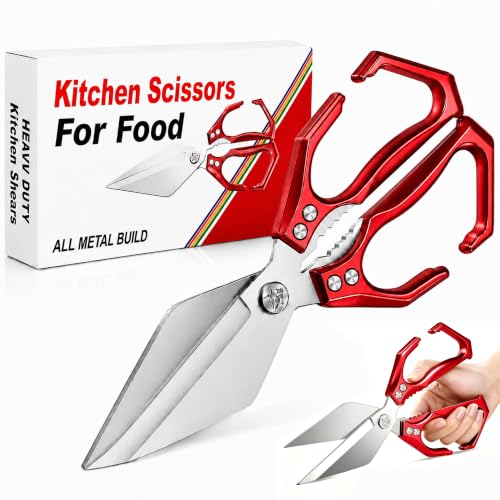
【Multifunctional Heavy Duty Poultry Shears】 The Heavy-Duty Kitchen Shears feature hardened stainless steel, This kitchen scissors can not only handle meat and vegetables, but also open packaging bags and even easily crush nuts
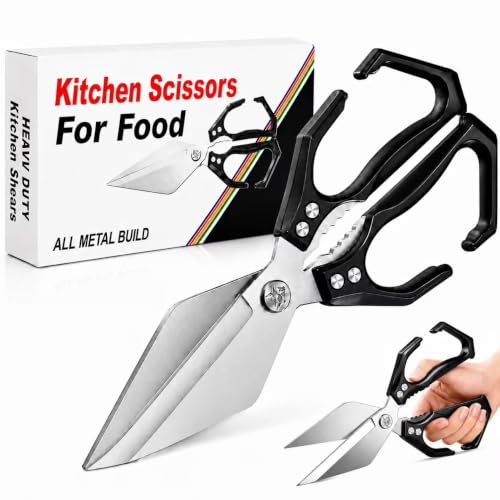
【Multifunctional Heavy Duty Kitchen Shears】 The Heavy-Duty Kitchen Shears feature hardened stainless steel, This kitchen scissors can not only handle meat and vegetables, but also open packaging bags and even easily crush nuts
Cleaning Shears After Handling Raw Poultry
After handling raw poultry, you should immediately rinse your shears under running water. This removes visible residue and prevents juices or particles from drying on the blades or hinge. Open the shears fully or disassemble them if possible for better access to all parts. Use hot, soapy water and a dedicated brush to scrub both blades and the hinge thoroughly, reducing the risk of cross-contamination. To prevent accidental mixing of tasks, consider using color-coded shears designated solely for poultry. Sanitize the shears by soaking them in a bleach solution—one tablespoon of bleach per gallon of cool water—for at least two minutes. If your shears are dishwasher safe, running them through a cycle is also effective. Before storing, dry all surfaces, including the pivot point, with a clean towel to prevent rust and bacterial growth. Proper cleaning and sterilization are essential for maintaining food safety standards.
Match the Tool to Your Most Frequent Kitchen Tasks
If you mostly prepare herbs, vegetables, and snack-packaging tasks, kitchen shears are the right tool. They excel at snipping herbs directly into dishes for fresh flavor, slicing scallions, and opening packages quickly. Their usability features, like sharp blades for precise cuts and ergonomic handles, help speed up these light tasks.
On the other hand, if your kitchen work involves breaking down whole chickens, turkeys, or larger poultry, poultry shears are essential. Their serrated blades and reinforced handles provide enough leverage to cut through bones, cartilage, and joints with ease. They securely handle slippery skin and dense parts, making poultry prep safer and more efficient.
Ultimately, choose kitchen shears for versatile, everyday prep work involving herbs, veggies, and packaging. Select poultry shears when your tasks regularly include bone-in poultry breakdown or dealing with heavy, tough cuts. This way, you match the tool to the workload for faster, more effective results.

HERB GARDENING ESSENTIAL: Stainless steel blade plant shears with sheath ideal for harvesting herbs outdoors or with a window herb garden for kitchen; encourages overall lawn and garden health, or perfect gift to go with any indoor herb garden kit

TIME SAVING: X-Chef 5-blade herb shear set is equivalent to 10 knife chops, which can snip fresh herbs, basils, or chives in perfect size onto plates quickly. Great for cutting paper, too.

【✂ Superb Quality】: Besides a beautiful finish, top quality build, professional design and ultra sharp blades make it feel comfortable, light and effortless while easily outperforming all other shears. It is made from premium, durable, top grade stainless steel that is rust and corrosion resistance, sharper and stronger.