
Are you trying to figure out whether diamond or ceramic sharpening stones will give you the best edge?
The answer depends on what you’re aiming for: if you need to remove a lot of metal quickly or fix chips, diamond stones are the way to go.
But for a smooth, mirror-like finish, ceramic stones are your best bet.
Keep reading to see how each type stacks up and how to choose the right one for your needs.
How Diamond Stones Crush Ceramic for Speed and Stock Removal
Diamond stones crush ceramic quickly because their abrasiveness is far higher than that of ceramic stones. They cut faster and remove much more metal per pass—around 7.62 mg compared to 0.69 mg under the same conditions. Use diamond when repairing chipped edges or reshaping bevels, as its durability allows you to work through hardened steels without the stone wearing down. Diamond’s primary advantage is speed, making coarse grit ideal for establishing a new edge geometry in seconds. For buyers focused on overall value, top knife sets with blocks often pair diamond or ceramic stones with quality blades to balance performance and cost. While diamond aggressively removes material, expect deep scratches instead of a polished finish. This tradeoff is suitable when fast stock removal is the goal, such as correcting damage or setting a quick bevel. Once the broad shape is achieved, switch to a finer stone for finishing. Diamond’s abrasiveness makes it the go-to option when speed outweighs fine surface finishing. Crafting a durable cutting surface like a butcher block requires similar abrasives to maintain flatness and remove scratches over time. Like fractionated coconut oil protecting wooden surfaces, diamond’s hardness ensures the stone itself remains effective through repeated use.

𝐖𝐡𝐲 𝐂𝐡𝐨𝐨𝐬𝐞 𝐃𝐢𝐚𝐦𝐨𝐧𝐝 𝐎𝐯𝐞𝐫 𝐖𝐡𝐞𝐭𝐬𝐭𝐨𝐧𝐞𝐬: Diamond sharpens even the hardest steels, including super steels like CPM-series, M390, and Elmax. Unlike traditional whetstones, diamond sharpening plates stay flat, require no lapping, work dry without mess, and deliver more efficient, consistent results.
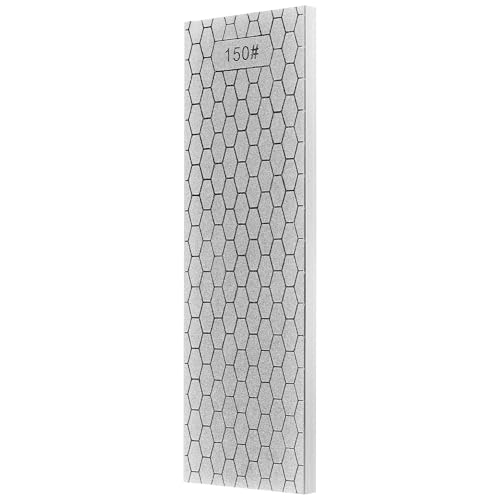
Convenience and Durability:diamond sharpening plates are far more durable and easily to maintain than whetstones because they won't be cratered and do not need to be flattened
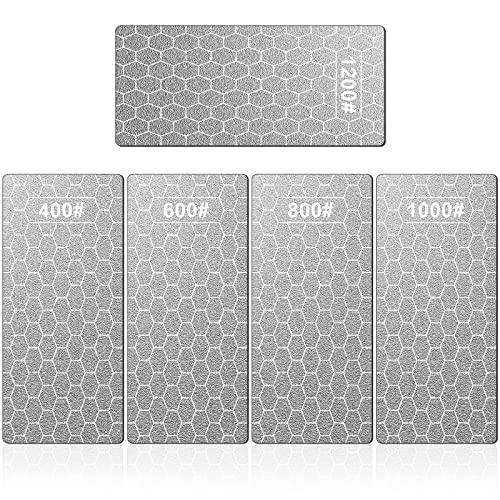
Unique Honeycomb Design:The sharpening stone set with unique honeycomb design ensures that the dust generated during the grinding process will not affect the sharpening. The diamond sharpening stone has a non-slip base to ensure that it will not slip during use and easily tackle both coarse and fine sharpening jobs.
Why Ceramic Stones Win for Final Polish and Edge Refinement
At 5,000 to 16,000 grit, you’re not cutting, you’re honing. This range creates very fine scratches, resulting in smoother bevels and a more refined slicing feel. Ceramic stones excel at this stage because they outperform diamond in terms of polish and burr removal. Unlike diamond, which is ideal for faster material removal, ceramic is designed specifically for refinement. It provides a subtle, polished finish that enhances edge sharpness without removing too much material, making it the preferred choice for the final stage of sharpening. For those who also want to maintain the quality of their dining tools, a top silverware set with steak knives benefits from this same ceramic-polished edge. To prevent your fine honed blades from dulling prematurely, always use a cutting board with juice grooves to protect the edge against hard countertops. For consistent results, a precision slicing guide compatible with many top meat slicers ensures the edge remains aligned for perfect cuts.

Natural Stone Material: Crafted from natural jade and other stones. Available in three high-grit options: 10,000(Green), 8,000(White), and 5,000(Grey) for precision polishing and lasting durability

Product Composition: This whetstone set provides you need for effective sharpening, including a 3000/8000 dual sided grit stone and a non-slip rubber base for enhanced stability.

WHETSTONE KNIFE SHARPENER KIT: This set of knife sharpening kit includes high quality grit 3000/8000 water sharpening stone with a beautiful nonslip bamboo base and non-slip rubber bases for holding the waterstone securely during the sharpening process, a flattening stone used for leveling of knife sharpening Stone. Angle guide for beginners can be a great idea for household gifts.
Do Diamond Stones Wear Out Faster Than Ceramic Stones?
Diamond stones generally wear out faster than ceramic stones when used for sharpening. This occurs because diamond stones lose their cutting efficiency over time as diamond particles fracture or detach, especially under heavy pressure or with coarse grits. You’ll notice a decline in aggressiveness and effectiveness as the diamond particles become less sharp. In contrast, ceramic stones wear through gradual glazing or flattening, maintaining their performance until they are visibly worn out. Similarly, bamboo cutting boards can also suffer from wear when exposed to the high heat and moisture of a dishwasher, making them less durable than hand-washed alternatives.
A study comparing material removal showed that a diamond plate removed approximately 7.62 milligrams of metal, whereas a ceramic stone removed only about 0.69 milligrams. This indicates that diamond stones tend to wear faster with each use. For heavy, aggressive sharpening, you may find yourself replacing diamond stones sooner. Conversely, for lighter, finishing tasks, ceramic stones often last longer and provide consistent results over time. Ultimately, the pressure you apply and the frequency of use influence how quickly each type wears out.
Which Stone Handles Hard Steels and Damaged Blades Better?
Diamond stones handle hard steels and damaged blades better than ceramic ones. For steels above 58 HRC, diamond abrasives efficiently cut through tough carbides, providing the precision needed for alloys like S30V or M390. They are also excellent for restoring damaged blades, such as chips or rolls, because their coarse grit removes metal quickly without excessive effort. This allows for faster reprofiling and repair, ensuring the edge is restored more efficiently. Unlike oil, which primarily conditions wood, cutting board wax provides a protective barrier that seals the surface against moisture and bacteria. Diamond stones also excel at sharpening the best knives for skinning deer, which often feature hard steel edges that require frequent maintenance. For example, a coarse diamond stone is ideal for the initial heavy work on severely rolled edges.
Ceramic stones mainly serve as finishing tools. They remove metal slowly, making them unsuitable for heavy repair or reshaping tasks. While they can refine an edge after initial correction, they lack the aggressiveness necessary for fixing severely damaged or hardened blades. For those, a low-grit diamond stone is preferred to reprofile quickly, then switch to finer grits for a polished finish. On hard steels, diamond stones deliver the speed and control needed to handle tough materials effectively.

4 pieces sharpening plates,made of durable diamond material

High-quality abrasive- These whetstones combine 70% monocrystalline diamond with 30% premium silicon carbide to make our unique aggressive cutting and fine polishing abrasive formula. This unique formula abrasive is a solid low cost option that punches way above its weight class in performance and price.

𝐖𝐡𝐲 𝐂𝐡𝐨𝐨𝐬𝐞 𝐃𝐢𝐚𝐦𝐨𝐧𝐝 𝐎𝐯𝐞𝐫 𝐖𝐡𝐞𝐭𝐬𝐭𝐨𝐧𝐞𝐬: Diamond sharpens even the hardest steels, including super steels like CPM-series, M390, and Elmax. Unlike traditional whetstones, diamond sharpening plates stay flat, require no lapping, work dry without mess, and deliver more efficient, consistent results.
Diamond vs Ceramic: Which Is Easier to Maintain?
Diamond stones are easier to maintain because they don’t require flattening and only need rinsing, brushing, and drying after each use. You can clean them quickly before swarf hardens and then store them dry. In contrast, ceramic stones demand more effort—they must be regularly flattened with a lapping plate to keep an even surface. Ceramics also tend to clog more easily, requiring careful cleaning with a mild detergent or alcohol to prevent glazing. While ceramic stones offer a variety of color options, this variety doesn’t compensate for their heavier maintenance needs. In terms of cost, diamond stones often have a higher initial price, but they save you significant time on upkeep. Overall, for low-effort sharpening, diamond stones are the more convenient choice, whereas ceramic stones, though manageable, require noticeably more care.

Convenience & Durability:Diamond sharpening plates are far more durable and easily to maintain than whetstones because they won't be cratered and do not need to be flattened

5 particle size specifications to choose from: grinding stone with anti slip base, made of durable diamond material. They are numbered 320, 600, 1000, 2000, and 3000 respectively, which can efficiently and accurately polish from coarse to fine grinding, suitable for different degrees of edge wear

Complete Grit Set Low grit to High Grit for Every Sharpening Stage: This 5-piece diamond stone set includes coarse grit to fix serious nicks or reshape a damaged blade edge. Move to 400 and 600 grit for daily edge maintenance. Finish with 1000 and 2000 grit to hone and polish your blade to a razor-sharp edge. No water or expensive oil needed though a few drops of honing oil can improve lubrication for even better results (Set update notice: 200# upgrade to 240#)
When to Choose Diamond vs Ceramic for Your Sharpening Needs
Diamond stones are best when you need rapid material removal, such as reshaping edges or fixing chips. Their aggressive cutting action allows you to quickly restore a dull or damaged blade with less pressure, saving time and effort. However, because they cut so fast, you must be careful to avoid removing too much metal, which could weaken your blade or alter its shape. For maintaining the highest quality on premium blades, referring to reviews of top Japanese gyuto knives can help identify which steels benefit most from diamond sharpening.
Ceramic stones excel when you want a finer finish, polishing, or touch-ups. They cut more slowly and offer better control, making it easier to achieve a razor-sharp edge without accidentally removing excessive material. Ceramic is particularly effective on hard, high-alloy steels like Japanese knives, where it maintains blade stability and helps produce a high-quality, refined edge.
Generally, use diamond for fast repairs or reshaping, then switch to ceramic for finishing touches and polishing. This combination ensures you progress efficiently while achieving a smooth, precise edge.

🧰NEVER DENT, NEVER FLATTEN – Tired of your whetstones wearing down and becoming uneven? Our sharpening stones feature a durable, diamond surface that stays perfectly flat forever. Enjoy consistent, professional-grade sharpening for years without the need for expensive flattening stones.

Dual-Sided Sharpening Faces: Features a 400 Grit diamond side for edge touch-ups & a ceramic side for finer honing; compact design helps maintain pocket knives, scissors, fishing tools, & small edge tools

Quality material: the surface of sharpener is made of diamond material, safe and durable, not easy to crater and flatten; With fine resistance to abrasion and corrosion, it can be applied with your confidence and easy to maintain
