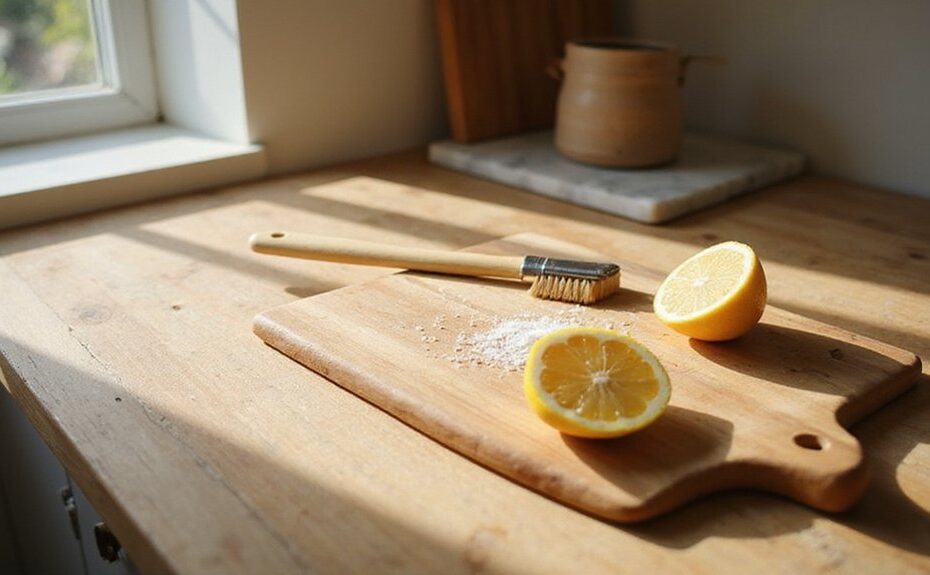
Wondering how to keep your wood cutting board clean and in good shape?
Proper care involves more than just rinsing after chopping.
From quick hand washes to deeper treatments for stains and odors, there are simple steps you can take to extend its life.
Keep reading to learn how to maintain your board safely and effectively.
Wash Your Wood Cutting Board After Every Use
You should wash your wood cutting board after every use. Even if you only sliced fruit or bread, proper hygiene begins with a quick clean. Use warm water and mild dish soap, scrubbing both sides and the edges with a soft sponge, especially in knife grooves where bacteria can hide. Avoid soaking the board, as prolonged exposure to water can cause warping or cracking. Keep washing brief to minimize moisture damage. Rinse thoroughly to remove all soap residue, then dry immediately with a clean towel. Air-dry the board upright to ensure air circulates on both sides and prevent moisture from building up. Never stack a damp board, as this encourages mold and bacteria growth. For more thorough drying and storage, you might consider a peeling knife with storage box to keep your tools organized and dry. Proper upkeep of any tool, including sharpening stones, requires understanding its specific material needs for durability and performance. Maintaining this simple routine helps prevent bacteria buildup, preserves your board’s shape, and keeps your food safe. Just as with diamond stones, avoid harsh chemicals or abrasive scrubbers that can damage the surface and compromise its cleaning effectiveness over time.

Convenient and Easy to Use: The gray microfiber cloth, sized at a moderate 5 inches, fits perfectly in the palm, enhancing comfort and control during use. This makes the process of waxing cutting boards both simple and efficient, saving your time and energy.

CLEANS WOOD SURFACES - Our cutting board cleaner is specifically formulated to gently and effectively clean food, oils and fats from wood surfaces that include butcher blocks and countertops.

Safe to use on any wood surface that may come into contact with food
Remove Stains and Odors With Baking Soda and Lemon
To remove stains and odors from your cutting board using baking soda and lemon, start by preparing a paste with baking soda and water. Apply this thick mixture over areas with lingering smells from foods like onions or berries. Let it sit for 10 to 15 minutes before gently scrubbing with the grain of the board. Rinse thoroughly with water afterward. For surface stains, cut a lemon in half and scrub it directly onto the discolored spots, squeezing juice as you go. Allow the lemon juice to sit for a few minutes before rinsing. To combine both methods, sprinkle baking soda over the board first, then scrub with the lemon half, using it as a natural abrasive. This process lifts residue without harsh chemicals. Always dry the board upright and repeat if odors or stains remain. Proper maintenance of your tools, including your cutlery sets, also ensures long-lasting performance and hygiene. Using a serrated knife for intricate cuts requires understanding its serrated edges for optimal performance and safety. Investing in high-quality knife blocks can help protect your blades and maintain their sharpness over time.

Mrs. Meyer's Baking Soda Cream Cleaner removes soap scum and grease build-up to make your kitchen sparkle

WIDE APPLICATIONS – Organic castile Based Soap formulated for Butcher Blocks, Cutting Boards, Bamboo Cutting Boards, Salad Bowls, Wood Utensils and Wood Countertops.
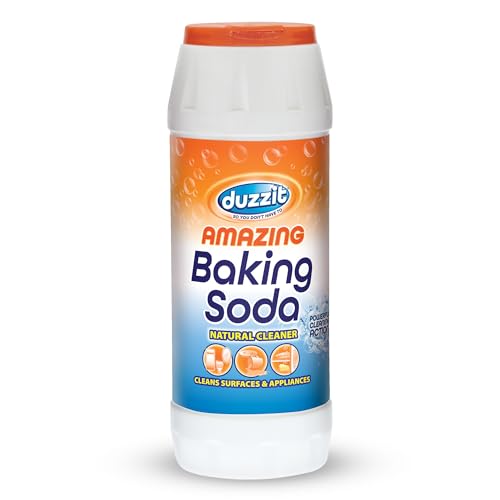
duzzit - amazing baking soda multi purpose household cleaner - 500g
Sanitize Your Board After Raw Meat, Poultry, or Fish
After washing your board with hot, soapy water, it is essential to sanitize it to eliminate any bacteria left from raw meat, poultry, or fish. Use a chemical sanitization method by mixing 1 tablespoon of unscented liquid chlorine bleach with one gallon of water. Pour the solution over the entire surface of the board, making sure it reaches into knife grooves and cuts. Let it sit for at least one minute, then rinse thoroughly with clean water to remove any residue. For comparison, top bread knives reviewed for quality require similar careful maintenance of their cutting surfaces. Never skip this step after handling raw animal proteins. Avoid soaking the board for extended periods, as excess moisture can cause warping. Instead, apply the sanitizer, allow it to dwell, rinse well, and then dry the board upright. This additional step significantly reduces food safety risks and keeps your wooden board safe for future use. For plastic boards, a similar cleaning products approach should avoid abrasive scrubs that create deep scratches. Selecting a knife that maintains excellent edge retention helps reduce the number of deep grooves that can harbor bacteria on any cutting surface.

Single Seventh Generation Professional Non Chlorine Bleach, Free and Clear, Unscented, Color-Safe, 64 Fluid Ounce - 1 each

BLEACH FOR COLORED CLOTHES: Remove tough stains and messes with Clorox ColorLoad Bleach to keep your colors bright and looking like new

Seventh Generation Chlorine-Free Bleach lifts tough stains leaving whites and colors their brightest without chlorine
Dry and Store Your Board to Prevent Warping
To prevent warping, you must dry your board thoroughly after rinsing away sanitizer. Immediately towel both faces, edges, and corners to remove surface moisture. Then, stand the board upright, allowing proper airflow to reach every surface. Never leave it flat and damp, as trapped moisture can cause cupping. Always finish drying at room temperature—never use heat sources like ovens or radiators, which can create uneven drying and stress the wood. For example, relying on a top-rated utility knife to scrape a damp board can also damage the wood surface.
Storing the board correctly also helps maintain its shape. Place it vertically on a rack with space on both sides, away from sinks, splash zones, and humid areas. Avoid direct sunlight, heating appliances, or radiators that dry one side faster, leading to warping. Do not wedge the board into tight spaces or pile heavy objects on top, as physical stress can bend the wood. Make upright drying a regular habit after each wash, ensuring it is completely dry before returning it to storage. Consistent airflow and moisture control are essential to keep your board flat and in good shape.

- Made of sturdy, eco-friendly, and easy-to-clean bamboo. Surface special treatment, the water is not easy to penetrate. No crack, no deformation.
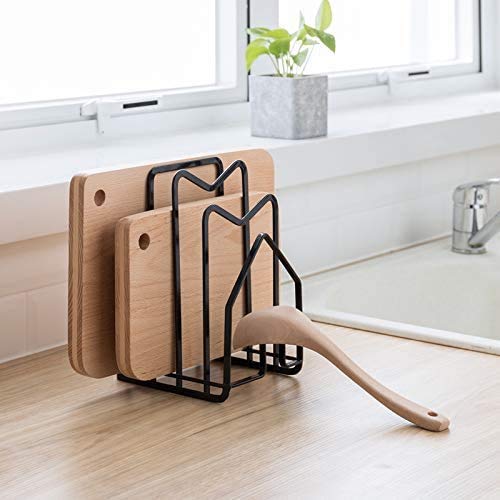
CUTTING BOARD RACK FLEXIBLE USES: you can use it to store your cutting board, chopping board, lids (THE TOP SLOT WITH A V-SHAPED GROOVE CAN HOLD POT LIDS.),cooking spoons, and recipe books etc. it securely holds items and keeps them organized, keeping your space mess free.

【Cutting Board Storage】Convenient to store cutting boards/pot lids/ plates, Suitable for kitchen cabinets.
Oil Your Wood Cutting Board to Prevent Cracking
Oil your wood cutting board regularly to prevent cracking. Oiling your wood cutting board regularly prevents cracking by filling surface pores and slowing moisture exchange. When water repeatedly enters and leaves the wood, it creates shrinkage stress that can lead to splits. Applying oil reduces wood permeability, especially at edges and end grain, which tend to absorb moisture fastest, keeping those areas protected. Unlike a charcuterie board where the health focus is on the foods served, the wood itself benefits from this barrier to maintain its structural integrity. For example, wood cutting boards offer superior durability compared to plastic when maintained with regular oiling. Japanese cutting knives require a stable, well-maintained board to preserve their precise edge geometry.
Begin with a clean, dry board. Use food-grade mineral oil and apply a thin, even coat across the entire surface, including edges and the underside. Rub it in with a lint-free cloth, following the natural grain of the wood. Allow the oil to soak in for several hours to maximize absorption. Wipe away any excess oil before storing the board.
In the first month, new boards often need weekly oiling to maintain proper moisture levels. If you use your board heavily, reapply oil every 2 to 4 weeks. Replace the oil when the surface appears dry, pale, or chalky, indicating it needs replenishment. Avoid using cooking oils that can turn rancid over time. Indoor air that is dry may increase oiling frequency, but consistent application is more effective than occasional heavy coats. Remember, oil acts only as a moisture barrier; it does not replace regular washing and cleaning of your board.
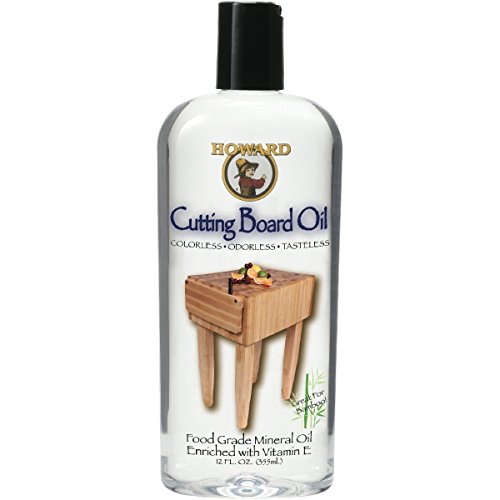
Cutting Board Oil is a deep penetrating 100% Pure USP Food Grade Mineral Oil that is tasteless, odorless, colorless, and will never go rancid

FOOD-GRADE MINERAL OIL FOR CUTTING BOARDS: Helps restore and protect dry cutting boards, butcher blocks, and wooden kitchen surfaces. Refreshes dull, worn wood and helps prevent cracking or splitting; works on bamboo, teak, acacia, olive wood, and hardwood boards

NSF CERTIFIED FOOD GRADE - This premium mineral oil is NSF certified and lab-tested to meet the strictest food safety standards. Colorless, odorless, tasteless, and gluten-free — perfect for cutting boards, butcher blocks, and all food-contact surfaces.