If you want to sharpen your Damascus knife without damaging its beautiful layered pattern, the right technique makes all the difference.
Using the wrong tools or methods can weaken the steel or ruin its appearance.
By understanding the proper approach, you can keep your knife sharp and looking great.
The key is gentle, precise sharpening with the right equipment—here’s how.
Why Your Damascus Knife Sharpens Differently
Your Damascus knife sharpens differently mainly because its core steel’s hardness governs how it responds to sharpening. The core, which forms the primary cutting edge, is usually hidden beneath multiple decorative layers. A harder core maintains its edge longer and resists wear but requires more effort on your stones to sharpen. Conversely, a softer core sharpens more quickly but tends to dull sooner. This variance in core hardness explains why two Damascus knives can feel so different during sharpening sessions. When selecting a Damascus set, it is important to compare top picks for quality and value to ensure the core steel matches your sharpening preferences.
Additionally, the layered construction adds complexity. These forge-welded layers are not purely aesthetic—they introduce metallurgical variation across the blade. Softer outer layers act as shock absorbers, reducing micro-fractures from impacts, while harder layers resist wear and deformation. This creates a subtle micro-saw effect on the edge. As a result, your sharpening process encounters a patchwork of properties, and each part of the blade may sharpen or resharpen at a different rate. The layered, multi-metal structure makes the experience of sharpening your Damascus knife unique compared to single-metal blades. When choosing a set, consider that overall quality often varies based on the core steel and layer construction used across different brands. To achieve the best results, you should also weigh performance and value when selecting a sharpening method that matches the blade’s specific hardness.
What Sharpening Angle Should You Use?
The ideal sharpening angle for your Damascus knife depends on its intended use and the steel’s hardness. For delicate slicing and precise cuts, aim for about 15 degrees per side. This narrower angle creates a sharper edge but may be less durable over time. For general kitchen tasks such as chopping and prep work, a steeper angle of 17 to 20 degrees per side strikes a good balance between sharpness and longevity. If you need a more robust edge to withstand heavy impacts or tougher cutting tasks, use an angle closer to 20 degrees per side. The key is consistency; using the same angle on both sides ensures a symmetrical edge. Always verify your chosen angle with a marker to confirm it matches your blade’s geometry. Keep in mind, the core steel’s hardness is the main factor influencing your angle choice—don’t be swayed by the Damascus pattern. Select your sharpening angle based on the task at hand for the best results. Blade style recommendations indicate that a general kitchen knife typically benefits from an angle between 17 and 20 degrees per side. If you frequently use a cutting board, applying food safe mineral oils can help protect the wood and maintain your knife’s edge during use. Maintaining consistent pressure on a diamond stone prevents uneven wear and ensures a more precise edge.

Package Includes: you will receive 15 pieces of diamond sharpening stones in different grits, including 80/120/150/180/200/240/320/400/600/800/1000/1200/1500/2000/3000 grit, which can be efficiently and accurately polished from coarse to fine grinding, suitable for different degrees of wear

Unique Honeycomb Design:The Diamond Sharpening Stone with unique honeycomb design ensures that the dust generated during the grinding process will not affect the sharpening. The knife sharpening stone set includes dust cover and non-slip rubber pad that can be used as a stone base while sharpening; With Sharpening Angle Guide integrated with 3 universal angles-14°, 17°, 20°.

Convenience & Durability:Diamond sharpening plates are far more durable and easily to maintain than whetstones because they won't be cratered and do not need to be flattened
Hone vs. Sharpen: Which Does Your Blade Need?
Honing is sufficient if your blade still cuts but feels sluggish because it realigns the edge without removing steel. If the edge responds well after honing, continue using it regularly to maintain sharpness. However, if honing no longer improves cutting performance, it’s time to sharpen. Sharpening involves removing small amounts of steel to restore a dull or chipped edge, effectively repairing the blade. Steel hardness in your Damascus knife influences how often you should hone versus sharpen; harder steels may hold their edge longer and require less frequent honing but more careful sharpening. Use honing as routine maintenance to extend the intervals between sharpening, which should be reserved for true dullness or damage. Recognize the difference: honing preserves a fine, aligned edge, while sharpening rebuilds a worn or damaged one.
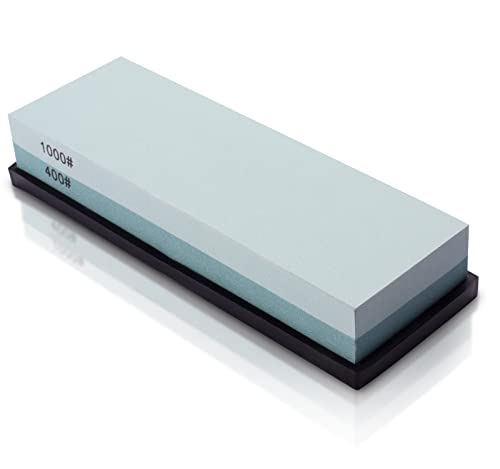
No oil needed, just put the stone into water for 10-15 minutes before using and they are ready to use. You can always adding water on it while sharpening, with water the lubricating effect of grinding will be great and helps you to save strength

【Premium Alumina Whetstone】Our whetstone knife sharpener (also a reliable honing stone) adopts high-grade aluminum oxide with proprietary sharpening compounds, making this knife sharpener stone deliver exceptional cutting performance. Strictly selected raw materials ensure the whetstones for sharpening knives are wear-resistant and long-lasting, outperforming ordinary sharpening stones for knives in sharpness retention and durability

WHETSTONE KNIFE SHARPENER — NO SKILL, NO GUESSWORK Most people avoid whetstones because holding the correct angle is intimidating. The included angle guide locks your blade position automatically — making professional knife sharpening practically idiot-proof, even on your first try. No oil needed, no mess, no guesswork.
Sharpen Your Damascus Knife on a Whetstone
To sharpen your Damascus knife on a whetstone, start by soaking the water stone for 5 to 15 minutes to ensure it’s well-hydrated. Place it on a non-slip towel to keep it stable during sharpening. Check the blade for dark spots or uneven color, which can indicate uneven pressure during honing. Keep the stone moist by regularly re-wetting it, maintaining a thin slurry to optimize sharpening efficiency. For a refined final edge, many experts recommend finishing with a stropping compound to polish and align the blade. A juice groove on your cutting board can also protect your blade by preventing liquid runoff that might stain or dull the steel. A Santoku knife, for example, pairs well with a Damascus blade and requires consistent edge maintenance to preserve its balance.
Hold the knife at a 15 to 20-degree angle relative to the stone. Use smooth, light strokes, drawing from the heel to the tip of the blade. Position the heel of the knife at the far edge of the stone and pull towards yourself, applying gentle, consistent pressure. Avoid rushing the process; steady, even strokes produce the best results.
Begin with a 1,000 grit stone to reshape and establish a sharp edge. Once satisfied with the initial sharpening, move to a finer grit like 4,000 or 6,000 for refinement. Make sure to mirror the same motion on both sides of the blade to keep the bevel centered and even. After sharpening, rinse the blade thoroughly to remove any residue and dry it immediately to prevent rust or corrosion—especially important for high-carbon Damascus steel.
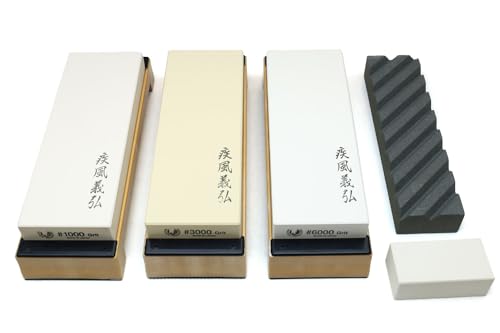
Grade : Toishi Sharpening Whetstone Full Set /Type: Japanese Sushi Chef Tool
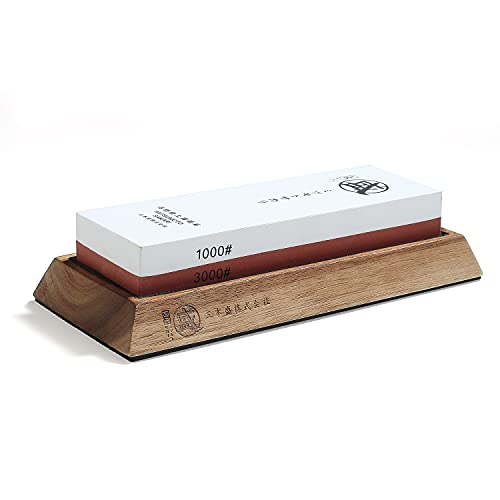
1000/3000 Grit Dual-Sided Whetstone: 1000 grit side quickly repairs dull edges and reshapes worn blades for daily meal prep; 3000 grit side hones and polishes edges to a smooth, razor-sharp finish for clean cuts of meat, fish, vegetables and fruit.
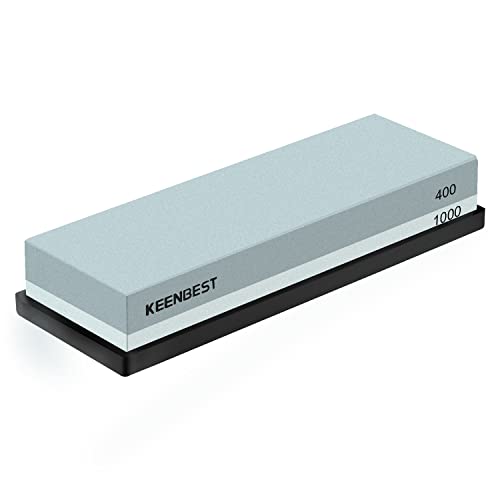
DUAL SIDED SHARPENING STONE: Made from durable silicon carbide(processes and inspections.), this two-sided sharpening block comes with both a 400-grit side, used for returning edges to their original shape, and a 1000-grit side used for smoothing and polishing cutting edges. Corrosion-resistant, heat-resistant, edges, and corners are clearly demarcated
Form a Burr on Your Damascus Knife
Form a burr on your Damascus knife by working until you feel a consistent, slight catch from heel to tip on one side. This indicates that the sharpened edge has reached a fine point of deformation—your burr. It’s a visual and tactile signal that the bevel is close to or at the desired sharpness. You should aim to develop a tiny, even ridge of metal on the opposite side of your stroke, which confirms proper edge refinement. Use controlled strokes, ensuring you don’t alternate sides prematurely, as that can prevent the burr from forming properly. Just as a cutting board benefits from periodic mineral oil to prevent drying and cracking, consistent burr formation prevents edge fatigue, and you must avoid the common mistake of rushing the process on your blade.
Start with a coarse grit if the edge is dull, and work steadily on one side until you detect the burr, then switch to the other side for balance. Check for the burr by gently sliding your fingertip across the edge—not along it—to feel for a tiny ridge. Once the burr is consistent and even, you know you’ve reached the appropriate level of sharpness. Be careful not to overwork, as a heavy burr can make removal more difficult and may weaken the edge. Treat your Damascus steel like any other, understanding that proper burr formation confirms you’ve effectively reached the true edge, not just a polished pattern.
3 Mistakes That Ruin the Pattern
Using aggressive powered sharpeners is a major mistake because they remove steel too quickly and generate excessive heat. This can ruin the heat treatment of your blade, weakening the steel and decreasing overall durability. Overheating during sharpening can also lead to a loss of the blade’s fine pattern and finish. Stick to manual sharpening techniques with light pressure to better control removal and prevent damage. Understanding correct technique prevents common beginner mistakes like using too much pressure or an improper angle. When selecting a manual sharpening stone, consider the same quality and performance criteria used for high-end charcuterie boards to ensure a consistent, even edge. Avoid using your Damascus knife on bamboo cutting boards, however, as they are known to be harder on knife edges compared to other materials.
Match the Angle to How You Use the Knife
Matching the sharpening angle to your actual use ensures a balance between sharpness and durability. For light slicing and delicate tasks, use a 15° per side angle. This acute bevel creates a finer edge that cuts with less resistance, ideal for precision work. For heavier chopping or tasks involving more contact with the cutting board, increase the angle to around 20° per side. A wider bevel helps prevent the edge from rolling or dulling prematurely, keeping your Damascus knife tougher and longer-lasting. If you’re unsure where to start, choosing 17° per side provides a versatile compromise. Consistency is key—using an angle guide or marker helps lock in your chosen angle. This method also reduces the frequency of sharpening and helps maintain the knife’s beautiful pattern, simplifying cleaning and storage routines. Proper storage is equally vital, as safe, space-saving holders protect the edge from accidental knocks that can misalign your careful work. For a more durable edge suitable for daily use, consider the example of Japanese folding knives which often prioritize a balanced angle to optimize both quality and performance.
Model: Wedgek AGM Medium size. For larger size model Wedgek LR5 is available.

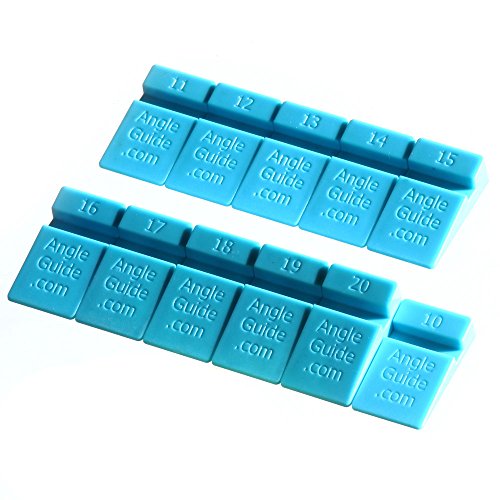
15° Whetstone Angle Guide: Helps keep a steady sharpening angle on a whetstone, so beginners can build a more repeatable stroke for kitchen knives and chef knives.

It makes sharpening blade edge like a pro!
Simple Maintenance for a Lasting Edge
To keep your edge lasting longer, you need to clean, dry, and protect your blade after each use. Start by rinsing the blade with warm water and mild soap, using a soft sponge—never abrasive scrubbers or steel wool, which can damage the surface. Pay particular attention after cutting acidic foods like citrus or onions, as they can cause corrosion. For stubborn residue, a gentle wipe with a soft cloth is always safer than aggressive scrubbing.
Immediately dry the knife with a soft towel, wiping the spine, edge, and any patterned grooves where moisture can hide. Apply a thin coat of food-safe mineral or camellia oil to form a protective moisture barrier. Store your knife in a dry, well-ventilated area, avoiding damp drawers or contact with leather, which can trap moisture. Always wash by hand; do not put your knife in a dishwasher. Regularly inspect your blade for early signs of rust, and handle it carefully to extend the life of your sharpening tools. Proper maintenance not only protects your investment but also ensures a sharp edge that lasts longer, and for convenience, some cooks find that self-sharpening knife blocks work well for daily touch-ups without damaging the blade. For tasks like slicing large proteins or vegetables, using a cutting board with feet provides a stable surface that protects your blade’s edge during prep. Understanding your knife’s intended use, such as recognizing specialized knife styles for specific tasks, helps you choose the best tool and care routine for your kitchen.

FOOD-GRADE MINERAL OIL FOR CUTTING BOARDS: Helps restore and protect dry cutting boards, butcher blocks, and wooden kitchen surfaces. Refreshes dull, worn wood and helps prevent cracking or splitting; works on bamboo, teak, acacia, olive wood, and hardwood boards

NSF CERTIFIED FOOD GRADE - This premium mineral oil is NSF certified and lab-tested to meet the strictest food safety standards. Colorless, odorless, tasteless, and gluten-free — perfect for cutting boards, butcher blocks, and all food-contact surfaces.

FOOD GRADE QUALITY: Premium mineral oil designed for direct and indirect food contact, meeting U.S. FDA regulations and USP standards for maximum safety