
If you’ve ever wondered how to keep your bamboo cutting board looking its best, you’re not alone. Proper oiling is key to maintaining its durability and appearance over time.
With the right technique, you can easily protect and nourish your board, making it last for years. Just a few simple steps will help you master the art of oiling your bamboo surface effectively.
What’s the Best Oil to Use on a Bamboo Cutting Board?
Food-grade mineral oil is the best choice for conditioning a bamboo cutting board. It is odorless and tasteless, which helps preserve the flavor of your food. Mineral oil penetrates deep into bamboo fibers, forming a moisture barrier that protects against cracks and warping. It also leaves no sticky residue, making it easy to clean and maintain. For an eco-friendly alternative, look for plant-based mineral oils labeled as food-safe, although these options are less common. For a complete kitchen solution, consider pairing your board with a top knife set for optimal performance. Avoid using cooking oils like olive or coconut oil, as they can go rancid over time, causing unpleasant odors and affecting your food’s taste. Instead, opt for a dedicated cutting board oil or a mineral oil blend with added wax to enhance water resistance. Applying a thin coat every month or so will keep your bamboo board conditioned, protected, and looking its best without developing funky smells or residue buildup. This product is crafted by Totally Bamboo, a brand recognized for bamboo innovation and care.
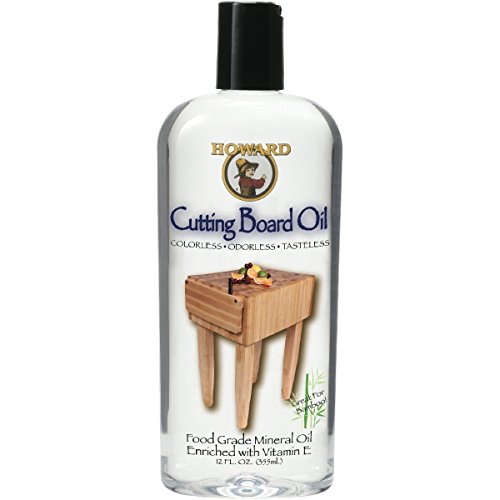
Cutting Board Oil is a deep penetrating 100% Pure USP Food Grade Mineral Oil that is tasteless, odorless, colorless, and will never go rancid

FOOD-GRADE MINERAL OIL FOR CUTTING BOARDS: Helps restore and protect dry cutting boards, butcher blocks, and wooden kitchen surfaces. Refreshes dull, worn wood and helps prevent cracking or splitting; works on bamboo, teak, acacia, olive wood, and hardwood boards

NSF CERTIFIED FOOD GRADE - This premium mineral oil is NSF certified and lab-tested to meet the strictest food safety standards. Colorless, odorless, tasteless, and gluten-free — perfect for cutting boards, butcher blocks, and all food-contact surfaces.
Why Oiling Your Bamboo Board Is So Important
Oiling your bamboo board is crucial for maintaining its durability and appearance. It creates a protective layer that helps prevent water absorption, which can cause the fibers to swell, warp, or crack over time. By regularly applying oil, you keep the surface stable and less prone to splits and surface checks, especially after washing. The oil also seals the edges and pores, reducing the risk of deep knife marks and surface wear. For best results, using a food-safe mineral oil is recommended, much like how Japanese sharpening stones require specific care for perfect knife edges. For those who also use their board for serving, an oiled surface provides an ideal foundation for charcuterie boards with bowls that require both durability and presentation. Unlike plastic alternatives that dull knives due to their harder surface, bamboo boards treated with oil help preserve blade sharpness.
A well-maintained, oiled surface supports better hygiene by limiting the absorption of food juices and mold growth. It also helps resist bacterial intrusion, keeping your cutting surface safer. Additionally, oil restores bamboo’s natural color and enhances its grain, giving your kitchen a more polished look. Consistent oiling extends your bamboo board’s lifespan, making it a reliable tool for daily food prep. Always store a freshly oiled board in a dry place to let the oil cure fully, which keeps both its function and beauty intact for years.
How to Clean Your Bamboo Board Before Oiling
To clean your bamboo board before oil-ing, start by removing loose debris. Scrape off any food bits from both faces and the edges using a soft cloth or gentle brush. Avoid abrasive scrubbers that can damage the finish. Pay special attention to grooves where residue can hide. For cutting tasks that require a durable blade, true Damascus steel offers superior edge retention and corrosion resistance.
Next, wash the board with warm water and mild dish soap, scrubbing gently to avoid scratching the surface. Rinse thoroughly to ensure no soap residue remains, as leftover soap can block the absorption of oil. Never soak or put the bamboo in a dishwasher because excess moisture causes warping. The high-carbon steel layers in Damascus knives are forged through repeated heating and folding.
For bacteria removal after handling raw meat or fish, rinse with a diluted vinegar solution. Follow this with a baking soda scrub to neutralize odors. Rinse the board again to remove any vinegar or baking soda residues. To keep the surface hygienic for years, use safe cleaning products like these natural alternatives.
Immediately dry the bamboo with a clean towel. Then, stand the board upright to air-dry for at least one hour. Ensuring the board is completely dry before oil-ing is essential, as hidden moisture can prevent the oil from penetrating properly.
How Much Oil Should You Apply to a Bamboo Board?
For a bamboo board measuring around 45 x 35 cm, you should apply approximately 10 to 15 milliliters of oil per side. This amount is enough to create a thin, even coat that leaves the surface looking uniformly moist without flooding it. For a slightly smaller board, such as one that is 38 x 28 cm, 5 to 10 milliliters per side usually suffice. Think of it in terms of teaspoons: about 2 to 3 for larger boards and 1 to 2 for medium-sized ones. Unlike ceramic knives, which require no oiling, bamboo boards depend on periodic conditioning to maintain their longevity. A similar approach applies to Santoku knives, which also benefit from proper care to preserve their edge.
The key is to use just enough oil so that the bamboo absorbs it fully. You’ll notice the wood grain drink in the oil during application; a very dry board will absorb more on its initial treatment. After soaking, if any oil remains visible on the surface, you’ve applied enough. Once the bamboo stops absorbing oil quickly, it’s a sign you’ve saturated it properly. For subsequent maintenance coats, use less—just enough to restore a subtle sheen and avoid any residue buildup. This principle mirrors how charcuterie boards require careful oiling to keep their wood conditioned for food display.

Revitalizing blend prevents drying and cracking of hardwoods and bamboo

FOOD GRADE QUALITY: Premium mineral oil designed for direct and indirect food contact, meeting U.S. FDA regulations and USP standards for maximum safety

NSF CERTIFIED FOOD GRADE - This premium mineral oil is NSF certified and lab-tested to meet the strictest food safety standards. Colorless, odorless, tasteless, and gluten-free — perfect for cutting boards, butcher blocks, and all food-contact surfaces.
How to Apply the Oil (Without the Mess)
To oil a bamboo board without making a mess, start by ensuring it is clean and completely dry. Any moisture can prevent the oil from absorbing properly, so air-dry the board in an upright position for several hours. Pour a small line of oil across one side instead of pouring directly onto the surface, which helps prevent excess spills. Use a lint-free cloth to spread the oil in long strokes that follow the grain of the bamboo. Make sure to cover the entire surface, including the edges, juice grooves, and knife marks. Apply just enough oil to create a thin, wet sheen—avoid puddles, as too much oil can lead to drips and messes. For added protection against fabric stains, place a cloth underneath the board during application. If you notice dry patches after spreading, add a few drops of oil directly to those spots, but do not overapply across the entire surface. Keep the oil container close by to minimize drips and splashes. To prevent messes from your hands, avoid using bare fingers and instead handle the cloth or tool. Let the board sit flat for 20 to 30 minutes so the oil can fully soak in, then buff it with a clean, dry cloth until the surface feels smooth and not greasy. Choosing a high-quality cutlery set can ensure your knives perform well when cutting on the board. If you are deciding between options, note that cutting board wax offers a harder surface finish than oil, which can affect long-term durability. For best results, avoid the harsh detergents that can dry out bamboo, as those used in dishwashers may strip natural oils and cause cracking.
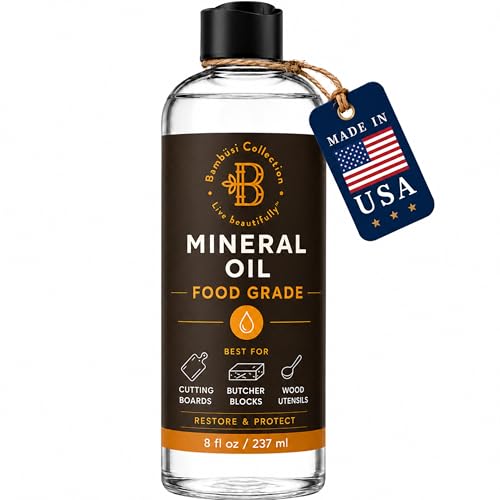
FOOD SAFE MINERAL OIL FOR CUTTING BOARDS: 100% pure food grade white mineral oil with nothing added. Clear, odorless, unscented and tasteless, so it won't change the flavor of food you prep on your board. Safe on wood cutting boards, butcher blocks and any wooden surface that touches food
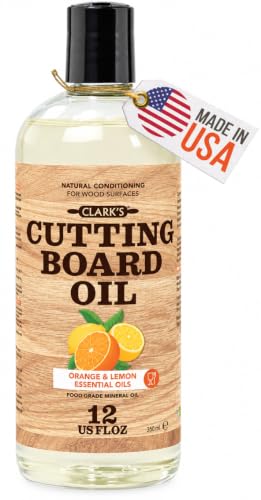
FOOD GRADE MINERAL OIL: Our mineral oil oil is lab tested to meet strict food safety standards. Clark's wood cutting board oil is not colorless, providing deep nourishment while keeping your wood cutting boards and kitchen surfaces protected.

WAX APPLICATOR INCLUDED WITH MINERAL OIL: This 12oz mineral oil bottle comes with a free wax applicator to easily apply oil on cutting boards
Soak the Oil, Then Wipe It Off
After spreading a thin, even layer of oil over the entire board, you need to let it soak in before wiping it off. Typically, a soak of 20 to 30 minutes suffices for proper oil absorption. Very dry boards may require several hours or even overnight to fully absorb the oil. Patience during this step ensures that the oil penetrates deeply, preventing dry spots. Once the soak time is complete, take a clean, dry cloth and wipe away all excess oil. Buff the surface until it feels dry and satin-like, free of slickness or shine. Any shiny puddles should be gone, and the surface should no longer be wet to the touch. This process is crucial for smoothing the surface and achieving a satin finish. After wiping, you should not feel or see any oil on your fingers. If you notice dry patches, you can apply a second light coat and repeat the wiping process. This is especially beneficial for fresh or very dry boards. Be careful not to leave the oil on too long without wiping, as this can create a greasy, sticky mess. Properly conditioning the board protects it from moisture damage, much like how a high-quality knife blade relies on a durable steel core to resist wear and maintain its edge. Similarly, selecting the right maintenance tools ensures your cutting board stays in top condition, just as choosing the best scissor sharpeners guarantees optimal performance for your shears. Japanese knives, for example, often prioritize a harder steel core for superior edge retention, demanding more careful maintenance than Western alternatives.
How to Buff and Cure the Board After Oiling
Once the oil has soaked into your board, buff the surface with a clean, dry, lint-free cloth using firm, circular motions. Continue until the surface feels smooth and develops a soft sheen, indicating the excess oil has been removed. This process prevents sticky residue and dust from attracting to the board. Aim for an even, matte or satin finish that feels dry to the touch, avoiding any wet patches. To ensure long-lasting protection, consider using a high-quality cutting board wax that seals in the oil for superior performance.
After buffing, it’s essential to cure the board before use. Position it upright on a rack so air can circulate around all sides and edges, which helps prevent warping. Allow the board to rest for at least 8 hours, with overnight being ideal. If your board is very dry, a 24-hour cure is recommended. Skipping this step can leave oily residue on food, so patience is crucial. Once curing is complete, check that all faces feel uniformly conditioned, with no slick or tacky spots remaining. The board is now ready to be used safely.

2-in-1 Formula for Total Wood Care: CLARK’S Cutting Board Wax food grade combines mineral oil and natural beeswax food-grade to work as both a wood conditioner and furniture wax, nourishing and sealing wood surfaces in one easy step
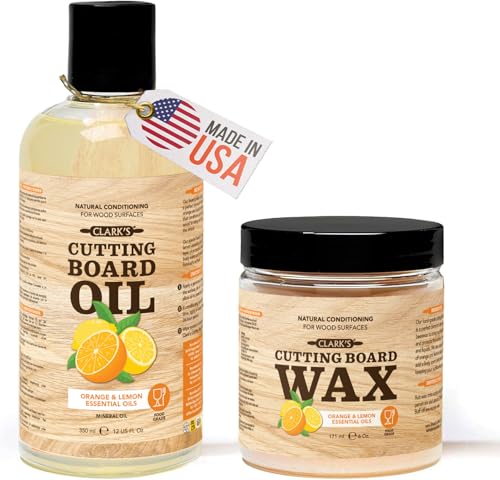
PERFECTLY PAIRED FORMULA: Food grade mineral oil for wood cutting board and wood wax are designed to work seamlessly together for optimal wood care and maintenance results
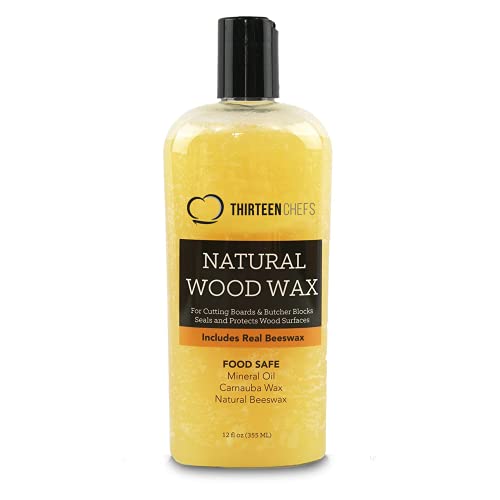
FOOD GRADE WAX - Our premium cutting board conditioner is made with genuine beeswax, carnauba wax and food grade mineral oil. Great for maintaining wooden cutting boards, wood countertops, butcher blocks, table tops, utensils, salad bowls and all other wood products that come in contact with food.
How Often Should You Oil a Bamboo Cutting Board?
How often you should oil your bamboo cutting board depends on your usage. If you cook daily, oil every 3 to 4 weeks. Heavy use may require re-oiling every 2 to 3 weeks to maintain the protective barrier. For those who use their board a few times per week, aim to oil every 4 to 6 weeks. Occasional users can extend the interval to 6 to 8 weeks. When the board starts to look dry or feels rough, it’s time to reapply oil.
A new bamboo board benefits from weekly oiling during the first 3 to 4 weeks. This helps build a strong, protective surface that resists moisture and stay smoother longer. In dry or heated kitchens, especially during winter, extend the interval by about a week since moisture evaporates faster. Watch how your board looks and feels; changes in moisture retention indicate when it needs another oiling session. Keep in mind that how often you wash or store your board influences this schedule—more frequent washing or poor storage conditions may necessitate more frequent oiling.

COMPLETE SET – Condition your cutting board with CLARK’S food-grade mineral oil, protect it with CLARK’S Cutting Board Wax, and apply with our specially designed applicator. Perfect for all wood types, including teak, bamboo, oak, maple, cherry, butcher block, wooden utensils, and kitchen countertops. The ultimate solution for maintaining new or aged boards. Reapply every 3–4 weeks or when the wood looks dry or feels rough.

REVITALIZING FORMULA BLEND prevents drying and cracking of hardwoods and bamboo. Great for restaurant cutting boards, great for home kitchens even chef cutting boards. This is the safest conditioner and will rejuvenate and revitalizes cutting boards. Great size for restaurants and industrial kitchens.
Signs It’s Time to Re-Oil Your Board
You’ll know it’s time to re-oil your bamboo board when water no longer beads up on its surface. If water droplets spread out or soak in within seconds, it means your protective oil layer has worn thin. A dull, faded appearance or a rough, fibrous feel also indicates dryness, making the surface more susceptible to damage. You may notice increased friction when touching the board and small cracks forming along edges or inside grooves. Spotty water resistance—where some areas repel water while others absorb—signals uneven protection, so a fresh coat of oil is needed. Keep an eye on your board’s hydration because even thorough cleaning won’t restore dryness. When oil absorption diminishes and your board no longer retains a smooth, water-resistant surface, it’s time to re-oil before cracks deepen or discoloration spreads. Choosing a food-safe mineral oil or a specialized blend can help maintain proper moisture levels and prevent the bamboo from drying out again. For optimal protection, consider purchasing a belt knife sheath to safely store your oiling tools nearby.
