Deciding between Japanese and Western knives can feel tricky, especially when you’re looking for the best fit for your cooking style.
Japanese knives are known for their razor-sharp edges and precise cuts, while Western knives are built to handle tougher tasks with more durability.
Your choice will depend on how you like to cook and what’s most important to you in a knife.
The full picture is below.
Japanese vs. Western Knives: What Actually Separates Them
Japanese knives differ from Western knives primarily in handle design and blade thickness. Japanese knives typically feature wa-style handles, which are simpler, lighter, and often made of wood. This design shifts the balance toward the blade, resulting in a nimble, precise feel ideal for delicate tasks like slicing fish or vegetables. Western knives usually have riveted, heavier handles that shift the balance toward the handle, providing more leverage for heavy-duty chopping and tougher ingredients. When selecting a knife for similar field use, experts often prioritize skinning performance over handle ergonomics, as edge geometry dictates clean cuts. Many top-tier brands are celebrated for their quality and performance in the Japanese knife market.
Blade thickness is another key difference. Japanese blades are notably thinner with less metal behind the edge. This reduction in metal cutting resistance allows for smoother, more effortless slices, especially for delicate items. Western blades tend to be thicker and more robust, designed to withstand harder uses like rocking cuts and chopping heavier ingredients. Essentially, you are choosing between a knife that offers agility and precision or one built for durability and strength. For those prioritizing ease of preparation, the best vegetable choppers offer quality and value through thoughtful design, though a knife’s edge geometry remains the primary factor for precision cutting.

ALL-PURPOSE NAKIRI KNIFE: The classic 7 inch kitchen knife is flexible for all kinds of heavy duty preps, like slicing, dicing, chopping and mincing. A truly all-around cooking knife, is easy to re-sharpen, clean and maintain.

Ultra Sharp Edge for Precision: Experience the pinnacle of cutting performance with our 8 inch chef knife. Hand-sharpened to an optimal 12-15 degree angle per side, this ultra sharp knife glides through tomatoes and meats without crushing. Whether you are a professional chef or a passionate home cook, the superior edge retention ensures your kitchen knife stays razor-sharp for effortless slicing, dicing, and mincing

PERFECT FOR FAMILIES WITH PETS OR KIDS: The kitchen knife set comes with a foldable stand, can be stored in a drawer to prevent children and pets from contact and injury, giving your family more peace of mind. When in use, the knife block set can stand on the countertop. Japanese knife set with reserved finger positions is convenient to move each time
How Edge Angle Affects Cut Quality and Edge Life
The angle ground into the knife’s edge directly influences its performance and lifespan. Lower angles, typically between 15 to 20 degrees per side, provide a sharper, more aggressive edge that slices through food with less resistance. This sharpness results in cleaner, more precise cuts but makes the edge more fragile and prone to rolling or chipping under heavy use or contact with hard surfaces. You’ll notice an immediate difference in cutting ease and accuracy with a low-angle blade. For example, recommended degree ranges for kitchen knives can vary by blade style to optimize performance. When selecting a set, reviewing a cutlery set guide can help match the angle to your cooking needs. Similarly, wood carvers require cut-resistant gloves to protect against accidental slips when using sharp-edged tools.
Wider angles, around 25 to 30 degrees per side, prioritize durability over initial sharpness. These edges are sturdier, supporting tougher chopping tasks and resisting damage over time. They may not feel as razor-like at first, but they last longer when subjected to regular heavy-duty use. The choice of angle often reflects cultural preferences—Japanese knives favor sharper, narrower angles for precision, while Western blades lean toward wider angles for strength. Aesthetically, low-angle edges look more refined, whereas broader angles give a robust, workmanlike appearance. Matching the edge angle to your specific task ensures optimal balance between sharpness and longevity.

Ultra Sharp Edge for Precision: Experience the pinnacle of cutting performance with our 8 inch chef knife. Hand-sharpened to an optimal 12-15 degree angle per side, this ultra sharp knife glides through tomatoes and meats without crushing. Whether you are a professional chef or a passionate home cook, the superior edge retention ensures your kitchen knife stays razor-sharp for effortless slicing, dicing, and mincing

CONVERT YOUR KNIVES: Ideal for converting traditional 20-degree factory edges of household knives into high performance Trizor XV 15-degree edges
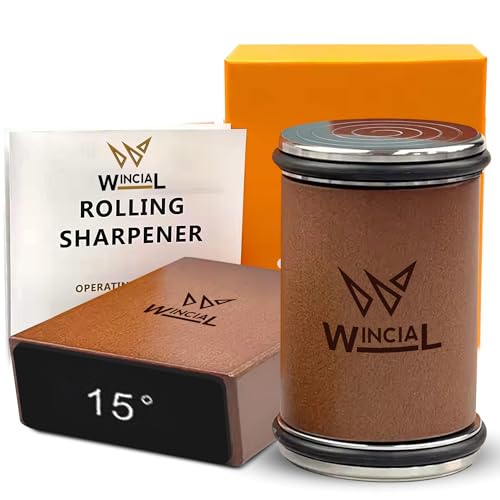
🌀 Innovative Rolling Design: Our wincial rolling knife sharpener allows a smooth back-and-forth motion that sharpens knives efficiently. This knife sharpener stone, a reliable knife-sharpener with an ergonomic cylindrical shape, full control, and effortless sharpening for all skill levels, eliminating complicated mechanisms and making professional-quality results achievable at home.
Steel Hardness: Why Harder Steel Stays Sharper
Steel hardness determines how well a knife maintains its sharp edge. Typically measured on the Rockwell C scale (HRC), higher hardness levels mean the blade resists wear and deformation better. Japanese knives often reach 58 to 67 HRC, which allows their edges to stay sharp longer because they lose less material during use. However, this increased hardness also makes the steel more brittle, raising the risk of chipping if you strike the blade against hard surfaces. For example, restoring a keen edge on such hard steel often requires a specific sharpening angle and the right abrasive stone, as outlined in techniques for damascus knives. Choosing a high-quality honing oil can also help protect the stone and improve the sharpening process on these harder steels. Using Arkansas stones provides a very fine abrasive suitable for polishing such high-hardness edges.
Western-style knives usually measure around 56 to 58 HRC. They tend to dull faster because their softer steel wears down more quickly but offer greater toughness. This resilience makes them better suited for rougher handling or impact-heavy tasks. While harder blades require less frequent sharpening, they can be more challenging to hone perfectly when needed. Your choice depends on whether you prioritize longer-lasting sharpness or higher durability under tough conditions.
Cutting Performance: Which Knife Excels at Different Tasks
Japanese knives excel at precision slicing, delicate vegetable work, and fish preparation because of their thinner geometry and sharper edge angles, typically between 12 and 17 degrees per side. These features reduce resistance and compressing of cells, resulting in cleaner, more precise cuts. They glide effortlessly through boneless proteins with minimal tearing, which can elevate the presentation of your dishes. The ergonomic grips and lightweight design of Japanese knives complement their delicate control and careful handling. Their aesthetic appeal often reflects their specialized craftsmanship, further emphasizing their precision-focused purpose. For chefs prioritizing refined results, selecting a blade from a top-tier cutting board with a stable base ensures the surface supports such meticulous work without slipping. Applying a food safe wood finish to the board further protects the surface from moisture and knife marks. Proper storage options like a DIY under-cabinet knife block can also safeguard these delicate edges from damage.
On the other hand, Western knives are better suited for rougher tasks like cutting through cartilage or handling less controlled conditions. They tend to have a more forgiving edge geometry, which makes them more durable and easier to use for heavy-duty work. When working with vegetables, Western blades typically have a wider wedge effect, which can crush softer produce, whereas Japanese knives’ minimal wedge effect keeps slices more intact and delicate. Ultimately, your choice depends on your specific task: Japanese knives excel at fine, detailed work that demands precision, while Western knives offer versatile performance that handles tougher, less refined cuts.
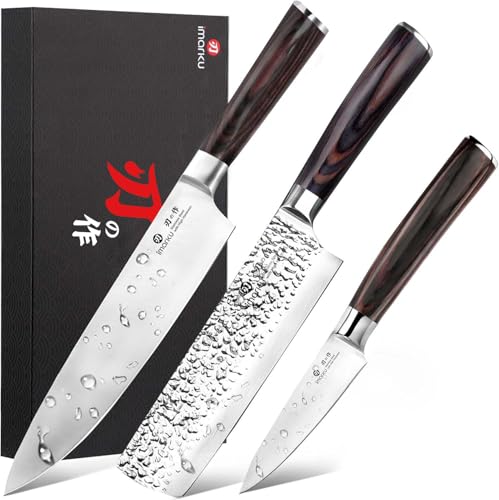
Ultra Sharp Professional Edge:Each knife in the imarku kitchen knife set is carefully hand-polished by skilled craftsmen with a 15° double bevel edge and 2.3mm blade thickness for exceptional cutting precision. These ultra sharp kitchen knives glide effortlessly through vegetables, fruits, fish, and meat, delivering a smooth and professional cooking experience
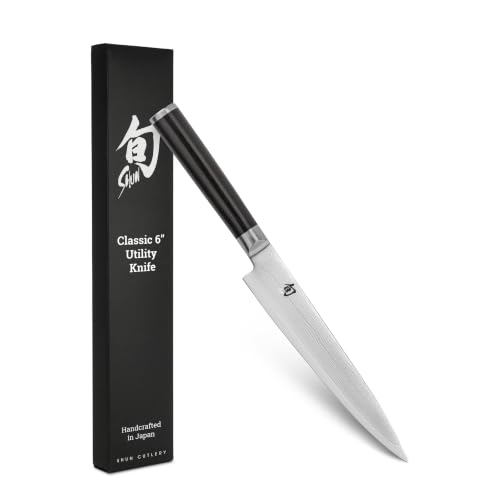
KITCHEN UTILITY KNIFE: The Shun Classic 6-inch Utility Knife is expertly designed for multipurpose use where precise cuts are needed, making it a must-have for any kitchen.

【6 Inch Small Kitchen Knife】This is a flexible, multipurpose kitchen knife. A smaller version of chef’s knife, it is lighter and more convenient to use, which is perfect for precision work such as slicing, paring but also be used for your daily kitchen tasks, chopping and mincing.
Durability and Toughness: Which Knife Survives Rougher Use
A Western-style knife generally survives rougher use than a Japanese-style blade. Its softer steel, typically around 55–58 HRC, absorbs impacts and bending without chipping immediately. If you hack at frozen food or twist against a cutting board, the edge may roll rather than crack. This damage can often be fixed easily with a honing rod. However, for balanced performance, top knife sets with blocks often combine Western durability with Japanese-style edge geometry for everyday versatility. In comparison, Japanese knives with harder steel—usually between 60–66 HRC—offer better edge retention but are more brittle. They are prone to chipping if too much force or misalignment occurs, especially when cutting through bone or very hard surfaces. Manufacturer reputation doesn’t alter this fundamental physics: a German brand’s construction might be more tolerant of rough handling, while Japanese brands prioritize steel hardness at the cost of fragility. Blade design also plays a role: thinner, harder profiles may look sharper but tend to be less durable under force. For survival situations where force and impact are unpredictable, a Western knife’s thicker spine and softer temper make it the more resilient choice. For safer cutting, using a cutting board with rubber feet prevents slipping and further protects the knife edge from uneven impact. If a serrated Western knife does lose its edge, proper maintenance requires using a specialized stone to sharpen each scallop individually.
Maintenance and Sharpening: Which Is Easier to Care For?
Western knives are generally easier to maintain than Japanese knives. Their softer steel is forgiving, making it possible to realign the edge quickly on a honing steel without risking chips. In contrast, Japanese knives are often hardened above HRC 60, which means they require more precise and careful maintenance with whetstones. Maintaining a Japanese blade involves soaking the stone, holding a steady 10–15° angle, and working through multiple grits, which demands more skill and patience. For those who prefer a more convenient setup, belt knife sheaths offer versatile storage and protection for knives during transport. For a perfect edge, many enthusiasts recommend using Japanese sharpening stones for their superior abrasive quality.
The lighter, ergonomic design of Japanese knives offers comfort during use but doesn’t ease maintenance. You must hand-wash and dry Japanese knives immediately after use to prevent corrosion and preserve their sharpness. Using a ceramic rod frequently can help maintain the edge and delay the need for full sharpening, but it still requires a more attentive approach compared to Western knives.

【Complete Knife Sharpening Stone Kit】You don't need to be a Pro to sharpen your blades, all you need is the right tools & technique. All the sharpening tools you need are here, one affordable set for you: 400/1000 & 3000/8000 grit whetstone; Coarse flattening stone; Non-Slip Bamboo base; Knife sharpening angle guide; Leather strop, a simple instruction manual about how to use and what does every component do.
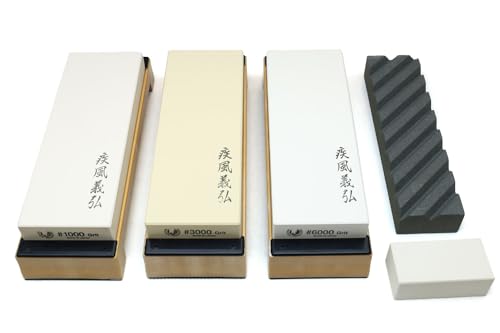
Grade : Toishi Sharpening Whetstone Full Set /Type: Japanese Sushi Chef Tool

✔ PROVIDES YOU AN EASE IN SHARPENING YOUR KNIFE - This Knife Sharpener is made in Japan whose quality is close to a natural whetstone. It has whetstone on both sides i.e. one side is 1000 for main sharpening and other side is 6000 for finish sharpening making it easy for you to sharp your knife in less time.
Which Knife Wins for Your Cooking Style?
Japanese knives excel for vegetable-heavy, detail-oriented cooking. Their flatter profiles and harder steel make it easy to execute clean, precise push cuts through produce, herbs, and fish. They are lighter and better balanced forward, which enhances handle ergonomics and provides fine control for intricate tasks. Pairing a Japanese knife with a proper wood cutting board helps preserve its sharp edge and prevents damage to the harder steel. A butter knife’s small notch serves a functional purpose in lifting butter from a shared dish without dragging crumbs back into it. For optimal knife care, consider using a board with feet to improve air circulation and prevent moisture buildup.
In contrast, Western knives are more suitable for high-volume, all-purpose meals or frequent meat work. Their curved blades allow for efficient rocking motion chopping, ideal for onions and batch prep. The tougher steel helps handle harder spots without chipping, making them durable for daily use. Popular brands like Wüsthof and Henckels focus on robustness and longevity, perfect for rigorous kitchen routines.
If you want a versatile option, a Western chef’s knife or a Japanese gyuto can cover most tasks. Choose based on whether your cooking emphasizes finesse or robustness, and select a knife that matches your primary cutting style.

【Premium Damascus Chef Knife with VG-10 Steel Core】Our Japanese knives feature a VG-10 steel core (62 HRC) for unmatched sharpness and stain resistance. The 67-layer Damascus cladding ensures durability while adding elegant, rust-proof patterns—perfect for both professional kitchens and home use

ULTRA SHARP 12° RAZOR EDGE: Designed for precision cutting, this kiritsuke chef knife features a finely honed 12° edge that delivers exceptionally clean slices through meat, fish, and vegetables—ideal for both professional chefs and serious home cooks.

[9-Layer Forged Structure] This professional chef knife is meticulously crafted with a 9-layer forged steel construction, delivering superior durability, corrosion resistance, and chip prevention. The multi-layer forging design not only reinforces blade strength but also enhances cutting stability, making this gyuto knife an essential tool for both professional chefs and home kitchens