Are Seido knives truly made with authentic Damascus steel? If you’ve seen their patterned blades and wondered if they’re the real deal, you’re right to question it. Many of these knives feature surface etching that mimics Damascus’s layered look but lack the actual layered steel construction.
Here’s what you need to know about their materials and craftsmanship.
What Does ‘Real Damascus’ Mean: and Does Seido Deliver It?
The meaning of “real Damascus” depends on the context, and whether Seido’s claim is legitimate hinges on which definition they use. Historically, “true Damascus” refers to wootz steel, a high-quality crucible steel originating from the Middle East, known for its unique pattern and legendary use in ancient swords. However, in modern knife marketing, “Damascus” often describes pattern-welded steel, which is made by forge-welding multiple layers of steel to create intricate patterns. Many buyers compare such knives using best cutlery sets reviews to assess quality and value. Understanding the cost of premium materials helps explain why charcuterie boards are so costly when made from high-end woods and metals. To help consumers navigate these claims, detailed comparisons of top knife sets with blocks often clarify material authenticity and overall performance.
If Seido is claiming to offer “real Damascus” as true wootz steel, their blades would need to be crafted from this traditional crucible steel, which is rare and historically significant. On the other hand, if they are using the term to describe layered, pattern-welded steel, they are aligning with today’s common industry practice. The distinction is crucial because pattern-welded steel is often layered and etched to produce a Damascus-like appearance but differs fundamentally from authentic wootz.
To evaluate Seido’s claim, you need to understand which version of “real Damascus” they use. Authentic wootz Damascus validates the claim if their blades genuinely incorporate this material. If they merely utilize pattern-welding and surface etching to mimic the look, the claim is more cosmetic than authentic. Recognizing this difference helps you determine whether Seido genuinely delivers “real Damascus” or simply a pattern-welded steel with a decorative surface.
What Does Seido Actually Promise on Its Own Product Pages?
Seido’s product pages clearly specify what their Damascus collection promises. They state that each blade is made from two alloys welded together to produce a distinctive rippled pattern. The collection uses a core of VG-10 or AUS-10 steel, both high-quality high-carbon stainless steels, with the outer cladding providing additional corrosion resistance. The company emphasizes that this design results in a premium, visually striking knife. Conversely, their FAQ distinguishes the Damascus knives from the Master Chef line, which features 7Cr17 steel, clarifying that the Damascus collection is marketed as a high-end offering. This transparency helps manage customer expectations and maintain the brand’s credibility. Unlike plastic cutting boards, which are often difficult to recycle due to material composition, these knives are built to last. Each knife in this collection is designed for specific kitchen tasks such as slicing, chopping, and dicing, ensuring versatility in meal preparation. For entertaining, you might also consider pairing your knives with a premium charcuterie board for an elevated presentation. Regarding customer support, Seido offers a Limited Lifetime Guarantee covering manufacturing defects specifically for its Damascus knives. Additionally, they provide a 30-day satisfaction guarantee, allowing you to return the product if unsatisfied. Be aware that exclusions apply—if misuse or improper care causes damage, the warranty becomes void.
The Third-Party Review That Says It’s Just an Embossed Pattern
Third-party reviews widely confirm that Seido’s Damascus pattern is just surface-deep. Blades Power outright states that Seido’s knives are “merely embossed,” meaning the Damascus look is purely cosmetic. They describe the pattern as a surface trick rather than a true layered steel laminate. Instead of layered metal, you get a surface-level imitation that doesn’t extend into the steel itself. Trustpilot reviews support this, with users calling the pattern “etched” or “laser engraved.” They clarify that the appearance is surface authenticity at best—a decorative finish, not genuine Damascus. Multiple independent sources agree on one key point: the pattern isn’t forged into the steel. Their consistent warning is that you’re paying for a fake appearance, not real layered construction. Unlike genuine Damascus blades, which require proper cleaning and maintenance to preserve their layered structure, Seido’s embossed surface can be treated like any standard stainless steel knife.
How to Spot a Surface Etch on a Seido Blade Without a Lab
To spot a surface etch on a Seido blade without a lab, start by tilting the blade under bright, raking light. A flat, uniform shine across the pattern indicates a printed finish rather than real depth. Genuine layered steel, however, shows subtle shadow shifts that suggest actual material layers. Next, examine the spine and choil—if the pattern is bold on the face but looks plain on these exposed areas, that’s a red flag. Also, inspect the edge bevel; if the pattern stops abruptly there, it’s likely just an etched coating rather than true layered steel. Finally, look for repetition in the pattern. Perfectly mirrored waves, even line thickness, or machine-like regularity point to a cosmetic surface treatment rather than authentic layering. Using these simple visual checks can help you avoid costly mistakes. Treating a knife with a fake surface etch like a wood cutting board in the dishwasher will ruin the blade just as quickly as it damages real layered steel. Serrated knives use tiny saw-like teeth to grip and cut through tough surfaces without slipping.

10Cr15Mov Core Steel Core with 10-12° Edge – Our chef knife features a premium 10Cr15Mov Core high-carbon stainless steel core hardened to 60HRC. With superior resistance to chipping and rolling—built to last through daily home cooking.

Complete 16-Piece Configuration】 The expanded layout includes an 8” Chef Knife, 8” Slicing Knife, 8” Bread Knife, 7” Santoku Knife, 5.5” Utility Knife, 3.5” Paring Knife, six steak knives, a 6” meat fork, kitchen scissors, a knife sharpener, and a natural wood knife block. This all-in-one complete set neatly covers a wide range of kitchen tasks from meal preparation to table serving

Exquisite 67-Layer Damascus Steel: Forged with 67 layers, this damascus kitchen Knife showcases a stunning ripple pattern. Not just a tool, it resists corrosion and dulling. our genuine damascus steel provides toughness for heavy-duty prep, ensuring your cooking knives remain a reliable partner. Every chef needs a reliable knife.
Why Seido’s 67 and 110 Layer Claims Don’t Add Up
Seido’s claim of 67 or 110 Damascus layers does not match standard forge folding mathematics. Typically, each fold doubles the number of layers. After five folds, you get 32 layers; after six folds, 64 or 128 layers. You cannot reach exactly 67 or 110 layers through simple folding because these numbers do not fit the exponential pattern of doubling. For the 110 layers, Seido’s description states “55 layers of each” steel, which is a fixed layer count rather than a result of folding. Non-standard layer counts can happen if the starting stack was odd or if additional layers are added later, but without clear explanation, these numbers seem more like marketing figures than actual construction details. This approach resembles how leather gloves are sometimes marketed as cut-resistant despite lacking certified materials. True Damascus quality should be judged by how the layers are created, not just how many are claimed, and reputable knife storage solutions emphasize layers and performance over inflated numbers. A well-constructed blade, like a sturdy charcuterie board, relies on honest material counts and reliable craftsmanship.
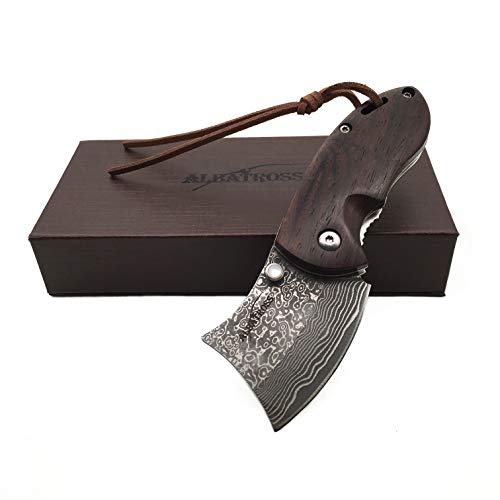
Enhanced Safety: Reliable liner lock mechanism prevents accidental blade closure during use, giving you confidence and security for all cutting tasks.

[HANDMADE DAMASCUS STEEL BLADE]: Expertly crafted with premium Damascus steel featuring unique layered patterns for superior sharpness, edge retention, and long-lasting durability. Ideal for cutting, slicing, and everyday utility tasks.
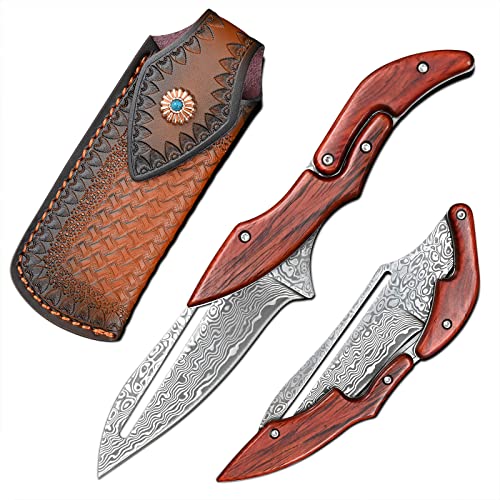
[VG-10 Japanese Damascus Steel Material]: Expertly crafted from 67 Layers VG-10 Japanese high carbon stainless steel ensures exceptional strength, durability and stain resistance. V-Glod 10 Japanese super steel cutting core at 60-61 Rockwell hardness. Vacuum heat treatment and nitrogen cooling technique are implemented, thus get the best characterization of the steel
VG-10, AUS-10, or 7Cr17: Which Steel Is Actually in the Blade?
7Cr17 is considered a budget steel with a hardness around HRC 58, offering decent corrosion resistance but soft edge retention. It’s commonly found in the Master Chef line, which suggests lower manufacturing quality compared to higher-end steels. In contrast, VG-10 and AUS-10 are premium steels often reaching HRC 60–62, with VG-10 being known for sharpness and edge retention, while AUS-10 offers slightly better toughness. In the Damascus collection, Seido claims a VG-10 core, but it’s important to verify if that’s for the entire blade or just a core layer. The Shinko series combines VG-10 and AUS-10 layers, achieving similar high hardness levels. The key is to check the specific steel composition rather than relying solely on branding, as the difference between 7Cr17 and VG-10 or AUS-10 is significant in terms of performance and quality. This 8.5 Inch Kiritsuke is actually forged with a VG10 core encased in 67 layers of Damascus high-carbon steel for durability. Proper storage of charcuterie boards helps protect the knife edges and surfaces when not in use.

ESSENTIAL 3 PIECE KNIFE SET: Includes an 8-inch chef knife for chopping and slicing, a 7-inch santoku knife for dicing and mincing, and a 5-inch utility knife for fruit, trimming, and smaller prep tasks

Blade Angle: 15 Degrees | Blade Length: 7 1/4” | Blade Height: 1 11/16” | Blade Thickness: 2.3mm | Total Length: 13 3/8” | Weight: 7.25oz

【Premium Damascus Chef Knife with VG-10 Steel Core】Our Japanese knives feature a VG-10 steel core (62 HRC) for unmatched sharpness and stain resistance. The 67-layer Damascus cladding ensures durability while adding elegant, rust-proof patterns—perfect for both professional kitchens and home use
Are Seido Knives Really Made in Japan or White-Labeled From China?
Seido Knives are not made in Japan; they are produced in Yangjiang, China. While the brand uses terms like “Japanese steel” and “Japanese-inspired craftsmanship,” there is no official statement confirming Japanese manufacturing. Third-party analyses indicate that these knives are private-labeled or white-labeled from Chinese OEM factories. This means the knives are essentially produced by Chinese manufacturers and rebranded as Japanese-style products. Customer reviews frequently challenge the idea that these knives are genuinely made in Japan, citing inconsistencies with the marketing claims. The material concerns often extend to performance, as plastic cutting boards dull knives more quickly than wood when used with such blades. The brand’s lack of a transparent country-of-origin label raises further suspicions. Unlike authentic Japanese knives, which proudly display their origin, Seido’s labeling is vague or absent. The claim of “Japanese steel” refers to the materials used, not the manufacturing location. In reality, you are likely purchasing a Chinese-produced knife dressed in Japanese-style branding, rather than a true Japan-made product. This distinction is critical because genuine Damascus knives require specific forge-welding techniques rarely found in mass-produced white-label goods. For the price, buyers often overlook that stamped blades lack the structural integrity of forged alternatives, which directly affects edge retention during heavy use.
5 Questions to Ask Before Buying a Seido Damascus Knife
Before purchasing a Seido Damascus knife, ask five critical questions to verify its quality and avoid falling for marketing gimmicks. Start by requesting the exact core steel used in the blade, such as VG-10 or SG2. Vague labels or generic “Damascus” descriptions often hide lower-grade steel or Chinese-made products. Knowing the precise steel tells you about the blade’s durability and cutting performance. You should also consider that the sharpening stones you use will need to match the core steel’s hardness for optimal edge maintenance.
Next, check how the Damascus pattern was created. Confirm whether it is forge-welded—layered steel fused during forging—or simply etched onto the surface. You can inspect the spine and choil for visible layered steel or pattern lines, indicating forge welding. This distinction affects the knife’s strength and aesthetic authenticity.
Third, ask for the Rockwell hardness rating, which should ideally be between 60 and 63 HRC. This range strikes a good balance between edge retention and ease of sharpening. A higher or lower rating may compromise the knife’s performance and lifespan.
Fourth, inquire about the blade’s construction. Is it full-tang, meaning the steel extends through the handle, providing strength and balance? Or is it just layered for aesthetic appeal only? Full-tang knives generally last longer and handle more rigorous use.
Finally, request detailed documentation from the manufacturer. Look for information on layer counts, heat-treatment processes, and the company’s reputation. While a clear warranty offers peace of mind, it only matters if the product’s specifications are precise enough to be enforceable. Asking these questions helps you distinguish real quality from superficial branding.

67-Layer Japanese Damascus Steel:The Damascus chef knife features 33 layers of Damascus steel on each side with 1-layer high-carbon Japanese VG10 steel core, this 67-layer construction delivers exceptional hardness, sharpness and durability. The blade showcases stunning Damascus patterns paired with a bold black hammered finish—enhancing cutting performance while reducing drag and food sticking.

Premium Design: This 8-inch chef's knife measures 13.78 inches in length, 8 inches 2.0 mm in thickness, and weighs 246 grams. Its 5.2-inch boxwood octagonal handle provides a comfortable, ergonomic grip. The 15-degree hand-polished blade on each side ensures precise cuts and long-lasting sharpness.
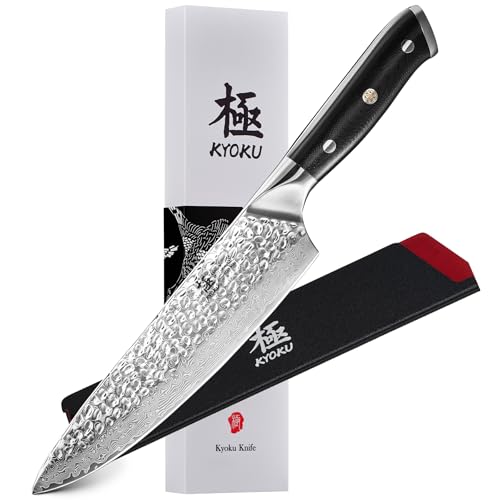
HIGH-END JAPANESE CHEF KNIFE: This all-purpose cool knife is part of Kyoku shogun series, manufactured with modern technology and traditional craftsmanship; its Japanese 67 layer Damascus VG-10 steel(MADE IN JAPAN) blade has been cryogenically treated and paired with a perfectly balanced handle offering superior precision and control for home chefs and culinary professionals alike
Should You Buy a Seido Damascus Knife Despite the Doubts?
Doubts about Seido’s Damascus steel authenticity shouldn’t stop you from considering this knife if performance matters more than branding. Even if you question the layered steel’s legitimacy, the knife’s VG10 core and balanced design can still give you reliable, effective cuts for everyday kitchen tasks. Its straightforward sharpening process allows you to maintain a razor-sharp edge with a honing rod or stone, making it practical for frequent use. Just be sure to verify the specifics of the model you’re eyeing—avoid listings that focus solely on “Damascus” hype without detailing the layered construction. If you require genuine layered steel as a non-negotiable feature, steer clear. But for a solid midrange option that combines style and functionality, a Seido knife can earn its place in your kitchen arsenal. The set includes a Damascus fillet knife alongside other specialized blades, enhancing its versatility for tasks such as filleting fish. For a more comprehensive overview, consult a comparison of top picks from experts to see how Seido stacks up against other leading brands in terms of quality and value. Understanding how pattern-welded steel is formed—by folding and forging multiple layers to create distinctive wavy patterns—helps you spot marketing jargon versus real construction claims. Many top-rated cutting boards also incorporate rubber feet to prevent slipping during use, a feature that enhances safety and stability in the kitchen.
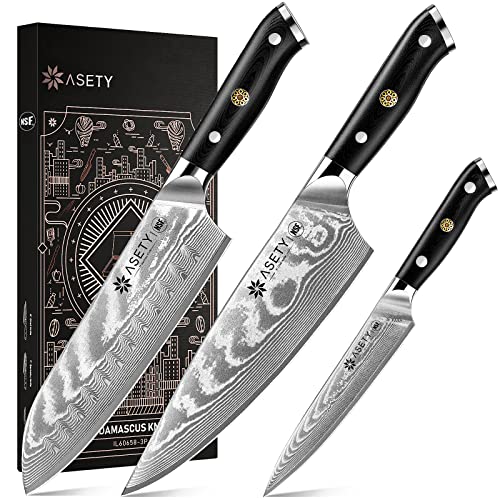
24/7 Cutomer Support: We stand by the quality of our products. Our team is available around the clock to assist with any questions. ASETY is more than just a knife- it's ideal for various special occasions. Hey, start your cooking story here!

【Damascus Knife Set】Atumuryou 3 piece knife set comes with 8" Chef Knife, 7" Santoku Knife and 3.5" Paring Knife, effortlessly handling everything from meat cutting and vegetable chopping to fruit preparation. Whether for home cooking or professional use, this is an ideal choice.

EXQUISITE DAMASCUS PATTERN WITH VG10 CORE: The Freelander 8-inch chef knife features a stunning Damascus pattern created through meticulous folding and forging of high-carbon steel. The VG10 steel core offers exceptional strength and durability, maintaining sharpness with ease for a long-lasting cutting experience.