Finding the right serrated knife can be tricky, especially when you want something that slices smoothly without crushing what you’re cutting. These knives come in various sizes, from small 4-5 inch steak blades to longer 8-10 inch bread knives, each suited for different tasks.
Knowing which pattern and size fit your kitchen needs makes all the difference. Keep reading to discover how to choose and care for the perfect serrated knife.
What Are Serrated Knives and How Do They Work?
Serrated knives work by using a series of small, jagged teeth along the blade edge. These teeth grip and bite into surfaces, making them especially effective for cutting through tough or crusty materials. Instead of applying downward force and pushing straight down, you use a gentle sawing motion. The points concentrate pressure at specific spots, allowing you to start cuts with less effort, even on slippery or hard surfaces. While damascus steel blades are often prized for their pattern and edge retention, serrated versions remain less common in top damascus knife reviews. Your cutting technique is crucial: a controlled back-and-forth stroke yields the best results. This motion helps the serrations slice through crusty bread, fibrous vegetables, or other tough materials without squashing their soft interiors. Maintenance is also simpler—since only the raised teeth contact surfaces during cutting, the blade wears down more slowly than a plain-edged knife. As a result, a serrated blade stays effective longer and requires sharpening less frequently. For hunters tackling game, however, this same sawing action can struggle with skinning tasks, where a straight edge offers better control for precise membrane cuts. Unlike plain edges, serrated blades are less prone to wear from cutting on hard surfaces, a durability advantage similar to how cutting board wax helps protect wooden boards from moisture damage.

Premium Quality Blade: This bread cutting knife is crafted from high carbon stainless steel (0.26%-0.35% carbon, 12%-14% chromium), the best bread knife’s blade is oil-tempered and heat-treated to HRC 53±1 for optimal sharpness and durability. Precise 2.3mm thickness ensures a perfect balance between sharpness and toughness

CLEAN SLICES FOR CRUSTY LOAVES – The long 10-inch serrated blade grips sourdough and artisan crusts while cutting through soft interiors with less crushing.

Ultimate 10-Inch Professional Blade: The ideal 10 inch bread knife for serious bakers. Its extended length allows for single-motion slicing through large sourdough bread boules and artisan bread without the need for repetitive sawing, ensuring a clean, bakery-quality finish every time
The Best Foods for Serrated Knives (And When to Use Them)
Serrated knives excel when slicing through foods with tough exteriors and tender interiors. Use yours first on crusty sourdough or a ripe tomato; the serrations grip the hard crust or skin without crushing the soft inside. They produce clean cuts through citrus rinds and melon skins, ensuring you don’t damage the delicate flesh. When preparing sandwiches, a gentle sawing motion with a serrated blade prevents squeezing out the filling, maintaining its shape and texture. Firm-cased cured meats also benefit from the steady grip, making slicing safer and more precise. Pair your serrated knife with proper storage solutions to keep the teeth sharp and consider decorating techniques that require precise, crumb-free cuts for garnishes or layered desserts. Whenever the exterior feels firm but the interior stays tender, your serrated knife is often the best tool for the job. For charcuterie boards, the same logic applies when cutting dense cured meats without tearing them, and design tips can help you present a clean, professional arrangement. For truly hazardous tasks like carving dense wood, the same gripping principle applies to cut-resistant gloves that protect against accidental slips. Maintaining the cutting edge of your serrated knife requires a specialized sharpening rod designed to fit between the scalloped teeth.
The 4 Main Types of Serrated Knives and How to Choose Blade Length
Serrated knives come in a variety of blade lengths to suit different tasks. The most common sizes are 8 to 10 inches for bread knives, which allow you to make long, smooth strokes through crusty loaves. For larger artisan breads, a 10 to 12 inch blade provides extra reach and control. Steak knives are typically 4 to 5 inches, offering precision for individual servings at the table. Utility serrated knives measure 6 to 7 inches, making them versatile for cutting a range of foods, from sandwiches to vegetables. Serrated paring knives are the smallest at 3 to 4 inches, ideal for detailed peeling and trimming delicate produce. For those seeking a higher level of craftsmanship, premium Japanese kitchen knives offer exceptional edge retention and precision in serrated designs. When comparing options, it’s helpful to read reviews that assess top rated utility knives for quality and value to find durable serrated models for everyday tasks. These sets often highlight serrated knife sets that balance performance and cost for home cooks.
Choosing the correct blade length depends on the food you handle: longer blades are suited for wide cuts and larger loaves, while shorter blades excel at detail work or intricate tasks. Storage considerations also matter; longer blades often require a dedicated slot or knife block to keep them safe and accessible. Material choice affects performance too—stainless steel blades resist corrosion and are easy to maintain, whereas high-carbon blades tend to stay sharper longer but may require more care. Picking the right size and material ensures your serrated knife performs well and lasts longer without crushing or damaging your food.
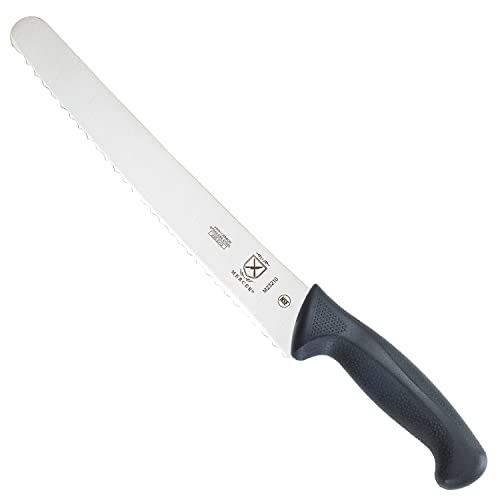
QUALITY CONSTRUCTION: Knife is crafted with one-piece high-carbon Japanese steel for easy edge maintenance and long-lasting sharpness
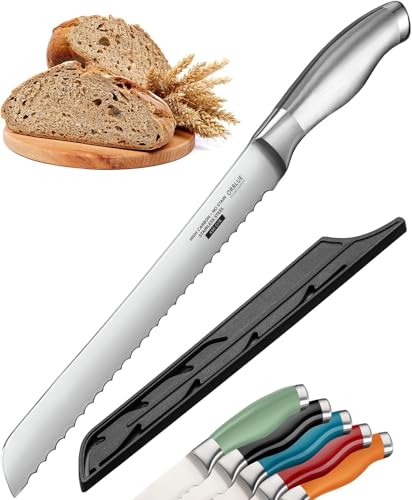
ULTRA-SHARP, CUTS EFFORTLESSLY: The Orblue Serrated Bread Knife blade has an ultra-sharp serrated edge that grips and effortlessly slices the toughest loaves of bread, to provide a smooth, clean cut. The blade runs 10 inches long with a 5-inch handle. Included as an added safety measure on the knife’s sharp tip is a rubber safety guard.

Razor-Sharp 10-Inch Blade: Rondauno bread knife with precision serrated edge effortlessly slices through hard sourdough with smooth, clean cuts
Matching Serration Patterns to Your Most Frequent Cutting Tasks
Matching your serration pattern to your most frequent cutting tasks is essential for optimal performance. The choice of tooth style directly influences how well your blade bites into food, so selecting the right pattern ensures cleaner cuts and less waste. For crusty artisan loaves, deeper and wider scallops are ideal because they can saw through hard exteriors without crushing the softer interior. When slicing delicate tomatoes or soft fruit, fine, pointed teeth provide controlled, clean cuts without tearing. A hybrid pattern combines both styles, making it versatile for tasks involving both tough and tender ingredients. Unlike ceramic knives, which are made from zirconia and require no sharpening, serrated blades maintain their edge through tooth design rather than material hardness. To further reduce the risk of bacterial buildup, you should hand-wash and dry your serrated knife immediately after each use, as plastic cutting boards can harbor microbes in deep grooves over time. Seasoning the board with mineral oil after cleaning helps seal surface pores and extend its lifespan against knife scratches.
Ergonomic handle design should not be overlooked; a comfortable grip reduces fatigue during repetitive slicing sessions. Rounded wave-like serrations work well for bread and cakes by gently preserving crumb structure, while micro-serrations offer precision for soft-skinned produce without tearing. Ultimately, match your serration pattern to your typical cutting behavior for better results, rather than relying solely on the blade’s appearance.

Expertly Crafted: Knives are made from premium 304 stainless steel for easy edge maintenance and long-lasting sharpness

ULTRA-SHARP, CUTS EFFORTLESSLY: The Orblue Serrated Bread Knife blade has an ultra-sharp serrated edge that grips and effortlessly slices the toughest loaves of bread, to provide a smooth, clean cut. The blade runs 8 inches long with a 5-inch handle. Included as an added safety measure on the knife's sharp tip is a rubber safety guard

BOLEXINO OFFSET BREAD KNIFE: BOLEXINO 9 Inch offset serrated bread knife is made of high quality stainless steel.This material makes the bread knife wear and rust resistant, corrosion resistant, offers decent edge retention for long-term usage.
How to Keep Your Serrated Knife Sharp (Without Ruining It)
Matching your serration pattern to your cutting tasks improves performance, but even the best pattern loses its bite without proper sharpening. Use a tapered or triangular rod that fits each gullet without widening it. For heavier tasks, diamond rods remove steel faster, while ceramic rods are better suited for light edge maintenance. Always sharpen only the beveled side, applying short strokes at the original grind angle. Work on one serration at a time until the rod matches the serration’s width. Using a top-rated zester for delicate citrus work can similarly benefit from precise tool selection to match the task. Selecting a quality sharpening stone that matches your rod material ensures consistent results across different edge types. Choosing the best knife storage also protects serrations from unnecessary wear between uses.
Don’t forget to remove burrs after sharpening. Flip the blade and gently deburr the flat side with minimal pressure. Fine-grit sandpaper or a light ceramic pass will clear away leftover shavings without dulling the new edge. Avoid aggressive back-and-forth motions or applying too much force, as this can deform the teeth. Store your knife properly to prevent serrations from rubbing against other utensils, and only sharpen when it begins to snag instead of slicing smoothly. Consistent regular maintenance is essential to preserve edge quality and prevent the need for extensive repairs.