Many of us wonder if plastic cutting boards are truly safe to use. On the surface, they seem convenient and easy to clean, but recent research suggests there might be more beneath the surface.
For example, a single plastic board can shed tens of millions of microplastics each year, with knife strokes releasing particles into your food.
While animal studies hint at potential health risks, the World Health Organization says human dangers are still unconfirmed.
Worn boards can also harbor bacteria, making proper care and timely replacement important.
Keep reading to understand whether your plastic cutting board is still safe to use.
How Many Microplastics Do Plastic Cutting Boards Actually Shed?
A single carrot-chopping session can release up to 1,114 microplastic particles from a plastic cutting board. This amount may seem small, but it adds up quickly—potentially reaching up to 79.4 million microplastics per person annually. The main factor driving this release is surface degradation. Repeated chopping wears down the board, causing it to shed more particles. Polypropylene boards tend to release 14 to 71 percent more particles by count than polyethylene ones. Each knife stroke contributes about 12 particles, and the more worn the board, the higher the microplastic buildup. Using a non-toxic oil like fractionated coconut oil can help condition wood boards, providing a safer alternative to plastic. Every time you use a damaged or heavily-used plastic cutting board, you are likely adding microplastics to your food. Interestingly, Arkansas stones are a natural alternative for sharpening knives, which could reduce the microplastic shedding by maintaining sharper blades on cutting boards. To minimize future contamination, you might consider storing knives on a magnetic kitchen strip instead of in a drawer, which helps protect blade edges.

THREE IDEAL SIZES FOR EVERY TASK - This bamboo cutting board set includes three essential cutting board sizes - 15x10”, 12x8”, 9x6” - covering all your kitchen needs. Use the small board for quick fruit prep, the medium for slicing vegetables, and the large for carving meats, rolling dough, or creating an elegant charcuterie board spread.
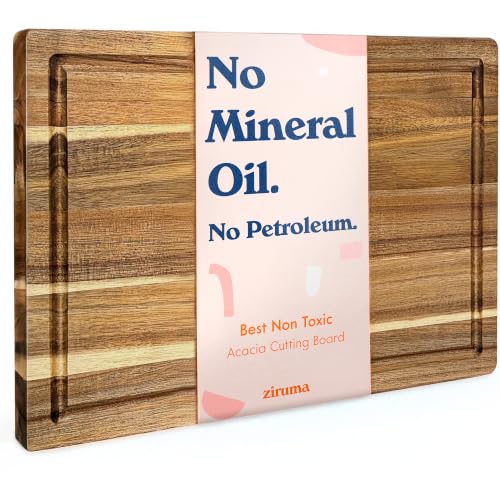
𝗙𝗶𝗻𝗶𝘀𝗵𝗲𝗱 𝘄𝗶𝘁𝗵 𝗕𝗲𝗲𝘀𝘄𝗮𝘅 𝗮𝗻𝗱 𝗡𝗮𝘁𝘂𝗿𝗮𝗹 𝗢𝗶𝗹𝘀 – 𝗡𝗼 𝗠𝗶𝗻𝗲𝗿𝗮𝗹 𝗢𝗶𝗹 𝗼𝗿 𝗣𝗙𝗔𝗦: Unlike standard cutting boards, ours is conditioned with a clean blend of unbleached beeswax, flaxseed oil, and lemon oil—never 𝗽𝗲𝘁𝗿𝗼𝗹𝗲𝘂𝗺 𝗯𝘆𝗽𝗿𝗼𝗱𝘂𝗰𝘁𝘀 𝗹𝗶𝗸𝗲 𝗺𝗶𝗻𝗲𝗿𝗮𝗹 𝗼𝗶𝗹. This natural finish nourishes the wood and keeps your food contact-safe. No synthetic coatings, no forever chemicals—— just a clean, natural treatment you can trust.
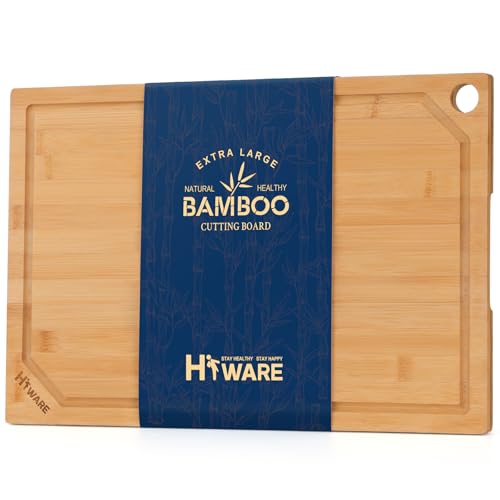
100% Premium Natural Bamboo: This cutting board is crafted from sustainable bamboo, showcasing the natural grain and beauty of the material. The surface has been carefully polished and conditioned with food-safe oil for an exceptionally smooth, burr-free finish that resists cracking and ensures long-lasting performance. Featuring a generous, sturdy design with extra thickness for enhanced durability, it stays firmly in place on your countertop—no slipping or shifting while you work.
Does Microplastic Exposure From Cutting Boards Harm Health?
Current evidence suggests that microplastic exposure from cutting boards is unlikely to immediately harm your health, but it is a potential risk. Animal and cell studies indicate that polypropylene particles can disrupt gut barrier function, and polyethylene may alter gut and liver metabolism. These findings are biologically relevant but do not necessarily predict the same effects in humans. Unlike serrated knives, which rely on serrated teeth to tear through tough surfaces rather than slice cleanly, microplastic shedding involves a different mechanism of physical wear.
Ingested microplastics are most likely absorbed in the gut, where they might cause inflammation and oxidative stress over time. Accumulating microplastics could potentially lead to hormonal or immune system changes, but there is not enough evidence to confirm this. The World Health Organization’s review found that data are insufficient to determine any definitive health risks from microplastic exposure through food contact surfaces like cutting boards.
While short-term laboratory tests show little to no toxicity, these tests do not account for long-term, whole-body effects. Overall, you should stay cautious and minimize your exposure, even though there is no proven danger at this point.
Why Knife Marks Increase Microplastic Shedding From Boards
Each time you cut into a plastic board, you create surface damage that makes microplastic shedding worse. The knife blade physically shaves off tiny polymer fragments, and as scratches deepen with continued use, more material becomes available to release with each cut. Worn boards shed significantly more microplastics than smooth ones because of this accumulated damage. Every cut leaves behind visible and microscopic knife marks that act like miniature abrasion pathways, turning what looks like superficial scratches into sources of particle release. The blade essentially scrapes plastic loose, pushing tiny fragments directly into your food. A high-quality knife set with a block can minimize unnecessary surface abrasion by ensuring blades stay sharper longer. Using a boning knife with a durable edge reduces the frequency of blade changes that can further scar the board. Home cooks following practical guidance on knife maintenance can preserve board surfaces by reducing the force required per cut.
Studies estimate that a single cut stroke can release between 100 and 300 microplastics, with scratched areas harboring roughly 3,000 particles per square millimeter. As the surface becomes increasingly scarred over time, the amount of polymer fragments shaved off with each use rises steadily. This ongoing damage transforms a once-smooth plastic surface into a source of continuous microplastic shedding, especially when the board is heavily scratched and aged.

FLEXIBLE PLASTIC CUTTING BOARDS FOR KITCHEN — 6 thin, colorful plastic cutting mats that bend: fold one into a funnel and pour chopped ingredients straight into the pot with far less mess. A lightweight, foldable cutting board set for everyday prep.

Large Enough Size - The flexible cutting mats for cooking dimensions are 14.65*11.02 inches, which makes enough space for food. The lightweight design is great for college apartments, small kitchens, RVs, or camping.

Premium Quality Material: made of BPA-free material. The cutting board of thickness of 1mm is more durable than the similar product on the market and built to last.
Do Worn Plastic Boards Pose Both Microplastic and Bacterial Risks?
Worn plastic cutting boards pose both microplastic and bacterial risks. As their surface becomes more damaged, knife grooves deepen and multiply, creating microbe-friendly crevices that trap food residue and moisture. These microenvironments make cleaning difficult, allowing bacteria to survive cleaning efforts and multiply overnight. Research indicates that worn plastic boards harbor higher bacterial counts than wood, especially when scoring is severe. The damage not only releases millions of microplastic particles into your food but also provides a protective habitat for pathogens. Every cut increases microplastic shedding and bacterial retention, turning your worn board into a dual threat to food safety. This contrasts with wood, which has natural antimicrobial properties that can reduce bacterial survival even in scored surfaces. Choosing a high-quality Japanese kitchen knife with superior hardness can minimize deep scoring on plastic boards over time. For those seeking alternatives, reviews of best vegetable choppers highlight options that offer better durability and safety over time.

ULTRA DURABLE STRENGTH: 3rd Party Tested for durability, thick cutting boards have a nonporous surface that won’t splinter or peel, unlike wood cutting boards or a bamboo cutting board; deep grooves help catch messy juices while our strong design is built to last in your home to handle tough messes

KITCHEN ESSENTIAL: This versatile cutting board is perfect for everyday use, ideal for cutting, slicing, and chopping a variety of meats, poultry, fruits, and vegetables.

PREMIUM QUALITY AND DURABLE: THETCHRY plastic cutting boards for kitchen is made of high-quality food-grade plastic, which is safe and healthy. And the surface of the cutting board is tough enough to withstand chopping, slicing and dicing various foods. Even after long-term use and repeated washing, it will not bend or break, and can be used by you and your family for a long time.
When to Replace Your Plastic Board: and Microplastic-Free Alternatives
Replace your plastic board when deep knife grooves appear or the surface shows signs of wear. Worn plastic boards shed microplastics and can harbor bacteria, making them unsafe for use. If the surface is heavily scratched, stained, or warped, it’s time to switch to a new board because cleaning becomes ineffective, and bacteria can hide in imperfections. Any structural damage that prevents proper sanitation means you should retire the board to maintain hygiene. Users of high-quality knives, such as Japanese Gyuto blades, should be especially cautious, as these sharp edges can quickly deepen grooves in soft plastic. For optimal performance, choose a knife designed for skinning deer that resists dulling even on worn surfaces.
Opt for wood or bamboo boards as they are excellent microplastic-free alternatives. Maple, walnut, and acacia boards can self-heal minor cuts, helping them stay smoother longer. For presentation or prep work, these boards often serve a dual purpose. Titanium or glass boards also do not shed microplastics but may be tougher on knives. Regardless of the material, replace or retire any board that cannot be properly sanitized to ensure safe food preparation.

100% BAMBOO: Kikcoin bamboo wooden cutting boards for kitchen preserves the original bamboo grain and texture.The surface is carefully polished and coated with food-grade oil, ensuring a smooth, burr-free finish that resists cracking

STOP RUINING YOUR COUNTERTOP WITH STEAK JUICE: Slicing a hot steak on wood means blood and marinade soaking into the grain, or running off the edge onto your counter. The titanium side's deep-groove perimeter traps every drop, so cleanup is a wipe, not a scrub. The 16 x 12 inch surface holds a full brisket, a spatchcocked chicken, or a tray of vegetables without crowding
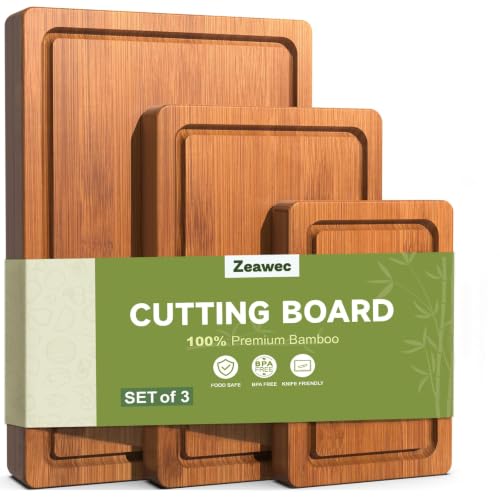
【Say Goodbye To Warped Boards】: Enjoy long-lasting durability with carbonized bamboo that resists cracking and splitting, even with heavy daily use.