If you’re trying to choose between a Nakiri and an Usuba, your decision mostly comes down to the type of edge each knife has. The Nakiri features a double-bevel, V-shaped edge that’s straightforward to sharpen and great for everyday vegetable prep.
The Usuba has a single-bevel grind, which requires more skill but excels at delicate, precise tasks like katsuramuki. Keep reading to understand which knife better fits your style.
The Core Difference Between Nakiri and Usuba Knives
The main difference between Nakiri and Usuba knives lies in their purpose and construction. Nakiri knives are designed for quick, everyday vegetable prep, making them ideal for home use. They typically feature stainless steel blades, which are easier to maintain and resist rust and corrosion. Usuba knives, on the other hand, are professional tools built with high-carbon steel, offering superior sharpness and edge retention but requiring more careful maintenance. For best results with any Japanese knife, selecting one of the best sharpening stones is crucial for maintaining a razor-sharp edge. For buyers choosing between them, a knife set with block that includes a Nakiri is often the better value for home kitchens. When considering overall craftsmanship, wood handles provide an excellent balance of durability and aesthetic appeal for both knife types.
Usuba knives hold cultural significance in Japanese cuisine, where chefs spend years mastering their single-bevel cut for precise tasks like *katsuramuki* (thin sheet slicing). These knives demand traditional technique to achieve their full potential, making them less suitable for casual cooks. Meanwhile, Nakiri knives are user-friendly, offering efficiency without specialized skill—perfect for quick prep sessions and everyday cooking.
The Single-Bevel Usuba Vs. Double-Bevel Nakiri
The most immediate difference you’ll notice between a Nakiri and an Usuba is the bevel. The Usuba has a single-bevel grind, resulting in an asymmetrical edge that favors precise cuts and traditional Japanese techniques. This grind typically includes a urasuki hollow back, which facilitates advanced cuts like katsuramuki. Because of its design, the Usuba is best suited for specialized tasks and requires specific handedness and dedicated sharpening skills. Its geometry also makes it more brittle, especially since it is usually made of high-carbon steel, which can chip or crack if misused. When selecting a storage solution, many cooks pair a specialty knife like this with top knife holders that protect the delicate blade. For maintaining the Usuba’s unique single-bevel edge, you will need specific sharpening stones that accommodate asymmetrical grinds. Comparing quality and value across knife types can help buyers choose between specialized and versatile options.
In contrast, the Nakiri features a double-bevel V-shaped edge, which is symmetrical and balanced. This design makes it ambidextrous and easier to use for most home cooks, especially for everyday vegetable prep. The double-bevel also simplifies sharpening, allowing you to maintain the edge with standard honing techniques. While both knives often use high-carbon steel, the Nakiri’s geometry provides greater toughness and durability, making it a more forgiving tool for general kitchen tasks.
Should You Buy a Nakiri or a Usuba?
A Nakiri is generally the better choice for home cooks seeking a versatile and low-maintenance vegetable knife. It features a double-bevel design that is easy to handle for right- and left-handed users, making it more forgiving for those still learning knife skills. The Nakiri also tends to be less expensive than an Usuba, offering more budget-friendly options and broader color choices. Its simpler storage solutions, whether on magnetic strips or in tool blocks, are suitable for most kitchens, though you should still use edge-protective storage to keep the blade from rattling against hard surfaces. Maintenance is straightforward because sharpening can be done on standard whetstones without worrying about side-specific angles. Overall, if you want a practical, easy-to-use vegetable knife that suits frequent household use, the Nakiri is an excellent option.
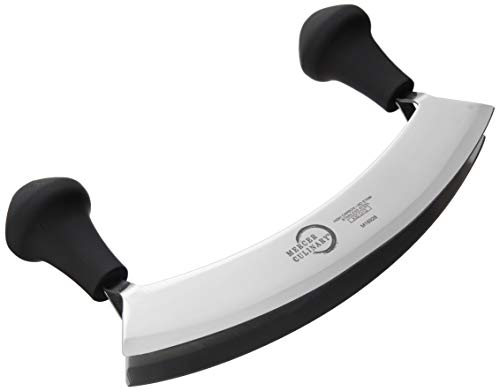
QUALITY CONSTRUCTION: Made with razor sharp Japanese steel double blades to make clean cuts and help with more efficient production

Constructed of Japanese SG2 Micro Carbide powder stainless steel, Japanese kanji is hand engraved on the blade; 63 Rockwell Hardness
Nakiri Vs. Usuba Cutting Performance: Chopping Power Vs. Delicate Precision
The Nakiri outperforms the Usuba in speed and efficiency for bulk vegetable chopping. Thanks to its double-bevel grind and flat edge, it can deliver straight push-cuts quickly and smoothly, making it ideal for processing large quantities of produce. Its lighter weight also reduces fatigue during extended use, aligning well with modern cooking routines. Pairing it with a cutting board with juice grooves helps manage released moisture during heavy chopping sessions. Using Arkansas stones for sharpening ensures both knives maintain their optimal edge geometry over time.
Conversely, the Usuba excels in precision and delicate cuts, thanks to its single-bevel geometry that creates an ultra-sharp, narrow edge. It’s especially suited for techniques like katsuramuki, which require thin, translucent slices that maintain cell integrity. The trade-off is that the Usuba tends to steer during slicing, requiring more control and skill to achieve clean, consistent results. While it demands a steadier hand, it rewards you with expert-level finesse. Ultimately, your choice depends on whether you prioritize speed and efficiency or refined artistry and delicate work. For those who also need a reliable way to carry their knife, belt clips for sheaths offer a convenient hands-free solution during kitchen prep.

ALL-PURPOSE PREP Knife: Ideal for chefs or home cooks to handle heavy duty preps. A truly all-around nakiri cooking knife built for vegetables, fruits, and boneless meat. Slicing meat is effortless. This chef Knife is the ultimate kitchen tool. Every knife lover needs this kitchen essential knife.

ALL-PURPOSE NAKIRI KNIFE: The classic 7 inch kitchen knife is flexible for all kinds of heavy duty preps, like slicing, dicing, chopping and mincing. A truly all-around cooking knife, is easy to re-sharpen, clean and maintain.

High-quality stainless steel blade
Tasks Where the Usuba Absolutely Dominates
The Usuba excels at tasks that require surgical precision, particularly *katsuramuki*—the rotary peeling technique used to convert vegetables like daikon or cucumber into a single, unbroken sheet. Its single-bevel geometry ensures the cut path remains extremely stable during long, controlled strokes, making it ideal for this delicate process. This design allows you to create perfectly thin, continuous sheets that are difficult to achieve with other knives. Unlike a santoku knife, the Usuba’s asymmetric blade is specifically engineered for this level of control, and unlike serrated knives, it relies on a razor-sharp edge rather than sawing action.
Beyond katsuramuki, you’ll find the Usuba indispensable for vegetable decoration. Its sharp edge enables you to carve intricate fans, blossoms, and detailed garnishes that elevate high-end plating. The knife’s precision also makes it suitable for ultra-thin slicing, where shaving daikon or carrots with minimal cell damage is essential to preserve flavor and appearance. Additionally, the Usuba produces fine julienne strips with consistency and clean edges, a feat that double-bevel knives generally struggle to match. For chefs also considering top chef knife sets, the Usuba’s specific performance highlights why single-bevel knives are valued for quality and precision work over double-bevel alternatives.
In essence, the Usuba’s craftsmanship and single-bevel design make it the go-to tool for professional-grade vegetable prep where accuracy and finesse are paramount.
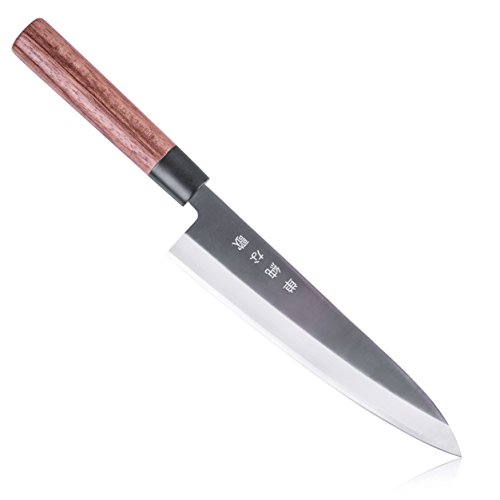
HIGH QUALITY STAINLESS STEEL: Our 420HC stainless steel blades are heat treated for optimum hardness and edge retention while maintaining the ability to be sharpened to a razor edge. The steel used is perfect for kitchen specific tasks because of its corrosion resistance, preventing it from oxidizing with rust when it comes to contact with meat, fruits and vegetables. Our steel blades run the length of the knife and through the handle for a full-tang design.
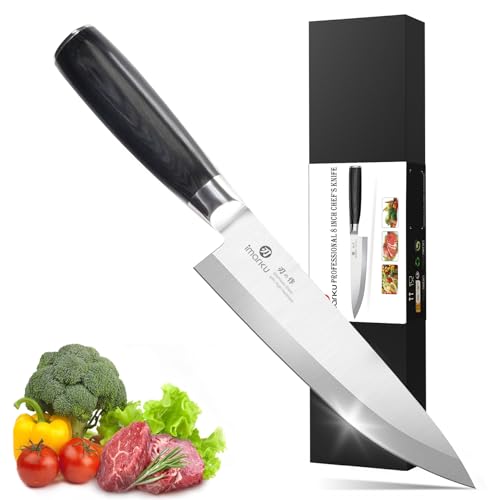
Single Bevel Blade Kitchen Knife: The imarku Rasor sharp Chef Knife features an expertly hand-sharpened blade with a single bevel design, for faster and smoother. This unique kitchen chef knife, tailored for right-handed users. Each cut retains maximum freshness and taste, making this carbon steel knife the perfect tool for achieving professional experience

The Ginsu Katana Paring Knife includes one 3.9-inch petty knife designed for peeling, trimming, slicing, and detailed kitchen preparation. Its compact size and traditional single-bevel blade provide excellent precision, making this kitchen paring knife a dependable choice for everyday food preparation.
Nakiri Vs. Usuba Blade Shape: Straight Edges Vs. Taller Profiles
The Usuba’s taller profile makes it more commanding than the Nakiri’s shorter blade. This extra height provides better clearance for your knuckles during rapid, straight-down chopping, making it easier to work quickly without accidental contact. The Nakiri’s more compact and lower profile feels more maneuverable and intuitive for casual prep tasks, while the Usuba’s taller design requires a more deliberate hand. Both blades feature flat cutting edges that maintain full contact with the board, but the Usuba’s refined geometry allows for sharper edge grind techniques, resulting in finer and more precise cuts. Keeping wooden cutting boards well-conditioned with food safe mineral oil helps extend their lifespan and protect the delicate edge geometry of these knives. Ergonomically, the Nakiri is suited for everyday use, fitting comfortably in a relaxed kitchen environment, whereas the Usuba’s formal and taller profile is better aligned with specialized, vertical slicing work. This contrast in design resembles the high cost of crafting specialized tools, where precision geometry and premium materials raise the price for professional-grade performance. To maintain such fine edges, a regular sharpening schedule ensures the blade stays optimally sharp for precise cuts. Essentially, you’re choosing between a straightforward, user-friendly knife and one optimized for precision and professional technique.
Nakiri Vs. Usuba Specs: Length, Weight, and Hardness Compared
Nakiri and Usuba knives differ significantly in their specifications, especially in blade length, weight, and hardness. Nakiri blades typically measure between 150 and 180 millimeters, making them more compact and easier to control. Usuba knives start at around 180 millimeters and can extend up to 240 millimeters, placing them in a longer, more professional range suited for precise vegetable work.
Weight also varies: nakiri knives generally weigh between 130 and 200 grams, which makes them lightweight and nimble. Usuba knives tend to be heavier, ranging from 200 to 350 grams, mainly due to their longer blades and thicker spines for durability and strength.
In terms of hardness, nakiri blades fall between 57 and 63 on the Rockwell Hardness Scale (HRC). Usuba knives are usually harder, sitting between 60 and 65 HRC. This higher hardness level is typical of usuba blades made from carbon steel, which often max out at 65 HRC. Nakiri blades can be made from both stainless and carbon steels, so their hardness can vary within that range.
Handle design also reflects their different uses. Nakiri knives typically have shorter blades with proportionally similar handles for easy maneuvering. Usuba knives, with their longer blades, have handles designed for formal, precise handling, accommodating the extra length and weight for better control in professional settings.
Nakiri Vs. Usuba Maintenance: Which Knife Is Easier to Keep Sharp?
The Nakiri is much easier to keep sharp than the Usuba. Its double-bevel edge is forgiving and can be sharpened on a whetstone every 2 to 4 weeks without needing to obsess over the angle. You simply repeat the same bevel on both sides, which makes maintenance straightforward and safer during sharpening. For those seeking top Japanese kitchen knives, the Nakiri offers a less demanding path to consistent performance.
In contrast, the Usuba’s single-bevel design demands more precise upkeep. Maintaining its concave back (ura) and flat bevel side requires daily touch-ups and weekly sharpenings. One slight mistake in angle can damage the knife’s geometry, risking its performance. While the Usuba rewards users who enjoy precision work, its maintenance routine is strict and time-consuming. If you prefer simple, low-maintenance knives, the Nakiri is the practical choice.
Nakiri Vs. Usuba Price: Is the Usuba Worth the Premium?
The Nakiri generally offers better value for most users compared to the Usuba. Entry- and mid-level Nakiris typically range from $80 to $240, with many factory-produced options that are reliable and accessible. In contrast, Usubas start at around $30, but quality versions usually cost between $120 and $230, with premium models reaching $360 to $395. The higher price of Usubas comes mainly from their specialized single-bevel craftsmanship, which allows for very precise cuts but requires skill to use effectively. Although higher-end Usubas may be made from blue or white steel, the additional cost is driven more by the craftsmanship and tradition than material durability alone. For those seeking top performance from these knives, the best Gyuto knives offer a similar focus on sharpness and edge retention in a double-bevel format. Brand reputation also influences prices, with Japanese specialist makers charging more for their expertise. When comparing options, it’s worth checking reviews on sharpening rod performance to maintain that precise edge over time. For those prioritizing a versatile knife, the best steak knives offer a different standard of edge retention for cutting cooked meat.
If you need a versatile, easy-to-use vegetable knife for general kitchen tasks, the Nakiri provides great value at a lower cost. The Usuba’s premium price is justified primarily if you demand the extremely thin, perfectly flat cuts typical of traditional Japanese vegetable prep. For most home cooks, the Nakiri covers your needs without the extra expense, while the Usuba’s higher price hinges on mastering a technique you might never fully utilize.

【Traditional Style Knife】A traditional Japanese-style vegetable knife, Traditionally, Nakiri knives were used to finely slice vegetables, but they are useful for creating clean cuts of root vegetables and precisely cutting delicate vegetables that might be squished under a heavier blade. Many professional chefs favor our Nakiri knives over a traditional Western knife.
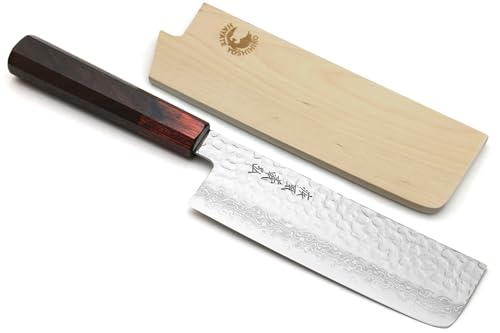
Blade Material: VG10 Stainless Steel / Edge Angle: Double Edged / Grade: Damascus / Handle Shape: Octagonal / HRC: 60 / Knife Style: Nakiri Vegetable Knife / Saya Cover: Natural Magnolia Wood / Stain Resistant: Yes / Made in Japan

Blade Material: VG10 Stainless Steel / Edge Angle: Double Edged / Grade: Damascus / Handle Shape: Octagonal / Hrc: 60 / Knife Style: Nakiri Vegetable Knife / Saya Cover: Magnetic Wood / Stain Resistant: Yes / Made in Japan
So, Which Knife Should You Actually Buy?
For most home cooks, a nakiri is the better choice. It’s easier to handle, sharpen, and maintain, which enhances safety by reducing slips during prep. Its double-bevel edge makes it more forgiving of technique errors, and durable materials mean it can last with simple care.
A usuba is suitable only if you frequently perform precise and decorative vegetable work, like katsuramuki. Its single-bevel edge requires advanced knife control to use correctly, and maintaining it involves extra attention. Beginners often find its steep learning curve challenging and risk damaging its asymmetrical grind if not careful.
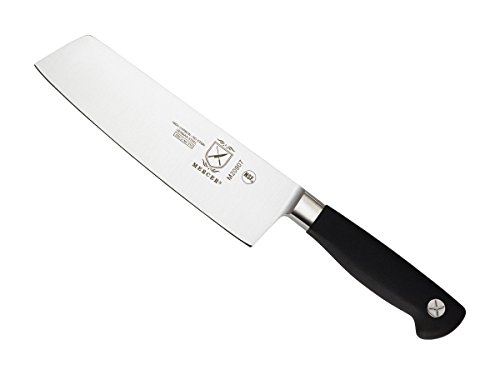
QUALITY CONSTRUCTION: Knife is precision-forged with high-carbon German steel for better durability, and taper-ground edge allows for increased efficiency when cutting along with incredible long-lasting sharpness

A BOX INCLUDES: One 6-inch stainless steel nakiri knife

QUALITY CONSTRUCTION: Knife is precision-forged with high-carbon German cutlery steel for incredible long-lasting sharpness