
Wondering which protects your board better—board butter or mineral oil? The quick answer is that they serve different purposes: mineral oil seeps deep into the wood to keep it hydrated, while board butter creates a water-resistant surface layer.
Knowing how and when to use each can make a real difference in maintaining your board’s long-term health. Here’s what you need to know to get it right.
What’s the Real Difference Between Board Butter and Mineral Oil?
Board butter generally contains a blend of mineral oil and beeswax, creating a semi-solid finish at room temperature. In contrast, mineral oil is a pure liquid that seeps into wood fibers to provide moisture without forming a protective top layer.
Because of its wax content, board butter spreads less easily and usually needs to be warmed before application. It leaves a glossy, satin-like sheen and forms a waxy barrier that better resists light moisture. Mineral oil, on the other hand, absorbs quickly into the wood, requiring more frequent reapplications to maintain hydration. Proper filtering of the beeswax ensures clear and pure beeswax for a high-quality final product. Applying multiple coats of mineral oil helps ensure deeper saturation into dry wood fibers. For those who also value their cutting tools, a quality knife set can benefit from the same protective routine.
When comparing cost and durability, board butter typically offers longer-lasting protection due to its wax barrier, though mineral oil is less expensive upfront.
The choice depends on your needs: use mineral oil for quick hydration and easy, frequent touch-ups, or opt for board butter when you want added protection and an enhanced appearance with a durable, glossy finish.

Protects Wood from Drying and Cracking - Wood wax, butter, cream, and conditioner is ideally formulated to protect your wooden tools for a lifetime.

Helps Protect Wood from Drying: Wood wax, butter, cream, and conditioner is formulated to help protect and maintain your wooden tools
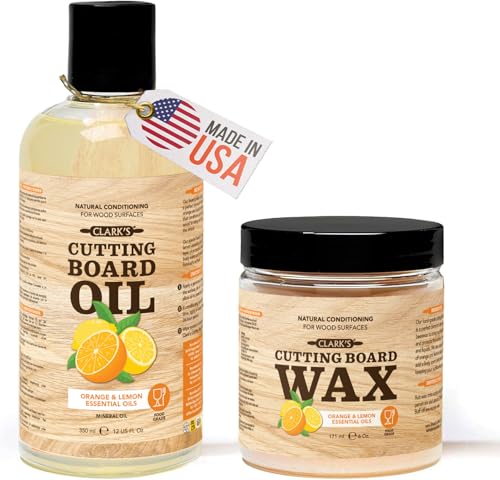
PERFECTLY PAIRED FORMULA: Food grade mineral oil for wood cutting board and wood wax are designed to work seamlessly together for optimal wood care and maintenance results
Why Mineral Oil Is Essential for Deep Conditioning
Mineral oil penetrates deep into wood fibers rather than just coating the surface, making it essential for effective deep conditioning. You will typically need to apply between three to six coats until the wood stops absorbing, indicating it has achieved optimal saturation. This process fills the pores within the wood, slowing water absorption, and helps prevent drying, shrinking, and cracking over time. When working with heavily used or textured boards, mineral oil’s non-rancid property ensures your conditioning treatment remains stable and doesn’t spoil. To choose an eco-friendly option, select USP-grade mineral oil, which is chemically inert and food-safe. For dry, pale, or rough wood, continual application restores a rich, lustrous appearance and extends the board’s lifespan. Reapply whenever water stops beading on the surface to maintain the wood’s moisture balance. Thirteen Chefs Mineral Oil offers a cost-effective, long-lasting solution for maintaining wood surfaces, requiring only a 1oz treatment every three months for an 18-inch cutting board. Storing boards vertically in a slot-style rack helps protect edges by allowing air to circulate and preventing moisture buildup that can warp the wood. To maintain a hygienic surface, regularly wipe away residue from sharpening stones with a soft cloth and mild soap after use.
Why Board Butter Beats Oil for Surface Protection
Board butter offers superior surface protection compared to mineral oil alone because of its beeswax content. The beeswax creates a moisture-repelling top layer that forms a surface barrier behind the surface. While mineral oil penetrates into the wood, butter stays on the surface, providing better moisture resistance. Water droplets bead up and roll off instead of soaking into the wood, reducing wear from everyday splashes and spills. Additionally, the wax finish adds a natural luster to your cutting board. Applying a thin layer of board butter after oiling results in a durable, protective film that mineral oil by itself can’t achieve. This dual approach conditions the wood underneath while creating a shield above for longer-lasting protection. The formula, containing only USDA organic beeswax and mineral oil, ensures a food-safe finish that extends the life of your wooden tools. For those looking to make a lasting investment, selection of best carving boards often emphasizes the value of a tough surface seal like this. Many top-rated cutting board reviews highlight how a well-sealed surface prevents damage from frequent knife use and washings. When comparing options, buyers should prioritize quality and value in a set that includes both oil and wax components, as this combination delivers the performance that top-rated cutlery reviews consistently recommend for maintaining wooden surfaces.

NOURISHES DRY KITCHEN WOOD - WU HOUSE Wood Butter helps condition dry cutting boards, butcher blocks, wooden spoons, serving boards, charcuterie boards, and other unfinished wooden kitchen pieces.

FOOD-GRADE MINERAL OIL FOR CUTTING BOARDS: Helps restore and protect dry cutting boards, butcher blocks, and wooden kitchen surfaces. Refreshes dull, worn wood and helps prevent cracking or splitting; works on bamboo, teak, acacia, olive wood, and hardwood boards

SEALS & PROTECTS CUTTING BOARDS: Designed to condition, seal, and protect wood cutting boards, butcher blocks, and wooden utensils. Food-grade mineral oil penetrates dry wood to condition it, while beeswax creates a protective surface barrier that helps keep wood from drying out.
Should You Combine Mineral Oil and Board Butter?
Combining mineral oil and board butter is a common and effective practice. Board butter typically contains mineral oil plus beeswax, often in a 3:1 ratio. First, apply mineral oil to deeply condition the wood, allowing it to penetrate the surface. Then, top with the board butter to create a water-resistant wax layer that protects the wood’s surface. This layering enhances preservation by providing both deep absorption and surface defense. To check how well the treatment resists absorbing liquids, drop a small amount of food coloring on the board; the combined treatment will resist staining better than either product alone. When preparing the mixture, gently heat the mineral oil and beeswax together—avoid overheating—and stir while cooling to prevent separation. Using too much beeswax can make the coating stiff, but a balanced mix reduces excess waxy stiffness and allows for easy buffing. Overall, layering mineral oil and board butter offers a more comprehensive protection for your wooden items than using either alone.

NSF CERTIFIED FOOD GRADE - This premium mineral oil is NSF certified and lab-tested to meet the strictest food safety standards. Colorless, odorless, tasteless, and gluten-free — perfect for cutting boards, butcher blocks, and all food-contact surfaces.

NSF CERTIFIED FOOD GRADE - This premium mineral oil is NSF certified and lab-tested to meet the strictest food safety standards. Colorless, odorless, tasteless, and gluten-free — perfect for cutting boards, butcher blocks, and all food-contact surfaces.

Revitalizing blend prevents drying and cracking of hardwoods and bamboo
When to Pick Mineral Oil vs. Board Butter
Choose mineral oil when your board appears dry, has rough fibers, or needs deep penetration. It’s ideal for the initial seasoning process because it penetrates deeper into wood fibers rather than just forming a surface coating. This internal conditioning is especially important for new, stripped, or heavily used boards that require a thorough refresh. Mineral oil is quick to absorb and helps restore the wood’s natural moisture, making it a reliable choice for internal hydration and protection.
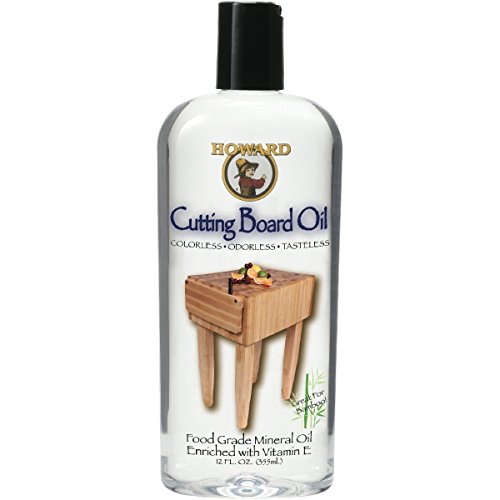
Cutting Board Oil is a deep penetrating 100% Pure USP Food Grade Mineral Oil that is tasteless, odorless, colorless, and will never go rancid

FOOD GRADE QUALITY: Premium mineral oil designed for direct and indirect food contact, meeting U.S. FDA regulations and USP standards for maximum safety

FOOD SAFE MINERAL OIL FOR WOOD CUTTING BOARD : Be safe with our 100% foodsafe mineral oil for use on natural wood. It's a perfect fit for all of your wood cutting boards, utensils, countertops, salad bowls, wooden products, and stainless steel since it's odourless and colorless!
How Often to Oil and Butter Your Board
The ideal frequency to oil your board depends on how often and heavily you use it as well as the storage conditions. For a new board, apply oil once daily during the first week to build initial protection, then switch to once a week for the first month. Boards used daily should be oiled every 3 to 4 weeks, while those used heavily for prep work may need oiling every 2 to 3 weeks. Moderate-use boards can go 6 to 8 weeks between applications. Light-use boards, such as those stored in a rarely used corner, can wait 2 to 3 months before re-oiling. If you live in a harsh climate or experience heated indoor environments during winter, you should check your board more frequently to prevent drying out. A dedicated block keeps knives sharp between uses, but self-sharpening knife blocks are not a substitute for proper board care. To safely remove any excess or rancid oil that has accumulated, you can use a paste of baking soda and water to gently scrub the surface without damaging the wood. High-quality knives with built-in sharpeners also require regular board maintenance to perform their best.
Keep an eye out for signs that your board needs oiling. A dry, rough, or pale surface indicates dehydration, while water soaking in instead of beading shows the oil layer is compromised. Reapply oil whenever these signs appear. Regularly maintaining your board with oil isn’t just for appearance; it helps prevent bacteria buildup and prolongs its lifespan. Checking your board every few weeks and oiling when it appears thirsty will keep it in safe, beautiful condition.
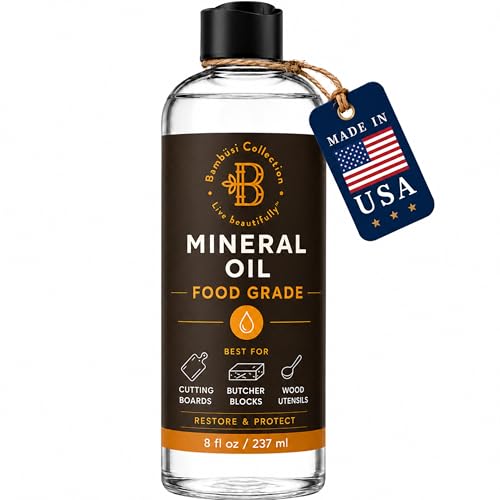
FOOD SAFE MINERAL OIL FOR CUTTING BOARDS: 100% pure food grade white mineral oil with nothing added. Clear, odorless, unscented and tasteless, so it won't change the flavor of food you prep on your board. Safe on wood cutting boards, butcher blocks and any wooden surface that touches food

REVITALIZING FORMULA BLEND prevents drying and cracking of hardwoods and bamboo. Great for restaurant cutting boards, great for home kitchens even chef cutting boards. This is the safest conditioner and will rejuvenate and revitalizes cutting boards. Great size for restaurants and industrial kitchens.

SIMPLE INGREDIENTS - Beeswax, Fractionated Coconut Oil, Pure Mineral Oil, and Vitamin E
Which Wins for Your Board: Mineral Oil or Board Butter?
Mineral oil usually provides the best deep conditioning for your board. It penetrates wood fibers easily, which helps reduce the risk of cracking over time. Applying mineral oil is straightforward: you pour it on and wipe it in, and it absorbs quickly, leaving a matte finish without much fuss. This makes it ideal if you want a simple, quick fix for dry or aging wood. For a complete kitchen upgrade, consider pairing your board care routine with a top knife set that offers both quality and value. Proper maintenance with mineral oil also helps address concerns about wood cutting boards being truly sanitary by reducing cracks where bacteria can hide. Pairing this with the right tools also ensures your knives benefit from sharpening stones designed for easy upkeep.
On the other hand, if your primary goal is stronger surface protection, board butter is the superior choice. Its beeswax content forms a protective film that beads water, guarding against moisture damage. After buffing, your board will also have a pleasant satiny sheen, adding to its visual appeal. While applying board butter involves a bit more effort—rubbing it in as a paste—the extra work pays off if your board faces frequent moisture or requires more durable sealing.
