
Wondering when to replace your plastic cutting board? It’s not just about the calendar—deep grooves from daily use can hide bacteria and make cleaning useless.
Knowing the signs of wear can help you keep your kitchen safe. Keep reading to learn exactly when it’s time to say goodbye to your old board.
Replace Your Cutting Board Every 6–12 Months
If you cook regularly, you should replace your plastic cutting board every 6 to 12 months. Repeated knife contact creates grooves that trap bacteria and make thorough cleaning more difficult. This replacement timeline directly reflects the material’s durability—daily use accelerates surface wear, which can compromise hygiene. Heavy knife work, especially with raw proteins, shortens this window, so check your board more often. To prolong its lifespan, store your board upright and dry between uses to prevent warping and mold. Deep scratches cannot be fixed by washing alone; once grooves form, you’ve lost the battle. Replacing your board annually is a practical food safety measure, not an expiration date. If you use your board less frequently, it might last closer to 12 months, but heavy daily cooking calls for more frequent replacements. Using blade guards on your knives can also help reduce deep scoring on your board by protecting the edge when stored. Always prioritize a smooth, cleanable surface over sticking with an older, worn board. Upgrading to a premium knife set with a block can also reduce wear on your board by ensuring you use well-balanced, sharp blades that require less force. However, wood cutting boards can be naturally antimicrobial and sanded smooth to extend their life.

FLEXIBLE PLASTIC CUTTING BOARDS FOR KITCHEN — 6 thin, colorful plastic cutting mats that bend: fold one into a funnel and pour chopped ingredients straight into the pot with far less mess. A lightweight, foldable cutting board set for everyday prep.

Large Enough Size - The flexible cutting mats for cooking dimensions are 14.65*11.02 inches, which makes enough space for food. The lightweight design is great for college apartments, small kitchens, RVs, or camping.

Is Your Cutting Board Still Safe to Use? Key Wear Signs
If your cutting board has any of these signs, it is no longer safe to use. Run your fingernail across deep grooves—if it catches, those channels can harbor bacteria that are difficult to remove with cleaning. Dense scoring or rough textures create a washboard-like surface that compromises sanitation. Visible cracks or splits can trap residue deep inside, making thorough cleaning impossible. Warping causes the surface to become uneven, which increases the risk of knife slips and allows liquids to pool, fostering bacterial growth. To maintain a hygienic surface, some cooks prefer applying a cutting board wax to wood boards to seal and protect them. For value-conscious shoppers, top-rated utility knives provide a reliable cutting tool that can be replaced cheaply.
Persistent stains or lingering odors after washing indicate embedded contamination that cleaning alone won’t eliminate. A peeling or rough surface suggests the plastic is shedding particles into your food, posing health risks. While maintenance tips might help extend the life of a board, they cannot repair structural damage. When you notice any of these issues, it is safest to replace your cutting board immediately. For kitchens prioritizing both durability and hygiene, wood handles offer a more resilient alternative for utensils that resist bacterial buildup.
Why Knife Grooves on Plastic Boards Harbor Bacteria
Deep knife grooves on plastic cutting boards create hidden bacterial reservoirs. These scratches trap food particles and moisture, making it difficult for soap and standard cleaning to reach microbes hiding inside. As a result, pathogens like Salmonella can survive even dishwasher cycles. The moisture in the grooves allows bacteria to multiply overnight, turning the scratches into continuous breeding grounds. When you cut raw meat on a grooved board, these deep channels can release contamination onto fresh ingredients, increasing the risk of cross-contamination. Visual cleanliness is not enough because bacteria remain beneath the surface. Japanese knives are far sharper and harder than typical Western blades, which means they actually create deeper, narrower grooves over time that are even harder to clean. Once these grooves deepen, sanitizing becomes nearly impossible, turning the board into a long-term source of contamination. Unlike bamboo, which naturally resists moisture absorption and bacterial penetration, plastic offers no such inherent antimicrobial properties to slow bacterial growth in scratches. For added protection, cutting boards with rubber feet prevent slipping during use, reducing the chance of accidental cuts that can create even deeper grooves.

QUALITY MATERIALS: This cutting board is made of polypropylene plastic. The poly material is non absorbent, nonporous, and will not harbor stains. It is gentle on knives, keeping their blades from getting dull quicker

ULTRA DURABLE STRENGTH: 3rd Party Tested for durability, thick cutting boards have a nonporous surface that won’t splinter or peel, unlike wood cutting boards or a bamboo cutting board; deep grooves help catch messy juices while our strong design is built to last in your home to handle tough messes

[VARIOUS SIZES] This versatile cutting board set including 3 different sizes (15.5", 12.5", 10.0") is designed for a wide variety of food such as meat, fish, vegetable, or fruit
What Wears Down Plastic Cutting Boards Faster
Knife abrasion wears down plastic cutting boards much faster than heat alone. Every cut creates grooves that deepen over time, trapping bacteria and making the surface rougher. Softer plastics tend to scuff more deeply under pressure, leading to a cloudy, textured appearance. Thinner boards are especially vulnerable, warping faster when run through hot dishwasher cycles frequently, as temperature fluctuations soften the material and cause bending. However, excessive knife use remains the main factor accelerating deterioration, as each chop damages the surface and increases roughness. Proper storage plays a role too; clamping boards tightly after washing can promote warping. To prolong your board’s life, hand wash it carefully and store it flat. Prioritizing knife damage prevention is more effective than worrying about heat exposure, since the surface visibly shows how much it has worn down. Switching to ceramic knives reduces abrasion because their harder composition creates fewer surface grooves compared to steel blades. Applying a protective food-grade mineral oil can help seal and preserve wooden boards, but plastic boards lack the porous structure that benefits from such treatment. For maintaining knives used on these boards, diamond sharpening stones offer superior durability compared to ceramic options.

Large 10.39-in x 14.78-in Utility Cutting Board is ideal for big meals

KITCHEN ESSENTIAL: This versatile cutting board is perfect for everyday use, ideal for cutting, slicing, and chopping a variety of meats, poultry, fruits, and vegetables.
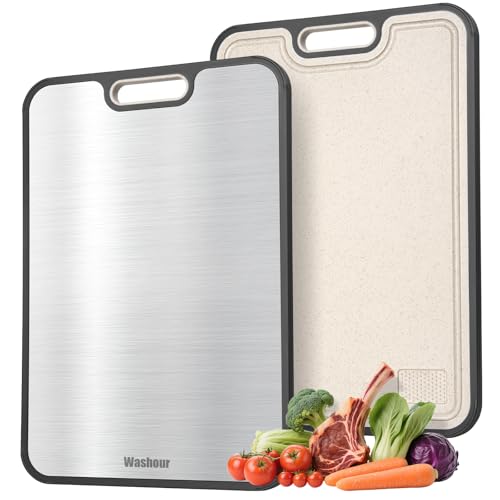
Titanium Cutting Board for Kitchen– SAFE and EASY TO CLEAN: Crafted with high-quality materials, the titanium cutting boards adopt a dual-sided structure. The food-grade titanium side is specially for raw meat, seafood and poultry, while the BPA-free PP side suits fruits and ready-to-eat food. Its non-porous feature prevents odor absorption, bringing all-round safety to your kitchen.
How to Inspect and Extend Board Life Between Replacements
Inspect your plastic cutting board regularly rather than waiting for obvious signs of failure. After washing and drying, hold it up to bright light and examine the surface for deep grooves, shadowed lines, or discoloration trapped within scratches. Run a fingernail across the surface; if it catches, the surface has worn enough to potentially harbor bacteria. Feel for a rough, “washboard,” or fuzzy texture, which indicates heavy scarring and significant wear. Over time, the material’s durability diminishes, so if thorough cleaning techniques do not restore a smooth surface, it’s time to replace the board. For knives with scalloped edges, maintaining a sharp blade is essential to avoid excessive pressure that accelerates board wear, and using a specialized sharpening rod can help keep those edges effective.
To prolong the life of your cutting board, wash it with hot, soapy water immediately after each use, then rinse thoroughly and dry promptly. Use a bleach solution to sanitize after handling raw meat. Allow the board to air dry or pat it dry to prevent moisture damage. Rotating multiple boards for different tasks reduces wear on any one piece, and keeping the board stable while cutting minimizes slipping and additional scarring. Replace your board when you notice cracks, warping, or surfaces that no longer stay flat, rather than waiting for obvious failure. Regular inspections are key to maintaining safety and performance.
