Ever wonder how to handle a kitchen knife safely and effectively? The key is mastering a proper grip and knife techniques that make chopping easier and safer.
When you focus on control and precise movements, you’ll cut more evenly and reduce the risk of accidents. Keep reading to learn the simple steps to get started with confidence.
Master Your Knife Grip and Guide Hand Position
Using the pinch grip and proper guide hand placement is essential for safe and precise cutting. To achieve the pinch grip, pinch the blade between your thumb and index finger just in front of the bolster, then wrap your other fingers around the handle for stability. This technique brings your hand closer to the blade’s center of control, enhancing accuracy. Keep your grip firm but relaxed to prevent fatigue, and align your wrist with your forearm to minimize strain over time. Investing in top knife sets that offer balanced quality and performance can further support these techniques and improve your overall cutting experience. Choosing a set with high-carbon stainless steel blades ensures lasting sharpness and edge retention. Many affordable Japanese knife brands provide exceptional edge retention without sacrificing budget-friendly pricing.
For safety, curl your fingertips inward so your knuckles face the blade. Your knife should glide against those knuckles, not your fingertips, reducing the risk of accidental cuts. Keep your thumb behind your fingers to maintain control and hold the food flat on the cutting board. As you cut, move your guide hand back slightly, keeping your knuckles ahead of the blade’s path. This positioning helps prevent slips and protects your fingers, giving you steadiness with every cut.
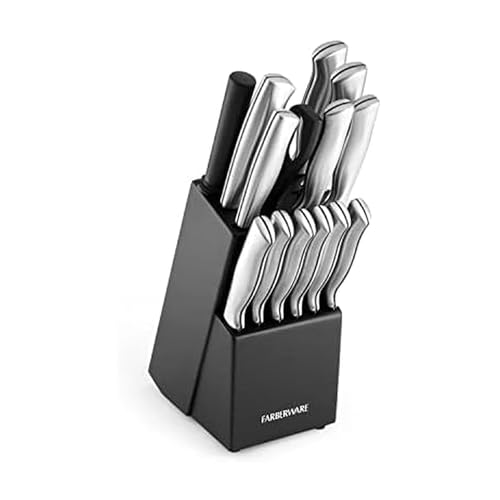
ULTRA-SHARP PRECISION CUTTING: Forged from high-carbon stainless steel, these blades maintain a razor-sharp edge longer than standard steel. Perfect for precise slicing, dicing, and chopping, ensuring professional-grade results for every meal prep
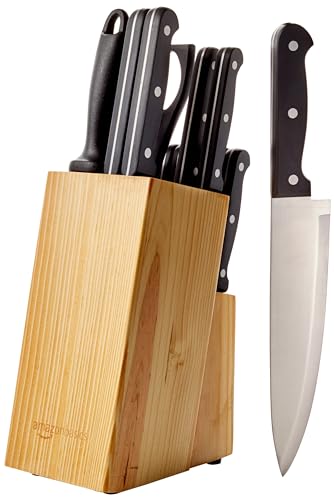
14-piece knife set incluedes: (1) 8'' Chef's knife, (1) 8'' Slicing knife, (1) 8'' Bread knife, (1) 5.5'' Utility knife, (1) 3.5'' paring knife, (6) 4.5'' steak knife, (1) 8'' kitchen scissors, (1) 8''sharpener, (1) knife block

【AESTHETIC KITCHEN UPGRADE】 Warm wood grain handles and a sleek black knife block make this set a countertop centerpiece — a seamless blend of modern style and everyday function that elevates any kitchen aesthetic.
Learn Essential Cutting Motions for Better Knife Skills
Once you’ve established a proper grip on your knife and your guide hand, you can focus on mastering the key cutting motions. These include the push cut, rock chop, slice and stack, julienne, and dice. Each motion is tailored for specific ingredients and the results you want to achieve.
The push cut involves moving the blade forward and down in one smooth motion. It is perfect for making clean, even slices of herbs and vegetables. To perform it effectively, keep your wrist steady and use your shoulder to guide the movement, minimizing the force needed.
The rock chop keeps the tip of the knife in contact with the cutting board while rocking the handle up and down. This motion is ideal for chopping garlic, onions, or herbs finely. It relies on a sharp knife and a stable cutting surface to produce uniform pieces.
Slice and stack involve cutting ingredients into uniform planks, then stacking them to create even layers for further cuts. This method is often used for preparation before julienning or dicing. Maintaining consistent thickness during the slicing step ensures evenly sized pieces later.
Julienne cuts are achieved by slicing stacked ingredients into thin, matchstick-sized strips. For neat juliennes, use a sharp knife and consistent motion, applying gentle pressure and keeping the blade perpendicular to the ingredients.
Dicing involves cutting ingredients into small, cube-shaped pieces. After stacking and slicing into planks, rotate the block and cut crosswise to achieve the cubes. Using a proper rocking or push motion keeps the cuts clean and uniform.
Proper knife sharpening is essential for consistent, smooth cuts. A dull blade requires more force, leading to irregular, unsafe cuts. Different blade types influence technique; a chef’s knife excels at the rocking and push motions, while a paring knife is better suited for detailed julienne or precise dicing. Home cooks should also consider the blade’s geometry, as a thinner edge reduces resistance and improves precision during these tasks.
Set Up Your Cutting Board and Body for Safety
To set up your body and cutting board for safety, start by ensuring the board is stable. Place a damp towel or anti-slip mat underneath to prevent shifting during use. Use a larger board if possible, as it reduces crowding and provides more space to work comfortably. Position the board near the counter’s edge, keeping it close to avoid overreaching and maintain better control. Stand with your feet shoulder-width apart, knees slightly bent, and shoulders relaxed to promote stability and reduce fatigue. Adjust the height of the board to match your elbows; if necessary, lift a low surface with stacked boards to achieve the correct level. Keep your forearms and wrists straight while cutting, and curl your non-knife hand into a claw to protect your fingertips. When taking a pause, always set the knife down with the blade turned away from you. Recheck the stability of your setup once your hands or the work area get wet. Proper knife storage and regular sharpening are essential for control and safety, so keep your blades maintained before beginning to cut. For slicing foods with tough exteriors, such as bread or crusty produce, a serrated knife provides superior grip and cleaner cuts compared to a straight edge. Investing in a top non-plastic cutting board can further improve stability and knife longevity compared to plastic alternatives. Book-shaped wood cutting boards are especially stable due to their larger surface area and sturdy construction.

【Designed for Separate Food Preparation】This double-sided cutting board is designed for separate food preparation. One side is suitable for meat, while the other side can be used for fruits and vegetables, helping keep ingredients organized during cooking.

Easy To Clean and Dishwasher Safe: Set of 2, Medium 12" x 9" and Large, 15" x 11.25" wood fiber cutting board, wooden natural color, dual-sided cutting surface. If you are looking for a crafted wood cutting board that is extremely safe to use, then we got you covered. BPA-free, dishwasher safe, Freshware wood cutting boards provide a clean food prep surface for every meal.

THREE IDEAL SIZES FOR EVERY TASK - This bamboo cutting board set includes three essential cutting board sizes - 15x10”, 12x8”, 9x6” - covering all your kitchen needs. Use the small board for quick fruit prep, the medium for slicing vegetables, and the large for carving meats, rolling dough, or creating an elegant charcuterie board spread.
Avoid Common Knife Safety Mistakes That Ruin Cuts
Maintaining proper knife safety involves avoiding common mistakes that can cause injuries. First, always keep your knife sharp and well-maintained. A dull blade requires more force, which increases the risk of slipping and cutting yourself. Regularly check and sharpen your knives, and keep them clean and dry. Use a blade size appropriate for the task—don’t attempt to cut large or tough items with a small knife or force a single knife to do everything. Understanding the difference between forged vs. stamped knives helps you choose a blade that balances durability and upkeep for safer cutting. Handle your knife deliberately. Grip the handle firmly, keeping your thumb off the spine unless the knife’s design supports it. Cut downward and away from your body with slow, controlled motions rather than fast chopping. Never try to catch a falling knife; instead, carry it with the blade pointing downward and away from your body. When cleaning, wash with the knife facing away from you, and store knives securely in a block or sheath. Never leave loose knives in a sink or drawer where they can cause accidental cuts. Staying attentive while handling your knife is crucial to prevent accidents.

【Premium Alumina Whetstone】Our whetstone knife sharpener (also a reliable honing stone) adopts high-grade aluminum oxide with proprietary sharpening compounds, making this knife sharpener stone deliver exceptional cutting performance. Strictly selected raw materials ensure the whetstones for sharpening knives are wear-resistant and long-lasting, outperforming ordinary sharpening stones for knives in sharpness retention and durability

PRO-SHARP EDGES AT HOME: Dull knives don't need replacing or a trip to a professional sharpening service. One pass on this Sharp Pebble whetstone knife sharpening stone restores a razor edge in your own kitchen. Water-based sharpening. No honing oil required.
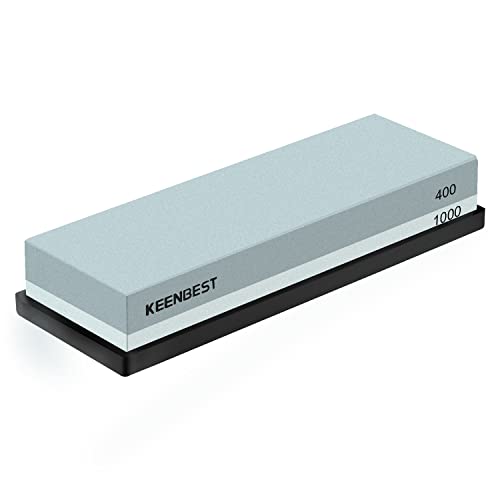
No oil needed, just put the stone into water for 10-15 minutes before using and they are ready to use. You can always adding water on it while sharpening, with water the lubricating effect of grinding will be great and helps you to save strength
Practice Cutting Skills With Soft Foods and Slow Reps
Practicing with soft foods is the best way to build your knife skills safely and steadily. Start with items like bananas, melon slices, or cooked potatoes—these cut cleanly with little resistance, giving you immediate feedback on your technique. Use slow, repeated strokes to develop consistency before focusing on speed. Smooth, even motions will often outperform forceful chopping, helping you control the blade more accurately.
Repeat each cut shape—such as coins, halves, or sticks—so your muscle memory improves and your cuts become more uniform. Soft foods also show your control instantly, making it easier to identify and correct mistakes. As you gain confidence, gradually move from simple slices to cubes, ensuring you maintain precision at every step. When selecting a cutting board for practice, note that plastic cutting boards dull knives faster than wooden alternatives, so consider this trade-off for your knife’s longevity.
Keeping your knife sharp is crucial: a sharp blade requires less force, creates cleaner cuts, and reduces the risk of slipping. However, investing in a quality blade like a Damascus knife can provide exceptional edge retention and corrosion resistance for long-term performance. Match the size of the food to your knife’s blade for better control, starting with smaller items like bananas before progressing to firmer produce. Focus on achieving consistent thickness over speed; this slow, deliberate practice lays the foundation for more advanced, efficient cutting. For those who eventually need to process firmer proteins, a dedicated electric fillet knife can further reduce effort and enhance precision.