
If you’ve ever struggled to get a sharp edge or keep your tools in top shape, honing oil might be just what you need. It’s a special lubricant and coolant used during sharpening to reduce friction, wash away metal shavings, and keep your stones clear.
Understanding the different types and selecting the best one can make a big difference in your metalworking results. The full details are right below.
What Is Honing Oil and Why Is It Used?
Honing oil is a specialized fluid used during sharpening and fine finishing to improve the process. It helps reduce friction between the abrasive stone and the workpiece, which lowers heat buildup and allows the abrasives to cut more smoothly. The composition of honing oil varies; it can be straight oils or emulsions, often containing rust inhibitors and anti-wear agents to protect both the stone and the metal. Similarly, selecting a quality knife set often involves balancing performance, durability, and value to ensure the best results. For example, just as honing oil enhances sharpening, best rated bread knives rely on high-quality serrations for consistent, clean cuts.
This oil performs several critical functions. Its flushing action clears away swarf—tiny metal or stone particles—that can clog the abrasive surface. This keeps the stone cutting effectively and maintains a clean working area. Honing oil also protects your workpiece from corrosion and extends the lifespan of your abrasive stones. When choosing honing oil, consider environmentally friendly options such as chlorine-free formulas, which are easier to dispose of safely. Select an oil with good wetting properties to ensure precise dimensional accuracy and stable cutting conditions, resulting in a cleaner, more refined finish.

HONING SOLUTION – Smith’s Honing Solution features built-in stone cleaning agents and rust corrosion inhibitors and it can be used on all sharpening stones. This non-petroleum-based honing oil will prevent your sharpening stones from clogging.

Knife Sharpener Stone Sharpening Oil to be used with your favorite sharpening system and Oil Stone to revitalize, maintain and preserve your tools, kitchen knives, utility knife and more

Main Uses of Honing Oil: Engine Work, Hand Sharpening, and General Metalworking
Honing oil is essential for engine work, hand sharpening, and general metalworking. In engine work, honing oil maintains precise cylinder geometry and surface finish during honing, especially with ferrous metals and some non-ferrous alloys. Use low-viscosity, chlorine-free, active-sulfur formulations designed for demanding engine-machine tasks to ensure optimal lubrication and cooling. For hand sharpening, applying a few drops of honing oil on your whetstone prevents pore clogging and promotes a keener edge by reducing friction and debris buildup. It also helps debris removal, leading to consistent cutting action. For those who value edge precision, selecting a reliable cutlery set can further complement your sharpening routine. In general metalworking, honing oil serves as both a lubricant and a flushing agent. It minimizes friction, carries away swarf, and keeps cutting zones cleaner during cutting, tapping, reaming, and grinding operations. Modern honing oils are formulated to balance effective lubrication with cooling, with safer, environmentally friendly ingredients replacing harmful additives used in older formulations, making them suitable for use on both ferrous and non-ferrous metals. When selecting a honing oil for general metalworking, consider the same principles of quality and style found in top-tier kitchen tools to ensure durability and performance. Understanding the cost factors behind premium tools can also help you make informed purchasing decisions, just as with the pricing of specialized oil formulations.

CYLINDER WALL CROSS-HATCH RESTORATION – Helps restore the cylinder wall cross-hatch pattern to support proper piston ring seating and oil retention. Ideal for engine rebuilding, cylinder reconditioning, engine repair, and routine cylinder maintenance.

CYLINDER WALL CROSS-HATCH RESTORATION – Helps restore the cylinder wall cross-hatch pattern to support proper piston ring seating and oil retention. Ideal for engine rebuilding, cylinder reconditioning, engine repair, and routine cylinder maintenance.

CYLINDER WALL CROSS-HATCH RESTORATION – Helps restore the cylinder wall cross-hatch pattern to support proper piston ring seating and oil retention. Ideal for engine rebuilding, cylinder reconditioning, engine repair, and routine cylinder maintenance.
What Are the Core Benefits of Honing Oil?
Honing oil offers five key benefits that directly enhance your work. First, it forms a thin lubricating film that reduces friction and drag, helping to manage heat. This stabilization prevents your workpiece from warping or thermal damage during machining or sharpening. Second, honing oil flushes away swarf and chips continuously, which prevents the abrasive stone from loading up. By doing so, it minimizes surface scratching and ensures smoother, more precise finishes. Third, the oil slows abrasive wear on stones and tools, extending their lifespan. This means fewer replacements and better overall maintenance for your equipment. For those who prioritize cutting surface quality, using the right oil is essential to preserving a premium butcher block from drying out. Fourth, consistent lubrication facilitates an even cutting action, enabling you to achieve tighter tolerances and cleaner finishes. Finally, honing oil provides protective properties against rust and welding, prolonging the service life of your tools and parts. To ensure you select the right product for your setup, it is helpful to research the best honing oil for your specific sharpening stone. For those processing game, a quality butcher knife also benefits from proper oiling to maintain its edge and prevent corrosion.
Types of Honing Oil: Petroleum, Water-Based, and Specialty Options
Water-based alternatives, also known as honing coolants, offer a safer and more environmentally friendly option for honing operations. They are easier to clean up because you can rinse away residue and swarf with water, reducing mess and labor time. These coolants also produce less odor and minimize petroleum exposure, making them suitable for workplace safety and environmental compliance.
Specialty honing oils are designed for demanding applications. Sulfur-bearing or extreme pressure (EP) formulas are used for heavy-duty ferrous work, where reducing friction and keeping the abrasive stones clean are critical. Low-VOC blends meet environmental regulations, especially in aerospace and medical settings, ensuring compliance without sacrificing performance. Additionally, stone-specific formulations are available for different abrasive types like diamond, cubic boron nitride (CBN), or aluminum oxide. These specialized oils help prevent clogging, enhance flushing, and adapt to the particular needs of your honing process.
How to Choose Honing Oil by Viscosity, Abrasive, and Metal
Choosing honing oil by viscosity depends on the abrasive size. Coarser stones require higher-viscosity oils to create a stronger film that helps hold abrasive particles and effectively removes debris. Fine finishing, on the other hand, benefits from low-viscosity oils that reduce loading and allow for a smoother, cleaner cut. When selecting an oil, consider the same performance factors used to evaluate scissor sharpeners, including quality and value for your specific sharpening application. For maintaining the sharpness of fine knives, a boning knife with proper blade steel benefits from a low-viscosity oil to avoid loading the stone. Because the best carving boards require proper maintenance of their edges, using the correct viscosity oil preserves both sharpness and board surface quality.
Metal compatibility is equally important. Ferrous metals like steel and cast iron generally accept most honing oils without issue. However, non-ferrous alloys such as aluminum and copper require non-staining, corrosion-inhibiting formulas to prevent discoloration or residue. Always verify your oil’s additive package—look for chlorine-free or non-staining extreme pressure (EP) options—and match it to your specific metal alloy to ensure optimal performance and surface quality.

High-viscosity oil refined to perfection
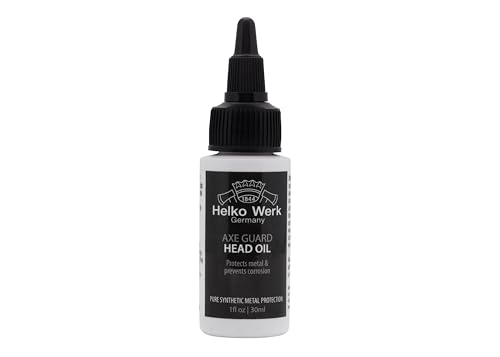
DEEP PENETRATION - With no odor, a clean synthetic oil with low viscosity with a consistency similar to olive oil, that easily spreads and penetrates on the metal surface to easily work into cervices and pits to protect your axe head. Helps remove light residue to assist in cleaning your axe head. Will not stain steel, wood or leather like most other oils.

DEEP PENETRATION - With no odor, a clean synthetic oil with low viscosity with a consistency similar to olive oil, that easily spreads and penetrates on the metal surface to easily work into cervices and pits to protect your axe head. Helps remove light residue to assist in cleaning your axe head. Will not stain steel, wood or leather like most other oils.
Best Honing Oils for Sharpening, Engine Work, and Diamond Tools
For honing stones, light mineral oil or commercial honing oil is best. Heavy motor oils tend to clog the pores of the stones, reducing their effectiveness. These lighter oils help carry away swarf—metal shavings and debris—keeping the edge sharp and cutting cleanly. Non-toxic options are a practical choice for everyday sharpening tasks, especially if you work frequently or prefer safer materials. Oleic-acid-based blends are also marketed specifically for oilstones, providing an effective and easy-to-use lubricant.

Ideal multi-species mild laxative generally used for horses, livestock and dogs

Mineral oil 99. 9 %

