Wondering if your plastic cutting board is dulling your knives? It’s a common concern, and the answer depends on the type of plastic you use.
Some plastics can cause significant wear after just a few thousand cuts, while others are gentler.
Keep reading to find out how to choose a board that helps keep your blades sharp longer.
Yes, Plastic Cutting Boards Dull Knives: But Here’s the Catch
Plastic cutting boards can dull knives over time, but the process is generally gradual. You might notice this more frequently in your knife maintenance routine, prompting you to sharpen your blades more often. Not all plastic boards cause equal damage—cheaper, rigid types or those with deep scratches tend to accelerate dulling. Your cutting techniques also play a role; aggressive chopping or twisting the knife against the surface puts extra stress on the edge. High-density polypropylene boards are typically gentler on knives. Ultimately, the condition of your cutting board matters most: smooth, undamaged surfaces help knives stay sharper longer. For example, a serrated bread knife is designed to handle crusty loaves without excessive force, reducing pressure on the blade edge. Regularly inspect your board for deep grooves and replace it when necessary to prevent unnecessary wear on your blades. However, if you frequently serve sliced meats and cheeses from a board, the associated charcuterie tray often encourages lighter, more careful cutting to preserve presentation, which can incidentally reduce wear on knife edges. To minimize this wear, pairing your board with a high-quality blade, such as those praised for their edge retention in top Japanese gyuto reviews, can help maintain performance between sharpening sessions.

【ALL IN ONE SET】Our cutting boards of various sizes can improve your efficiency in the kitchen. Extra large size:17.0*11.8*0.4 inch; Large size:14.0*9.5*0.35 inch; Medium size:11.4*7.8*0.35 inch. Each size is designed for a type of food and can be cut separately. Perfect for multiple meals or all day use.

Large 10.39-in x 14.78-in Utility Cutting Board is ideal for big meals

LARGE CUTTING BOARD - Measuring 18 x 12 x 1/2 inches, our professional cutting boards are large enough to cut and chop meals for the family, but small enough to fit in dishwashers, cabinets and drawers. Boards weigh 3 pounds and resist slipping on most surfaces.
How Plastic Cutting Boards Compare to Wood, Glass, and Other Materials
End-grain wood preserves knife edges 48% better than plastic, while edge-grain wood outperforms plastic by 29% in reducing wear. Plastic is gentler than glass, which dulls knives the fastest—faster than both stone and metal. For durability, wood requires more maintenance but results in less micro-chipping and longer-lasting edges. Glass and stone surfaces cause knives to lose sharpness quickly, making them poor choices for regular chopping tasks. In terms of cost, plastic is cheaper upfront and dishwasher-safe, but you’ll need to replace it sooner because deep grooves increase friction. HDPE plastic offers a good middle ground: moderate wear, easy cleaning, and acceptable durability for daily use, though it doesn’t protect your blades as well as wood does. Some raised cutting boards with feet also provide better knife clearance and stability during prep. Choosing a board with the right knife style ensures your cutting surface matches the task at hand. For those who prioritize blade longevity, top butcher blocks for knife lovers recommend end-grain wood as the superior choice.

SIZE MATTER! : 1.7" Thickness for stability, 100% sustainable black walnut wood grown in America for long-lasting. We manufacture super thick & durable wooden boards, crafted using the end-grain technique, added Black walnut wood ensures ultimate adhesion, and it’s knife friendly. Ideal as Charcuterie boards, chopping board, butcher block.
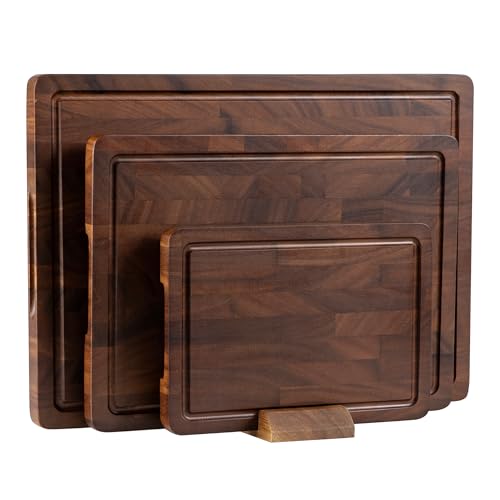
【Craftsmanship and Material】THETCHRY cutting board set is meticulously crafted from genuine South American Walnut. Renowned for its dense grain, walnut is considered the premier material for high-end kitchen tools. Not only is this board 1.5 times harder than ordinary wood, but its end-grain pattern effectively minimizes knife marks, protecting your blades with every cut.

Still looking for a cutting board that is both beautiful and practical? THETCHRY end grain walnut cutting board is the ideal choice for you! The unique structure has excellent durability and can withstand heavy cutting without being easily damaged. Its "self-healing" property makes every cut as smooth as silk. The blade cuts between the wood fibers and the fibers quickly close after leaving, keeping the knife sharp as new.
Which Plastic Cutting Boards Are Worst for Knife Sharpness?
Low-density polypropylene cutting boards are the worst for knife sharpness. Testing shows they significantly degrade blades, with edges dulling from 120 to 195 BESS after just 2,000 cuts. These boards are soft and abrasive, causing rapid edge wear. Hard polycarbonate and dense composite boards are nearly as harmful—they are too rigid, which rounds over fine edges quickly. Thin, warp-prone boards also pose problems because they flex under pressure, increasing stress on your knife’s edge. As these boards age, deep grooves and scars develop, turning the surface abrasive and catching your blade, which speeds dulling. Chemical reactions from dishwasher heat can warp cheaper boards further, making the problem worse. To protect your knives, stick with thicker, softer polyethylene cutting boards. Additionally, proper maintenance helps minimize the abrasive grooves that accelerate blade dulling on plastic boards. For the best blade longevity, consider pairing your knives with a high-quality Japanese knife set that balances edge retention and ease of sharpening. When selecting a board, look for knife sets with blocks that often include recommendations for compatible cutting surfaces to preserve edge quality.

Type: SD/Standard type (polyethylene one side 5mm thick)

Type: SD/Standard type (polyethylene one side 5mm thick)

Type: SD/Standard type (polyethylene one side 5mm thick)
Why Plastic Cutting Boards Wear Down Knife Edges
Repeated cuts create microgrooves on the surface of your plastic cutting board. These tiny scratches trap food debris, grit, and abrasive particles. Each time you slice across the surface, your knife’s edge grinds against this embedded dirt. Over time, the grooves deepen and become rougher, increasing friction and causing your knife to dull faster. As more cuts and grooves form, the cycle intensifies, leading to increased wear on your knife edges. In contrast, wood cutting boards like those designed to look like books are softer and more forgiving on knife edges. Choosing a cutlery set with harder blade steel can help mitigate this wear. However, just as plastic surfaces can trap abrasive grit, a dishwasher cycle can erode the protective finish of softer kitchen tools.
When Should You Replace a Plastic Board to Protect Your Knives?
You should replace a plastic cutting board immediately when it develops cracks, chips, or warping. Deep grooves that catch your fingernail are a clear sign the surface is worn out and can no longer provide a safe cutting surface. These grooves are not only dulling your knives faster but also trapping bacteria. If stains or odors persist after washing, or if food particles remain lodged in cuts, it’s time to dispose of the board. Fading color and loss of transparency indicate the plastic is breaking down and thinning. A rough, fuzzy surface or persistent residue can also compromise food safety. For regular home use, plan on replacing your plastic board every 1 to 3 years, but check it frequently for signs of wear.

FLEXIBLE PLASTIC CUTTING BOARDS FOR KITCHEN — 6 thin, colorful plastic cutting mats that bend: fold one into a funnel and pour chopped ingredients straight into the pot with far less mess. A lightweight, foldable cutting board set for everyday prep.

Large Enough Size - The flexible cutting mats for cooking dimensions are 14.65*11.02 inches, which makes enough space for food. The lightweight design is great for college apartments, small kitchens, RVs, or camping.

Choosing a Plastic Board That Protects Knife Sharpness
Choosing a plastic board that protects your knives from dulling involves prioritizing material and surface features. Opt for high-density polyethylene (HDPE) or polypropylene, as these plastics are dense yet soft enough to yield to your blade instead of resisting it. This helps prevent excessive wear on your knife edges.
Focus on surface texture: a firm but slightly forgiving surface with some flexibility protects your blades better than overly rigid or abrasive boards. Avoid hard plastic boards that can cause rapid dulling. Thicker boards—around 1.5 inches or more—provide greater stability and reduce flexing during use, which can also dull blades. High-quality materials and thoughtful construction, as seen in expensive charcuterie boards, often prioritize durability and knife safety in similar ways.
Deep grooves or cuts trap debris and increase friction, leading to more wear. Instead, choose a smoother surface that minimizes embedded particles. For added protection during storage, consider pairing your board with a dedicated blade guard to shield your knife edges when not in use. Make sure the board is labeled as FDA-compliant and “knife-friendly,” ensuring it meets safety standards and is gentle on cutlery. Regularly cleaning off grit and food particles prevents embedded debris that can scratch and dull your knives over time.

QUALITY MATERIALS: This cutting board is made of polypropylene plastic. The poly material is non absorbent, nonporous, and will not harbor stains. It is gentle on knives, keeping their blades from getting dull quicker

DISHWASHER SAFE FOR EASY CLEANUP: Non-porous composite material cleans quickly in the dishwasher for everyday kitchen convenience.

DURABLE: Epicurean's paper composite material is a natural material. Color, primarily our natural color, will develop a deep patina over time, behaving similar to wood or a wood floor. Patina does not affect the performance or integrity of the product/material and Epicurean does not guarantee color fastness for the life of the product. PROUDLY MADE IN THE USA.