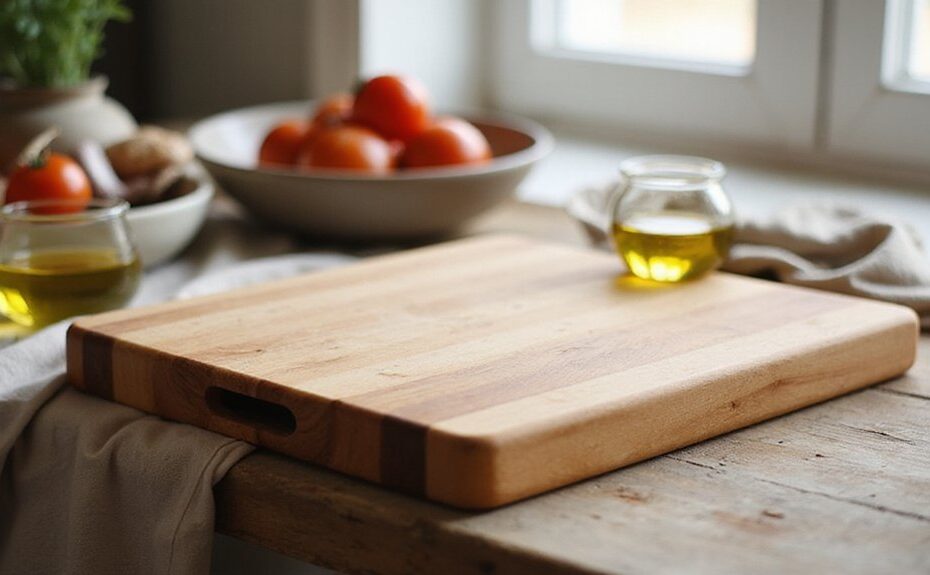
Wondering if you can use olive oil on your cutting board? The quick answer is no.
Olive oil doesn’t dry or cure inside the wood, which means it can turn rancid and leave a sticky, unpleasant residue. This can affect your food’s taste and smell and even attract bacteria.
Instead, there’s a better, safer way to keep your cutting board in great shape, and it’s easy to do. The full details are below.
Why Olive Oil Seems Like a Good Idea for Your Board
Olive oil might seem like an easy fix for your cutting board, but it’s not always the best choice. Because it’s a common kitchen ingredient, you might assume it’s safe and effective. You grab it from your pantry, rub it on the wood with a cloth, and immediately notice the darker tone. That quick visual change makes you think it’s working. The oil seems to fill the wood’s grain, reducing the appearance of scratches, and the surface gains a warm sheen. It’s tempting to believe your board is now protected. Unlike a cherry pitter that uses a simple mechanical plunger to cleanly remove the pit, wood oil must cure properly to avoid tackiness. The logic appears straightforward: wood is porous, so applying a thin oil layer should slow down liquid absorption and prevent drying out. Plus, since olive oil is food-safe and already in your kitchen, you skip searching for specialized wood care products. Its convenience, low cost, and instant polished look make olive oil feel like a perfect, intuitive solution. But in reality, using olive oil for board care can cause problems over time, such as added stickiness or even mold development, which can compromise the board’s longevity and hygiene. Just as selecting quality sharpening stones requires understanding how abrasive materials interact with steel, choosing the right oil for your cutting board demands knowing how different oils react with wood fibers. However, unlike the forged layers of steel that create a durable Damascus blade, olive oil lacks the chemical stability needed to protect wood without turning rancid.
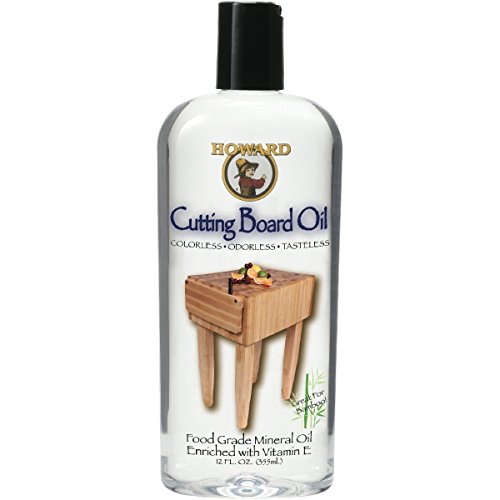
Cutting Board Oil is a deep penetrating 100% Pure USP Food Grade Mineral Oil that is tasteless, odorless, colorless, and will never go rancid

Revitalizing blend prevents drying and cracking of hardwoods and bamboo

FOOD-GRADE MINERAL OIL FOR CUTTING BOARDS: Helps restore and protect dry cutting boards, butcher blocks, and wooden kitchen surfaces. Refreshes dull, worn wood and helps prevent cracking or splitting; works on bamboo, teak, acacia, olive wood, and hardwood boards
The Real Problem: Olive Oil Turns Rancid in Wood
Olive oil on a cutting board can turn rancid because it never fully hardens or cures inside the wood fibers. As a non-drying oil, it remains embedded within the wood pores and is constantly exposed to oxygen. This exposure drives oxidation and breakdown of the oil, creating sticky, gummy residue that feels unpleasant and attracts dust and grime. Even if you use organic-certified olive oil, its shelf stability doesn’t improve once absorbed into the wood. The oil begins to spoil soon after opening the bottle, and oxidation continues deep inside the pores. Once the oil has penetrated and turned rancid, removing it is difficult without sanding or scraping the affected wood. Washing alone won’t reverse the damage because the rancid layer is deeply embedded and sets into the material. Unlike honing oil or mineral oil, olive oil lacks the properties needed to properly protect and seal wood. For example, bamboo cutting boards often fare better with proper mineral oil treatments that resist rancidity and spoilage. Just as steak knives are specifically designed for cutting through meat without dulling, proper wood oils are designed to cure and protect cutting boards without going rancid.
How Rancid Oil Ruins Food Smell and Taste
Rancid oil on your cutting board can transfer off-odors and flavors directly into your food. This occurs because oxidation produces volatile compounds like hexanal, which emit smells reminiscent of crayons, wet cardboard, or old paint. The smell becomes sour, bitter, or putty-like, giving an obvious warning. Once these compounds mix with your meal, they contaminate the flavor, causing fresh ingredients to taste harsh, sharp, or soapy instead of clean. Rancid oil overwhelms delicate flavors and leaves a bitter, metallic aftertaste. The quickest way to detect rancidity is by smell—if it smells stale or paint-like, avoid using that board. These oxidation products stick around, and if incorporated into your food, they ruin the entire dish. The spoilage is immediately tasted and can’t be easily washed away, making early detection essential. Using a top charcuterie board with proper care reduces the risk of rancid oil contamination. Using food safe mineral oils instead prevents this rancidity issue entirely. High-quality knife sets are designed with precision and performance to cut through fresh ingredients cleanly, but they cannot salvage a dish contaminated by rancid oil from a neglected board.
The Sticky Mess Olive Oil Leaves Behind
Olive oil leaves behind an uncured film that never fully hardens. This tacky residue attracts dust and food particles, forming a gritty layer that is hard to remove. Even after washing, the board appears dirty because particles cling stubbornly to the sticky oil. Repeated applications worsen the buildup, and oxidation turns the residue into a gummy, darkened mess. This sticky film not only feels unpleasant but also causes surface corrosion by trapping moisture and debris, which can weaken the wood over time. A similar buildup can interfere with magnetic knife storage if the board is used near metal tools, compromising both safety and edge protection. Cleaning becomes increasingly difficult as soap and water struggle to lift the oily film, leaving your board greasy and unclean. For a better solution, consider using a dedicated zester instead. A high-quality chef’s knife, maintained on a properly oiled board, delivers superior cutting performance that a sticky olive residue will always hinder.
Why Olive Oil Never Fully Protects Cutting Boards
Olive oil never fully protects a cutting board because it is a non-drying oil that doesn’t cure inside wood fibers. Instead of forming a durable barrier, it remains liquid, providing only temporary conditioning that quickly breaks down. Oxygen accelerates oxidation, and exposure to heat or light speeds this chemical process, leading to faster spoilage. As the oil fails, uneven absorption results in some pores being sealed while others stay exposed, leaving parts of the wood vulnerable. The rancid smell that develops signals spoilage rather than preservation, and this odor can transfer to your food. In contrast, food-grade mineral oil or wax blends resist oxidation and stay stable over time, maintaining a protective barrier without turning rancid. Olive oil’s inability to form a lasting seal means your cutting board remains unprotected despite repeated applications. Achieving a truly sharp edge on a knife, by contrast, requires adhering to recommended degree ranges that balance sharpness and durability. Cut-resistant gloves used during kitchen prep, by contrast, offer a durable physical shield that remains effective without requiring curing or reapplication. For comparison, forged knives are made from a single piece of steel and are typically heavier and more durable than stamped knives, which are cut from a sheet of metal and are lighter and more flexible.

NSF CERTIFIED FOOD GRADE - This premium mineral oil is NSF certified and lab-tested to meet the strictest food safety standards. Colorless, odorless, tasteless, and gluten-free — perfect for cutting boards, butcher blocks, and all food-contact surfaces.

NSF CERTIFIED FOOD GRADE - This premium mineral oil is NSF certified and lab-tested to meet the strictest food safety standards. Colorless, odorless, tasteless, and gluten-free — perfect for cutting boards, butcher blocks, and all food-contact surfaces.

FOOD GRADE QUALITY: Premium mineral oil designed for direct and indirect food contact, meeting U.S. FDA regulations and USP standards for maximum safety
Your Board After Months of Olive Oil Use
After months of olive oil use, your cutting board likely looks blotchy and uneven. The glossy finish you initially aimed for quickly turns tacky because olive oil is a non-drying oil that never fully hardens. Expect to see dark, saturated patches alongside dry, lighter areas, indicating inconsistent oil absorption. The surface feels sticky to the touch, trapping dust and crumbs, which makes it appear dirty even after washing.
A common sign of over-application is a lingering rancid smell that remains in the pores, no matter how often you clean it. The uneven oiling creates moisture imbalances—dry spots can crack or warp, and the tackiness reduces the board’s usability during prep work. Applying fresh oil on top will not repair the damage; it only adds another degraded surface layer. Over time, the board becomes dull, stained, and more difficult to clean, signaling it’s time to sand down the surface or switch to a more suitable oil like mineral oil for better results, similar to how a high-quality knife requires proper maintenance for optimal performance.
The Hidden Food Safety Risk: Rancid Residue
Applying olive oil to your cutting board can create a hidden food safety risk. Olive oil’s poor stability means that exposure to air, light, and warmth rapidly causes it to oxidize and form rancid residue. This residue not only produces a stale smell resembling nuts or crayons but also traps food particles in the wood grain, making thorough cleaning ineffective. Over time, oxidized oil encourages microbial growth because the degraded film provides a breeding ground for mold and bacteria that are difficult to remove completely.
Smelling off odors is an important warning sign. If your board has a rancid smell, the oil has already broken down, increasing the risk of contamination. Consuming residues of oxidized oil can lead to health issues such as inflammation and damage caused by free radicals. To maintain food safety, regularly inspect your cutting boards for unusual odors, especially when using oils on the surface. Remember, what looks clean may still harbor unsafe residues if the oil has degraded.
The Best Alternative: Food-Grade Mineral Oil
Food-grade mineral oil is your best choice for maintaining a cutting board. Unlike rancid olive oil, it is tasteless and odorless, ensuring no unwanted flavors interfere with your food. Its low viscosity allows it to absorb deeply into the wood fibers, rather than forming a sticky surface film that can attract dirt or promote bacteria growth. Additionally, this oil penetrates the wood grain to restore faded colors and smooth rough or chalky areas.
Applying mineral oil is straightforward. Begin with a clean, dry board and spread a thin, even coat across all surfaces. Let the oil soak in for at least several hours, ideally overnight, then wipe away any excess with a clean cloth. For new or heavily used boards, multiple coats may be necessary during the initial treatment to build a protective, penetrating layer.
Reapplication depends on usage and condition. Typically, you should reapply roughly once a month or when the surface appears dry or water no longer beads on the surface. Mineral oil resists rancidity and does not gum up over time, making it a reliable, long-lasting finish. It also meets strict food-contact safety standards, which is why it remains the industry standard for maintaining wooden kitchen tools.
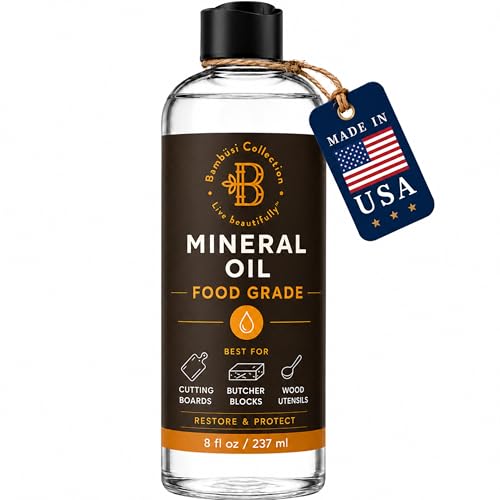
FOOD SAFE MINERAL OIL FOR CUTTING BOARDS: 100% pure food grade white mineral oil with nothing added. Clear, odorless, unscented and tasteless, so it won't change the flavor of food you prep on your board. Safe on wood cutting boards, butcher blocks and any wooden surface that touches food
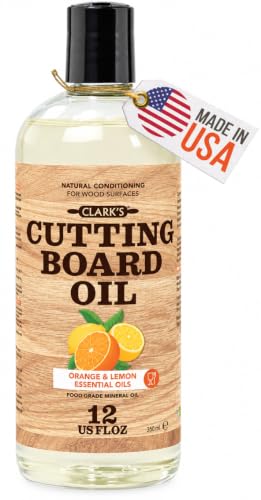
FOOD GRADE MINERAL OIL: Our mineral oil oil is lab tested to meet strict food safety standards. Clark's wood cutting board oil is not colorless, providing deep nourishment while keeping your wood cutting boards and kitchen surfaces protected.

Food Grade - SMPLY. Mineral Oil is perfect for cutting boards, wooden spoons, butcher-block countertops, and any wooden surface that is used to prepare food!
How Board Butter With Beeswax Adds Extra Protection
Board butter with beeswax creates a surface barrier that repels liquids and seals the wood’s topmost pores, offering protection beyond oil alone. While oil soaks deep into the fibers to condition the wood, the beeswax sits on top, forming a protective layer that prevents moisture from seeping in during washing and food prep. This barrier helps prevent water from soaking into your board, which can lead to cracking and warping over time. In addition to protection, applying beeswax enhances the natural appearance of the wood, giving it a smooth, polished look rather than a greasy sheen. Typically, you apply board butter with beeswax after the oil has stopped absorbing—rub it in thoroughly, let it rest so the wax can set, then buff away any excess. For maximum safety when handling the board during these steps, consider using cut-resistant gloves to protect your hands from accidental slips. Reapply when the surface no longer repels water or appears dry. Keep in mind, however, that this finish complements proper care routines: always dry your board thoroughly after cleaning and avoid soaking it in water. Unlike mineral oil, board butter with beeswax offers a cost and durability balance that many users find superior for long-term board maintenance.

Protects Wood from Drying and Cracking - Wood wax, butter, cream, and conditioner is ideally formulated to protect your wooden tools for a lifetime.

Helps Protect Wood from Drying: Wood wax, butter, cream, and conditioner is formulated to help protect and maintain your wooden tools
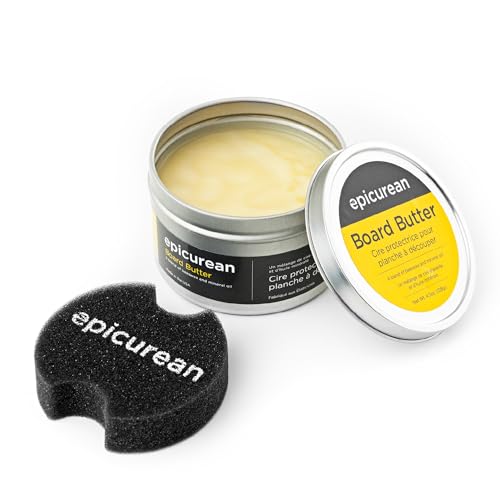
RESTORES: 4.5 ounce board butter in retro styled tin with sponge applicator; restores and conditions all types of wood boards and utensils. Applicator color may be yellow or black.Butter-like consistency; proprietary blend of mineral oil and beeswax; mineral oil helps to prevent drying and cracking
The Simple Rule: Use Mineral Oil, Not Pantry Oils
Use mineral oil for your cutting board instead of pantry oils like olive oil. Mineral oil is tasteless, odorless, and won’t go rancid, making it ideal for long-term protection. Pantry oils oxidize over time, which leads to sticky residue, unpleasant smells, and off flavors on your surface. This product is safe for kitchen use, meeting food safety standards for cutting boards and utensils.
Proper oil absorption is key to maintaining a durable, protected surface. Mineral oil penetrates into the wood fibers, reducing moisture absorption and preventing cracks. Unlike triglyceride-based cooking oils, mineral oil stays stable for years, even in warm kitchens. To apply, use a thin coat and let it soak in fully before wiping away any excess. Reapply every few weeks or whenever the surface looks dry or absorbs water quickly to keep your board in top condition.

【Food Safe Mineral Oil for Cutting Boards】Made from 100% food-grade mineral oil, this colorless and odorless conditioner is laboratory-tested to meet strict food safety standards. It's the trusted, food-safe mineral oil for wood cutting boards, butcher blocks, and all your food-contact surfaces.

【100% Food Grade Mineral Oil – Safe for Kitchen Use】 Nicalas Cutting Board Mineral Oil is a food grade mineral oil that is 100% pure, colorless, odorless, and tasteless. Lab-tested to meet strict food safety standards, it is the ideal mineral oil for wood cutting board, butcher block, and all food-contact surfaces. Safe for daily kitchen use and trusted by home chefs.