Wondering if linseed oil is safe for your cutting board? The answer depends on the type you choose. Food-grade raw or polymerized linseed oil can be a good option if applied properly.
While regular boiled linseed oil from the hardware store is not safe for contact with food. In the next part, you’ll discover everything you need to know to safely treat your cutting board with linseed oil.
Can You Safely Use Linseed Oil on a Cutting Board?
Yes, you can safely use linseed oil on your cutting board, but only if it is explicitly labeled as food-grade and intended for food-contact surfaces. Standard linseed oil from hardware stores often contains drying agents, solvents, or additives that are not safe for ingestion. Food-grade linseed oil penetrates deeply into the wood fibers, creating a protective barrier that helps reduce moisture absorption without leaving a tacky or greasy feel. For those who prefer a complete maintenance solution, top knife sets with blocks often include cutting boards that benefit from the same protective treatment. When selecting a cutting board, pairing it with high-quality butcher knives ensures your processing setup is both safe and efficient. Choosing cutlery from the best cutlery sets also supports a cohesive kitchen workflow.
Always check the label carefully to ensure the product is approved for food use. Avoid any linseed oil that lists metallic driers or solvents, as these can be harmful when ingested. When applying, use thin coats and let each layer fully cure. The curing process takes several days and is complete when the finish is hard and stable—simply being dry to the touch is not enough. Proper curing ensures your cutting board remains safe and well-protected for daily food preparation.

FOOD-GRADE MINERAL OIL FOR CUTTING BOARDS: Helps restore and protect dry cutting boards, butcher blocks, and wooden kitchen surfaces. Refreshes dull, worn wood and helps prevent cracking or splitting; works on bamboo, teak, acacia, olive wood, and hardwood boards

FOOD GRADE MINERAL OIL: Our mineral oil oil is lab tested to meet strict food safety standards. Clark's wood cutting board oil is not colorless, providing deep nourishment while keeping your wood cutting boards and kitchen surfaces protected.

NSF CERTIFIED FOOD GRADE - This premium mineral oil is NSF certified and lab-tested to meet the strictest food safety standards. Colorless, odorless, tasteless, and gluten-free — perfect for cutting boards, butcher blocks, and all food-contact surfaces.
Raw vs. Boiled: Which Linseed Oil Is Actually Safe?
The safest linseed oil for a cutting board is one explicitly labeled as food-grade. The distinction between raw and boiled is less important than verifying this label. Many hardware-store versions of raw linseed oil can contain unknown impurities or chemical additives that aren’t safe for food contact. Boiled linseed oil, even if labeled food-safe, often includes metallic driers and other additives to accelerate curing, making it unsuitable for food surfaces. These additives can be toxic if ingested. Raw linseed oil cures more slowly, sometimes taking weeks to fully dry, and its shelf life depends on purity. For safety, always choose a raw linseed oil that bears a clear food-grade certification, and avoid any products that do not specify this on the label.

Penetrates deep and protects wood creating a quality finish for wood furniture and antiques

Velona USDA Certified Organic Flaxseed Oil: 100% Pure and Natural Carrier Oil. Unrefined. Cold Pressed. Not Diluted, Non-GMO, No Additives, No Fragrance, Alcohol Free.

NATURAL WOOD FINISH - Raw Linseed wood refinishing oil absorbs into the wood's grain, enhancing the natural color and the texture of the grain
Why “Food-Grade” on the Label Is Non-Negotiable for Cutting Boards
The label must explicitly say “food-grade” or “food-safe” to be suitable for your cutting board. This designation indicates the oil meets FDA standards for safe food contact, ensuring it’s free from toxic metallic drying agents like arsenic, cadmium, or lead that can leach into your food. Non-food-grade oils, such as generic or boiled variants, often hide harmful additives that pose health risks when absorbed into porous wood surfaces. Using a food-grade oil guarantees proper curing, which creates a durable, hard surface that resists knife scars and moisture penetration. Always check the label carefully; if it doesn’t clearly state “food-grade” or “food-safe,” consider it unsuitable for kitchen use, because there’s no room for ambiguity when dealing with what touches your food.
How Fast Does Linseed Oil Dry on Cutting Boards?
Raw linseed oil generally takes between 3 and 7 days to feel dry to the touch, while boiled linseed oil usually dries within 24 to 72 hours. However, this initial dryness does not mean the finish has fully cured. Full curing can take several weeks, during which the oil undergoes a chemical transformation, shifting from a glossy appearance to a dull, matte sheen.
A surface that feels dry may still be soft or tacky underneath; this is normal during the curing process. As the oil cures, you’ll notice a matting effect that indicates the finish is hardening. It’s also important to watch for potential staining—an uncured board can transfer oil onto food or cloth. The drying process speeds up in warmer temperatures, with lower humidity, and when applying thin coats. Thick layers slow down drying significantly and can leave a tacky residue. Always wait until the oil is fully cured before using your cutting board to prevent damage or contamination.
How Do You Safely Apply Linseed Oil to a Cutting Board?
To safely apply linseed oil to a cutting board, start with a raw, food-grade product and avoid boiled linseed oil, which is toxic. Begin by thoroughly cleaning the board with soap and water, then dry it completely. Lightly sand the surface with fine sandpaper to create a smooth, even base, and remove all dust to ensure proper absorption.
Pour a small amount of oil onto a lint-free cloth. Using the cloth, apply a thin, even coat by working with the wood grain, paying special attention to the edges and underside of the board. Allow the oil to soak in for 15 to 20 minutes. As the wood absorbs the oil, you’ll notice a slowdown in absorption. When the surface no longer appears to soak up the oil, wipe off any excess with a clean, dry cloth. Leaving excess oil on the surface can cause a sticky finish and attract dirt.
Always wear gloves to protect your skin from the oil. After finishing, dispose of used rags flat and away from heat sources, since linseed oil can pose a fire risk. Place the board in a well-ventilated area to dry completely before use, ensuring it is safe and properly conditioned.
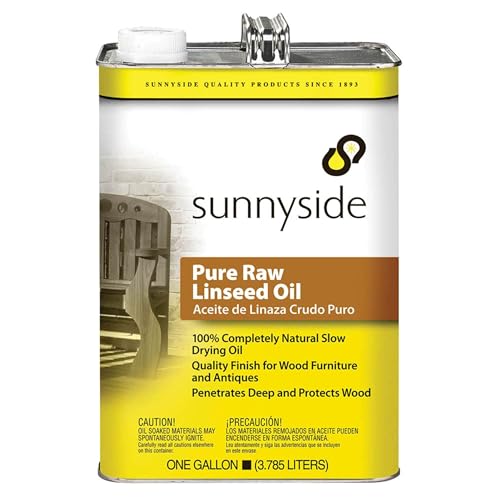
Penetrates deep and protects wood creating a quality finish for wood furniture and antiques

SUPERIOR ORGANIC REFINED LINSEED OIL: Clark's wood finish is an organic refined linseed oil which provides a warm, soft appearance and adds protection against water, liquids and daily use.

🌱 OUR PURE LINSEED OIL FOR WOOD: is a vegetable oil for treatment and maintenance of all solid wood. The oil leaves a 100% biological surface and underlines the original natural structure of the wood. Our linseed oil provides the surface with a beautiful, long-lasting and resistant surface, protecting against dirt, moisture and drying out. Lighter woods will attain a light yellow color. Contains: 100% refined linseed oil.
How to Tell When Your Linseed Oil Finish Is Fully Cured
Once your linseed oil finish is fully cured, it will feel solid and stable. First, check the surface visually; it should no longer look wet or glossy but instead have a uniform matte appearance. Lightly touch the surface—if no tackiness or stickiness remains, that’s a good sign. Perform a white cloth test by gently wiping a small area; if no oil transfers to the cloth, the finish has dried properly. A fully cured linseed oil finish also provides good protection against moisture, which is a key factor in determining whether wood cutting boards are safe for long-term use. Run your fingers over edges and pore areas; they should feel hard and smooth, not soft or rubbery. The odor of raw linseed oil, which can be strong, will significantly diminish once fully cured. Keep in mind that environmental factors like humidity can slow the curing process. For comparison, high-quality Japanese kitchen knife sets often require similar careful maintenance of their wooden handles. Historically, raw linseed oil can take several weeks to cure completely, while boiled linseed oil cures faster but still needs time. Unlike some finishing oils, honing oil is specifically designed for sharpening stones and should not be used on cutting board surfaces. When all these signs align—no tackiness, no residual odor, and a hardened feel—you can be confident that the finish is fully cured and safe for regular use.
What Happens If You Use the Wrong Linseed Oil on a Cutting Board?
Using the wrong linseed oil on a cutting board can pose serious health risks and impact the board’s functionality. Boiled linseed oil often contains metallic drying agents that react unpredictably with food. These chemicals can leach into your meals over time, potentially making them unsafe to eat. Non-food-grade oils, even if they appear dry, do not ensure safety for frequent contact with food. Raw linseed oil purchased from a hardware store is also risky unless explicitly labeled as food-grade. An inappropriate oil may remain sticky or cure too slowly, leading to a messy, impractical surface. The best course of action is to stop using the board immediately. Check the label carefully; if it does not say “food-grade” or “food-contact safe,” assume it is unsuitable. Remove the finish and reapply only a certified food-safe linseed oil to ensure your cutting board stays safe for food prep and your health.
When Linseed Oil Isn’t Right: Faster Food-Safe Alternatives
If speed and safety are your priorities, food-grade mineral oil or a mineral-oil-beeswax blend are your best options. Walnut oil, a natural plant-based choice, dries in approximately 72 hours, which is considerably faster than linseed oil’s multi-day process. Commercial board oils also offer quick dry times, typically between 8 to 10 hours under normal conditions. Just make sure to check for food-contact labels on these products to ensure they are safe for use on your cutting boards. For those also seeking a high-quality knife, reviews of affordable kitchen knives can help you select a blade that performs well without requiring a high-maintenance oil finish. Avoid using unlabeled plant oils, as they can go rancid inside the pores of your board, causing unpleasant odors and potential health issues. When quick results matter, stick with products specifically formulated for food contact and safety.
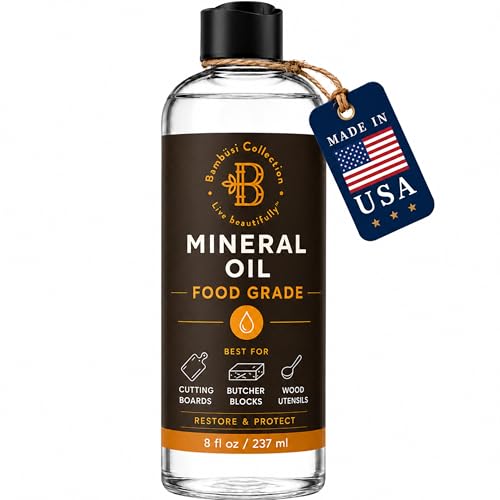
FOOD GRADE MINERAL OIL: This clear, odorless and tasteless white mineral oil is food safe and made for kitchen wood and food-contact surfaces. It soaks into dry cutting boards and butcher blocks to condition the wood without adding fragrance, flavor or unwanted residue
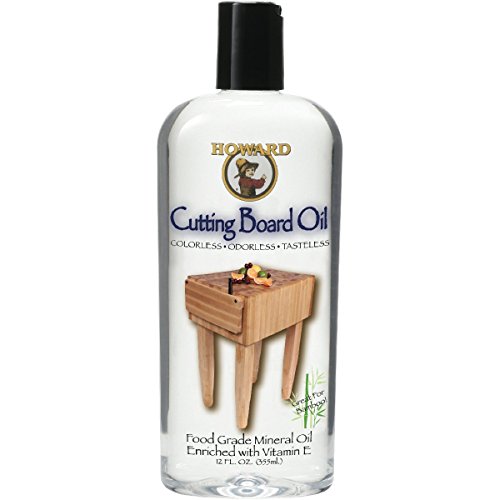
Cutting Board Oil is a deep penetrating 100% Pure USP Food Grade Mineral Oil that is tasteless, odorless, colorless, and will never go rancid

FOOD GRADE QUALITY: Premium mineral oil designed for direct and indirect food contact, meeting U.S. FDA regulations and USP standards for maximum safety
When to Use Linseed Oil on Cutting Boards (And When to Skip It)
Linseed oil is suitable for your cutting board only if you choose food-grade raw or polymerized variants. Avoid using any hardware-store boiled linseed oil because these often contain metallic driers that can be unsafe for food contact surfaces. Raw linseed oil penetrates deeply, creating a hard, protective finish, but it cures slowly—months may pass before it’s fully cured. Expect to wait at least one to two weeks before your board is ready for use after application. For a comparison of oil finishes on kitchen tools, evaluating chef knives vs santoku highlights how different materials require different maintenance approaches. Proper curing is essential to prevent any transfer of oil to food. Also, ensure you only use products labeled as food-safe and designated for kitchen use. Be mindful that oil-soaked rags pose a fire hazard; dispose of them according to safety guidelines. If you need quick results, experienced practitioners recommend skipping linseed oil altogether. Only proceed when you can confirm the product’s safety, and allow enough time for the oil to fully cure before using your board for food prep. When selecting a finish for tools that demand precision and performance, the same care applied to blades should guide your choice of wood treatments. Following a realistic maintenance schedule ensures your board stays protected without risking its food-safe status.

SUPERIOR PENETRATING POWER: Linseed oil for wood is a linseed oil with the natural beauty of all wooden surfaces. Suitable for use on all types of wood. Easy to apply and dries quickly. Provides an attractive, natural, satin finish

100% PURE RAW LINSEED OIL – NO ADDITIVES: Cold-pressed from premium flaxseeds, our formula contains no solvents, driers, or VOCs. What you get is nature’s purest wood conditioner — exactly as it has been used by craftsmen for centuries.

Penetrates and protects wood creating a quality finish for wood furniture and antiques