
Struggling to find affordable stropping compounds or tired of pricey store options? You can make a cost-effective alternative at home for just around 11.5 cents per 10 mL of diamond spray—over 200 times cheaper than buying retail.
By choosing your abrasive and mixing it with simple ingredients like petroleum jelly or melted wax, you can create a custom polishing paste or solid block tailored to your needs.
Keep reading for easy instructions on making your own stropping compound that works just as well—if not better—than store-bought.
3 Reasons to Make Your Own Stropping Compound
Making your own stropping compound can save you a significant amount of money. DIY diamond spray, for example, costs as little as $0.115 for 10 mL, which is just a fraction of the $24 or more you’d pay for a commercial product. Using common workshop materials like scrap leather, old denim, or cardboard, you effectively avoid paying for packaging and branding. You also get to choose the abrasive type—diamond powder or aluminum oxide—and can experiment with different concentrations to suit your needs. For instance, a simple chalk dust paste can serve as a mild touch-up compound. Overall, creating your own stropping compound offers a customized, cost-effective alternative without the commercial markup. If you need a reliable tool to process your abrasives, consider that many best vegetable choppers also come with sharp blades that benefit from regular stropping. Since leather’s role in this process is primarily as a carrier for compounds, any type of scrap leather works effectively. For those who also need a storage solution, consider that high-end knife sets with blocks often include multiple blade types to match different sharpening needs. A quality cutlery set can also serve as a benchmark for value when comparing the performance of your homemade abrasive to premium commercial options.
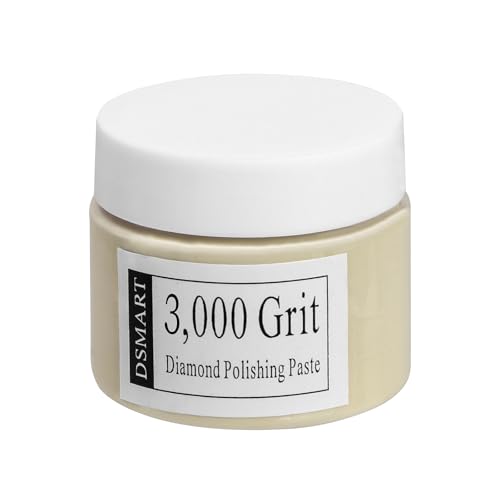
【Valuable 50g Pack】- This pack of diamond polishing & grinding compound includes total 50 gram(1.76) which is 10 times of the volume of the syringe one, it is a super valuable and professional choice for you to finish much more projects.

Double-Sided Leather Strop: Crafted with genuine cowhide, this knife strop offers both a smooth and suede side, providing flexibility for any sharpening needs. Perfect for refining and honing your blades, achieving a professional-grade edge.

Diamond powder without unnecessary additives: we offer 1 item 5 gram per pack = 25 carats 120 grit 120/140 Mesh, which is most suitable for lapping surfaces of hard materials. Large particle sizes.
How to Match Grit to Your Sharpening Stage
To match grit to your sharpening stage, you should only begin stropping after your edges have been refined to roughly 5000 JIS grit or finer. This ensures the edge is sufficiently established for fine polishing rather than aggressive material removal. If your edge needs more noticeable refinement, start with a coarse compound, which helps remove minor imperfections and bridges the gap between your stones and polishing steps. For a recommended starting point, the 4000 JIS grit stone is often ideal for knives that need general repair or a balanced edge, as noted in the selection guidance. Additionally, these sets often guide users toward balanced edge durability, a key benefit mentioned in comparisons of top carving sets. Unlike some abrasive options, this approach avoids the disposal concerns linked to certain plastic cutting boards, which are often not recyclable due to mixed materials.
Next, move to a medium compound in the 5 to 2 micron range. This level is ideal for everyday blades, as it enhances edge durability and smooths out the metal without removing too much material. Finish with a fine compound around 0.5 micron or ultra-fine for a mirror polish and a shaving-sharp edge. Between each grit change, thoroughly clean the blade to prevent contamination that could result in scratching or uneven sharpening.
When stropping, reduce your angle by 1 to 2 degrees from your sharpening angle. This prevents rounding over the edge and maintains sharpness. Remember, the coarser your stone finish, the coarser your starting compound should be to match the edge’s refinement level effectively.

Size: 176 x 52 x 15 mm

Protect your investment in quality knives with this 4000 grit knife sharpening stone, great for maintaining and refining razor sharp cutting edges
This combination sharpening stone is essential for maintaining cutting edges on tools, kitchen knives and other sharp edges. This Tool and Knife Sharpener is a dual grit sharpening whetstone with 4000 grit on one face for maintaining and refining, and 8000 grit on the opposite for polishing razor sharp edges
Which Abrasive and Binder Should You Use?
Choosing the right abrasive and binder depends on your budget, application ease, and the desired finish. For abrasives, chromium oxide combined with paraffin wax offers a low-cost, reliable solid option. Aluminum oxide pairs well with a wax-mineral binder blend for a versatile, general-purpose cut. If faster cutting is your priority, diamond powder dispersed in glycerine suits a liquid or paste format best. Binder compatibility is crucial: a good binder softens with friction, allowing abrasive particles to embed into the leather nap effectively. Avoid overly brittle binders that flake off or very soft ones that glaze over. Paste formats are easier to apply than hard bars, and applying thin layers improves particle retention. Softer binder systems are generally easier to load and reapply than dry mixes, making them more user-friendly during shaping or finishing tasks. Because the leather’s nap holds the compound best when it is warmed before loading, applying a few drops and rubbing them in on a heated surface prevents waste and ensures even distribution. Warmed leather enhances absorption and reduces the risk of the compound pooling or drying out prematurely.
Simple Recipe for a Solid or Paste Compound
To make a simple solid or paste compound, start by choosing your preferred abrasive and binder. For a paste, blend your powder into petroleum jelly until the mixture is smooth and spreadable. For a solid bar, melt a waxy binder like tallow or paraffin in a double boiler, then stir in the abrasive. Pour this mixture into a mold and let it cool to solidify.
You can experiment with alternative binders such as vegetable glycerine or more liquid options to achieve different consistencies. For instance, a base mix of equal parts vegetable glycerine and dipropylene glycol remains stable and never separates for long-term storage. To customize the appearance, add a tiny amount of pigment or incorporate a different-colored abrasive. Keep in mind that a thin layer of the compound is sufficient; if the mixture feels too thick, stir in more binder, and if it’s too soft, add more abrasive. Working with small batches allows you to better control the texture and results.
How to Apply Stropping Compound Without Wasting It
Applying a thin, even coating is essential to avoid waste. Thick layers cause abrasive particles to clump instead of cutting cleanly, which reduces effectiveness. Match your application method to the type of compound—rub wax blocks like crayons, dab pastes with your finger, or mist sprays quickly. Use only a tiny amount to start; a pea-sized dab is sufficient. Spread it evenly until the leather grain underneath remains visible, ensuring complete but light coverage. Understanding the viscosity and lubricity of your compound helps prevent clumping, much like choosing the right honing oil for sharpening stones. Over-application is a common mistake that wastes material and clogs your strop. A quality charcuterie board often requires a similar light touch with oil to prevent staining and warping. For a more durable edge, consider how premium Japanese steel responds to a finer abrasive grit, which can reduce the need for frequent reloading.
Buff the surface smooth to break up lumps and promote even distribution. Let the compound settle before stropping. Reload sparingly, only when the surface feels dry or the cutting action diminishes. Remember, a thin layer lasts longer than you might think, so resist the temptation to add more. Using the right amount and technique ensures better results with less effort and minimal waste.

Crafted from the highest quality materials

SPECS: 1oz jar of 600 grit (polishing) lapping compound

AFTER THE STONE: Sharpening leaves a burr - a fragile wire edge that folds over on the first cut, which is why a knife feels keen for a day and then stops biting. Stropping straightens and refines that edge instead of grinding it away, so the bevel comes up clean and mirror-bright and holds longer between sharpenings. Ten to twenty light passes after your finest stone is enough. Far less steel comes off than a stone takes, so a kitchen knife can be stropped every week for years.
Stay Safe When Handling Abrasive Powders
Handling abrasive powders safely begins with limiting airborne dust generation. Use wet methods such as damp scooping or mixing whenever possible to prevent powders from becoming airborne. Keep containers sealed tightly to minimize dust escape, and handle only small amounts at a time to reduce exposure risk. Never dry sweep; instead, employ a HEPA vacuum to clean up dust, preventing respirable particles from re-suspending into the air. For consistent dust control, a rotary cheese grater with enclosed collection can serve as a model for containment.
Personal protective equipment is essential. Always wear a NIOSH-approved respirator to guard against inhaling crystalline silica dust, which can cause silicosis. Complement this with eye protection and gloves to avoid skin irritation and contamination. Wash your hands thoroughly before touching your face to prevent transferring dust, and change contaminated clothing before leaving your workspace to avoid spreading dust elsewhere. For a workspace that maintains high safety standards, consider investing in quality charcuterie boards to ensure your surfaces are easy to clean and free of dust traps.
Before starting work, read the Safety Data Sheet (SDS) for your abrasive product. Using safer substitutes like aluminum oxide can drastically lower your long-term health risks, although you should remain vigilant about proper handling procedures regardless of the abrasive type. Proper precautions are key to staying safe when working with abrasive powders. For a more informed choice, consider comparing the affordable Japanese knives reviewed in our guide for value comparisons in the kitchen.
