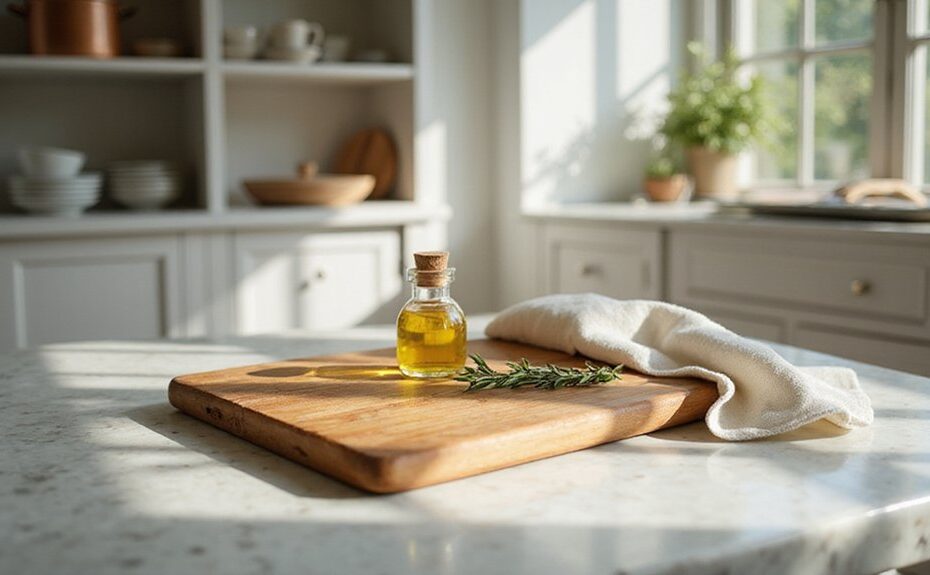
Ever wonder how to keep your cutting board looking great and working well? Proper oiling is key to protecting the wood and extending its life, but it can seem tricky at first.
When done right, you’ll have a smooth, food-safe surface that resists moisture and stains. Below, you’ll find simple steps to master this routine and keep your board in top shape.
Apply Mineral Oil in Six Simple Steps
Apply mineral oil in six simple steps:
Start by thoroughly cleaning your board. Wash it with warm water and mild dish soap, rinse well, and dry completely. Pay special attention to all edges and cracks to ensure no moisture remains. This step is crucial because trapped water can create a barrier that prevents the oil from absorbing properly. A light wash removes dust or factory residue without requiring soaking. Choosing a high-performance knife set alongside proper board maintenance ensures your blades stay sharp and your surface stays protected. To keep the surrounding workspace hygienic, periodically clean ceramic stones used for sharpening with a mild cleaner to prevent residue buildup.
Next, pour a small amount of food-grade mineral oil onto the surface. Be careful not to overdo it—you can always add more if needed. Using a lint-free cloth, rub the oil in with the grain of the wood. Make sure to coat the face, back, and all edges. Don’t forget to work oil into any grooves and the end grain areas, where moisture can settle. For boards that see heavy use, pairing this step with quality chef knife sets ensures your tools and surface work well together.
Allow the oil to soak into the wood for at least 20 to 30 minutes. During this time, reapply oil to any spots that appear dry. You’ll know the treatment is complete when the surface develops a light gloss and no immediate dry patches are visible.
Finally, buff away all excess oil with a clean cloth until no greasy film remains. You want the wood to absorb the oil rather than sit coated with a thin, shiny film. This process helps maintain a smooth, conditioned surface that resists moisture and stains.
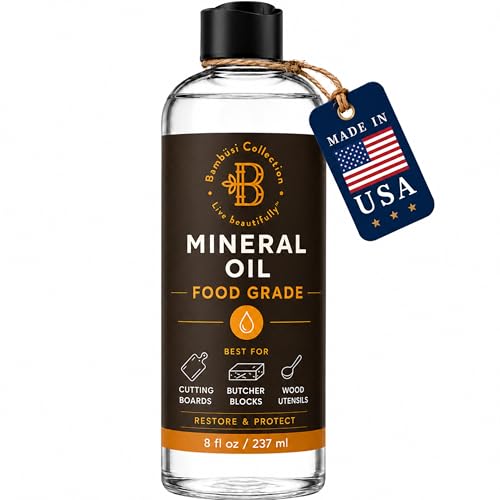
FOOD SAFE MINERAL OIL FOR CUTTING BOARDS: 100% pure food grade white mineral oil with nothing added. Clear, odorless, unscented and tasteless, so it won't change the flavor of food you prep on your board. Safe on wood cutting boards, butcher blocks and any wooden surface that touches food

FOOD GRADE QUALITY: Premium mineral oil designed for direct and indirect food contact, meeting U.S. FDA regulations and USP standards for maximum safety
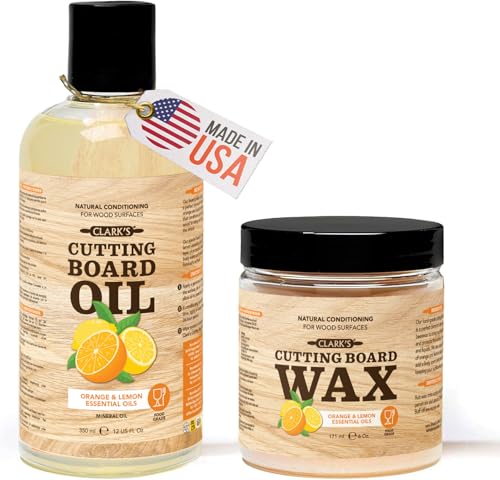
PERFECTLY PAIRED FORMULA: Food grade mineral oil for wood cutting board and wood wax are designed to work seamlessly together for optimal wood care and maintenance results
How Often Should You Oil a Cutting Board?
The ideal frequency to oil your cutting board is roughly every 3 to 4 weeks for regular daily use. If you do heavy prepping or frequent chopping, consider oilings every 2 to 3 weeks. Light use allows for longer intervals, around 6 to 8 weeks, between oilings. However, instead of sticking strictly to these timeframes, pay attention to the board’s appearance and feel. If the surface becomes dry, rough, or water no longer beads on top but soaks in, it’s time to reapply oil. Environmental factors like dry indoor air or winter heating can also cause the board to dry out faster, meaning more frequent oilings are necessary. Watch for these signs and adjust your oiling schedule accordingly. Regular maintenance, about once a month, provides a solid baseline, but prioritizing the board’s condition over the calendar ensures its longevity. For those also seeking quality kitchen tools, a cutlery set review can offer valuable comparisons on performance and value. Similarly, choosing the right tool for the task can be informed by understanding top pizza scissors for quality and performance. Just as a dull blade compromises your prep work, maintaining a sharp edge on your knives is essential, and natural whetstones offer a traditional method for achieving that precision finish.
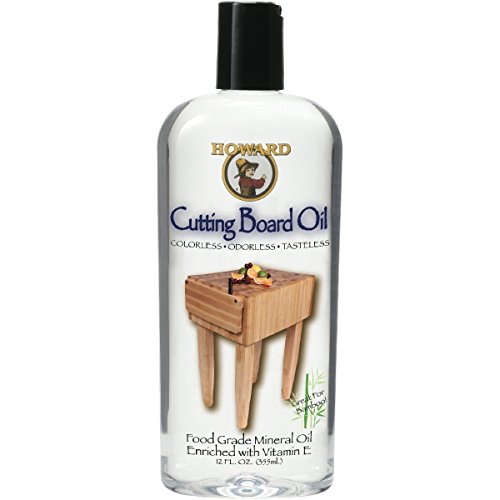
Cutting Board Oil is a deep penetrating 100% Pure USP Food Grade Mineral Oil that is tasteless, odorless, colorless, and will never go rancid

REVITALIZING FORMULA BLEND prevents drying and cracking of hardwoods and bamboo. Great for restaurant cutting boards, great for home kitchens even chef cutting boards. This is the safest conditioner and will rejuvenate and revitalizes cutting boards. Great size for restaurants and industrial kitchens.

NSF CERTIFIED FOOD GRADE - This premium mineral oil is NSF certified and lab-tested to meet the strictest food safety standards. Colorless, odorless, tasteless, and gluten-free — perfect for cutting boards, butcher blocks, and all food-contact surfaces.
Why Mineral Oil Is the Only Safe Choice for Boards
Food-grade mineral oil is the only safe choice for finishing your cutting board. It is stable and won’t go rancid, unlike kitchen oils that can spoil over time. This stability prevents odors or contamination that could transfer to food. Mineral oil’s inert, odorless, and tasteless qualities make it safe for direct contact with food. It penetrates deeply into the wood fibers, conditioning the surface and creating a barrier against moisture. Unlike some oils that form a brittle film, mineral oil conditions the wood to reduce cracking and swelling. After applying, wipe off any excess once the oil has been absorbed. Always select a product labeled as food-grade or USP-grade. Avoid industrial or cosmetic mineral oils, as they are not intended for food contact. Maintaining a razor-edge edge on your knives is just as important for safe, clean cuts. Choosing the correct grade ensures your cutting board remains safe, clean, and durable over time.

FOOD-GRADE MINERAL OIL FOR CUTTING BOARDS: Helps restore and protect dry cutting boards, butcher blocks, and wooden kitchen surfaces. Refreshes dull, worn wood and helps prevent cracking or splitting; works on bamboo, teak, acacia, olive wood, and hardwood boards

Food Grade - SMPLY. Mineral Oil is perfect for cutting boards, wooden spoons, butcher-block countertops, and any wooden surface that is used to prepare food!

NSF CERTIFIED FOOD GRADE - This premium mineral oil is NSF certified and lab-tested to meet the strictest food safety standards. Colorless, odorless, tasteless, and gluten-free — perfect for cutting boards, butcher blocks, and all food-contact surfaces.
What Happens If You Use Vegetable or Olive Oil?
Using vegetable or olive oil on your cutting board can lead to problems. These plant-based oils oxidize quickly when exposed to air, heat, and light, causing them to go rancid. Olive oil stays liquid and doesn’t cure, so it remains prone to spoilage, which produces a sour smell. Vegetable oils break down into sticky, gummy residues that feel tacky instead of smooth. For a similar reason, using the wrong sharpening stone on Japanese knives can also cause surface damage over time.
This tacky buildup attracts dust, creates uneven patches, and transfers stale tastes and odors to your food. Even after washing, the odors can linger, making your board smell sour and feel greasy. Because these oils don’t harden or cure, you’ll find yourself needing frequent reapplications. Over time, the residue becomes difficult to remove and can cause contamination, leaving your cutting surface looking fine but feeling unpleasant and unsafe to use.

Revitalizing blend prevents drying and cracking of hardwoods and bamboo

SIMPLE INGREDIENTS - Beeswax, Fractionated Coconut Oil, Pure Mineral Oil, and Vitamin E
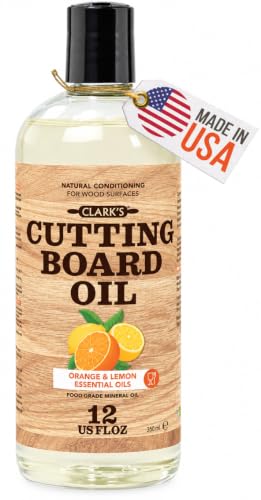
FOOD GRADE MINERAL OIL: Our mineral oil oil is lab tested to meet strict food safety standards. Clark's wood cutting board oil is not colorless, providing deep nourishment while keeping your wood cutting boards and kitchen surfaces protected.
How to Tell When Your Board Needs Oiling
To tell when your board actually needs oil, start by inspecting its appearance. If it looks pale, chalky, or dull rather than rich and shiny, the oil has depleted. You’ll often notice this fading first in areas of high use, such as near edges or cut zones.
Next, perform a water test: pour a teaspoon of water onto the surface. If the water beads up, your board still has some protection. But if it soaks in within 30 seconds to a minute, it’s time to apply oil. Don’t rely solely on a schedule; boards used daily will need more frequent checks than those used occasionally. Unlike some materials, bamboo cutting boards often require more frequent oiling due to their dense, moisture-wicking nature. Choosing a quality affordable knife can help ensure clean cuts that preserve the board’s surface.
Additionally, feel the surface’s texture. If it feels rough or fibrous instead of smooth, this is another clear sign it’s overdue for oiling. Ignoring these indicators can lead to hairline cracks, especially around edges or cuts. Regularly checking your board’s appearance, water repellency, and texture will help maintain its health and longevity. Proper care includes using a quality bread knife to avoid deep scoring that can accelerate moisture loss.

【Food Safe Mineral Oil for Cutting Boards】Made from 100% food-grade mineral oil, this colorless and odorless conditioner is laboratory-tested to meet strict food safety...
How Long Should the Oil Soak Into the Wood?
The oil should soak into the wood for at least 20 to 30 minutes for a light maintenance coat, but longer soaking is needed for deeper penetration. When the surface no longer looks wet and the wood’s grain stops appearing glossy, the absorption process is complete. For more thorough treatment, leave the oil on for 4 to 8 hours. Very dry or end-grain boards benefit from overnight soaking, which is 12 hours or longer, because the end grain absorbs more oil and requires extra time. Mineral oil typically takes 4 to 6 hours, while tung oil can take anywhere from 24 to 72 hours per coat. Board butter absorbs faster, often within 1 to 2 hours. Always place the board flat in a well-ventilated spot during soaking. For knife lovers, end-grain butcher blocks often demand the longest oil soak times due to their porous structure. Using ceramic stones for sharpening ensures the blade stays precise and effective even after prolonged board care. Boards that receive consistent oiling every few months will maintain their appearance and resist drying cracks far longer than neglected ones.
Why Wiping Off Excess Oil Prevents a Sticky Board
Applying a thin coat and then wiping away any excess prevents a sticky, gummy surface. Use a lint-free cloth to remove all the surplus while the wood is still wet. This step ensures you don’t leave behind thick patches of oil that can turn sticky as they dry. After wiping, buff the surface lightly to smooth out any remaining residue and guarantee a dry, matte finish. A well-balanced layer of oil that’s been properly wiped off won’t feel greasy or shiny to the touch. Instead, it will leave the board clean, protected, and ready for regular use without sticking or feeling unwieldy. This careful removal mirrors the design logic behind butter knives, where a notch prevents excess butter from collecting and becoming messy.
Should You Mix Mineral Oil and Wax for Protection?
Mixing mineral oil and beeswax in about a 4:1 ratio creates a soft, protective balm for your board. To do this, gently melt the beeswax and then stir in the mineral oil until fully combined. This blend leverages wax layering to seal in the oil and repel moisture while the oil penetrates deeply to hydrate. The finish tends to be smoother and slightly glossy, and it lasts longer than oil alone.
Apply the oil first and let it soak in for at least a few hours or overnight. Then, evenly spread the wax blend over the surface. After it has cooled and set, buff off any excess to achieve a non-sticky, protected surface. Keep in mind that these food-safe additives act as a conditioner rather than a permanent seal, so periodic application is necessary. This method provides your board with enhanced resistance to water, stains, and grime. For cutting boards used with charcuterie, pairing this care routine with the right tools, like top cheese knife picks, ensures a clean and enjoyable serving experience.
Five Mistakes That Ruin a Wooden Board’s Finish
To keep a wooden board’s finish intact, avoid these five common mistakes. First, never use cooking oils on your board. They tend to go rancid inside the wood, leading to unpleasant odors and making future restoration more difficult. Second, do not put your board in the dishwasher. The heat can warp and crack it, while also stripping away its protective oil layer. Third, avoid soaking or submerging the board in water. Prolonged exposure causes swelling, warping, and raised grain, all of which damage the finish. Fourth, skip regular oiling. Neglecting this step leaves the wood dry, dull, and vulnerable to cracking over time. Fifth, ignore scratches and grooves. These imperfections trap debris and accelerate surface wear, diminishing the board’s appearance. Regular sanding and re-oiling also helps preserve the knife edge, which relies on proper cutting surface maintenance. To properly restore the surface, gently sand with 200 to 320 grit paper to smooth out imperfections, then apply conditioning oil. For comparison, the best knives for processing meat require similar care to maintain a sharp edge. To protect your investment, always pair your board with a high-carbon stainless steel blade that resists rust and holds its edge. Steer clear of these errors to extend the life and beauty of your wooden board.