If you’re wondering how to sharpen your serrated Cutco knives at home, you’re in the right place. Unlike straight blades, serrated knives need a specialized tool and careful technique to bring back their cutting edge.
In this guide, you’ll learn how to use a ceramic rod to sharpen each scallop and how to test your work to ensure your knives slice cleanly again.
Ready to restore your knives’ sharpness? Keep reading for all the details.
Why Sharpening a Cutco Serrated Knife Differs From Straight Edges
Serrated knives must be sharpened differently from straight-edged blades because of their unique construction. Unlike a straight edge, which relies on a continuous bevel that you can easily hone along a flat stone, serrated knives have individual teeth and recessed cutting surfaces. These teeth sit above the recessed areas, which only contact the food during slicing. When you sharpen a serrated knife, you need to focus on each tooth separately—matching the original grind—rather than trying to hone the entire edge at once. This precision is why choosing a quality knife set with proper sharpening guidance can make long-term maintenance much easier. Many top white knife sets include serrated blades, so understanding their specific care is essential.
Standard sharpening tools, such as a flat stone or a general-purpose rod, won’t work effectively because they don’t conform to the tiny, narrow gullets between the teeth. Attempting to use them can damage or alter the profile of the edge. For example, Arkansas stones are designed for straight edges and cannot fit into serrated gullets. For specialized blades like the Cutco Double-D, which has a very precise scalloped edge, only the factory-designed sharpening wheels can restore the correct shape. Home sharpeners typically lack the narrow, specialized equipment, so trying to use standard techniques risks ruining the knife’s unique serration profile.
What Tools Actually Work for Sharpening Cutco Serrations
The only home tools that can effectively sharpen Cutco serrations are specialized ceramic rods. These rods can reach into each individual scallop more precisely than flat sharpening slots. However, using them requires extreme control, as maintaining the correct angle is crucial to avoiding dulling the teeth. Hand stones or traditional sharpening tools are not recommended because they lack the precision needed and pose a high risk of damaging the recessed scallops and protective crowns. Pull-through sharpeners, even those with serrated slots, are strictly advised against by Cutco because they can harm both the blade and its unique serration design. Unlike some cutting boards made from bamboo that require frequent oiling, serrated knives demand specialized maintenance to preserve their edge. For hunters processing their own game, selecting a proper skinning knife is essential, as the right fit ensures clean cuts and protects the blade from damage. Free sharpening via mail-in service is available but costs for postage. Similarly, keeping a plastic cutting board clean requires safe cleaning products to prevent bacterial buildup, especially after cutting raw meat. Ultimately, the safest choice remains sending your knife back to the factory for professional sharpening.
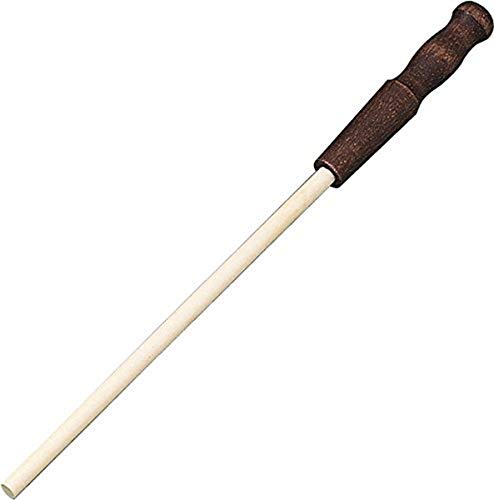
Wood handle

SHARPENS ALL KINDS OF KNIVES & TOOLS: This diamond-coated steel rod is used to sharpen a variety of knives and tools such as serrated blades, electric fillet knife blades, and even fish hooks. Crafted with durable materials for long-lasting use, ensuring a reliable tool for all your sharpening needs.

Size: 2 pieces diamond sharpeners about 135mm(5.3 inches) long-lightweight,suitable size,easy to store and save space
Step-by-Step: How to Sharpen Each Cutco Tooth From Handle to Tip
When you reach the tip, slow your stroke and lift the handle to follow the curve. Finish that last serration carefully without overshooting the point. After completing your full pass along each serration, refine the edge with light finishing strokes to smooth out any roughness. Inspect the blade to check for consistent evenness, and test its sharpness on soft bread to ensure it slices cleanly. If one section feels weaker than the others, repeat the sharpening motion only on those specific serrations. The frequency of sharpening depends on how often and intensively you use the knife; sharpen only when you notice a decline in cutting performance to preserve the original pattern. This technique uses vibration technology for precise sharpening, ensuring no metal loss or damage to serrations. For serving the sliced bread afterward, pairing it with one of the top-rated charcuterie boards can elevate your entertaining. If you ever need to retire this knife, follow local disposal rules for safe wrapping and recycling routes. To maintain your cutting board’s surface after slicing, apply a food-grade mineral oil to protect the wood from moisture and cracking.

Size: You will receive 2 pieces of diamond sharpeners, the tools are about 135mm/5.3 inches long,lightweight,suitable size,easy to store and don't take up much space.

1. 4.5" Sharpening Stick Compact size with pocket clip and 1.44 light weight, easy carry.
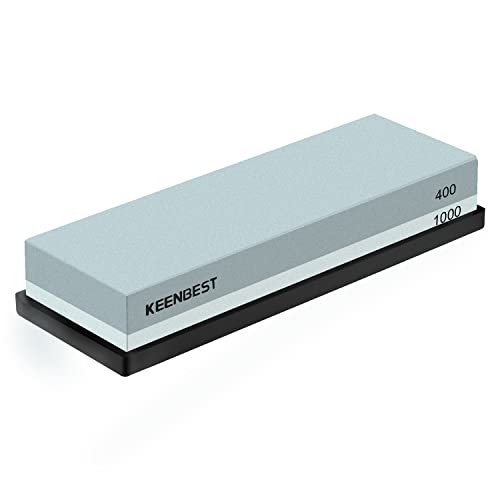
No oil needed, just put the stone into water for 10-15 minutes before using and they are ready to use. You can always adding water on it while sharpening, with water the lubricating effect of grinding will be great and helps you to save strength
Match the Factory Bevel on Each Tooth Without Over-Grinding
Identify the beveled side of your Cutco serrated blade, which usually has a visible polished grind on the serrations. Match the factory bevel by using a rod that fits snugly into each gullet of the blade. Apply light pressure and use short, controlled strokes to gently re-establish the bevel. Stop as soon as you feel a burr forming; this indicates you’ve matched the existing edge without over-grinding. Remember, the goal is to preserve the original serration profile, not to reinvent it. Avoid removing too much metal, as over-grinding can weaken the blade and alter its cutting performance. Unlike glass cutting boards, which can be hard on edges, your sharpening rod should be softer than the blade steel to avoid damaging the serrations. Keep your strokes deliberate and consistent with the factory angle to protect the longevity of your knife. For a space-saving storage approach, consider a DIY holder that protects both the edges and the serrations from contact with other tools. This careful approach is similar to how a charcuterie board requires balancing food components without overloading any single element.

Premium Material: The diamond knife sharpener is made of superior diamond material, which has excellent wear resistance, corrosion resistance, high temperature resistance, high strength and impact resistance, durable for long time use.

SHARPENS SERRATED AND STRAIGHT EDGES: Tapered diamond-coated rod reaches scallops and micro-serrations while the flat/half-round section restores plain edges, making it suitable for bread knives and pocket knives
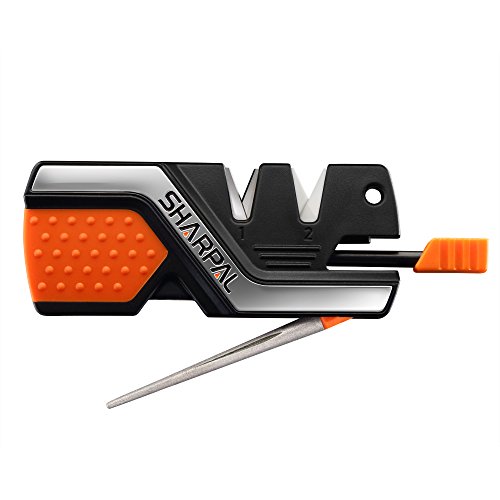
6 FUNCTION: 1. No. 1 V-Notch slot (Coarse CARBIDE)-Quickly set a new edge; 2. No. 2 (Fine CERAMIC)-Hone for a smooth finished edge; 3. Tapered diamond rod (Medium 400 Grit) for serrations & gut hooks; 4. Diamond rod with groove for fishhooks; 5. Ferro rod; 6. High-pitched emergency whistle
Finish on the Flat Side, Then Test on a Real Tomato
Finish on the flat side with just a few light passes. Use an edge-trailing motion to gently remove the wire edge—avoid grinding the blade. Overworking this step can ruin your knife’s bite, so focus on precision rather than effort. Check for a slight catch with your fingertip to ensure the burr is gone; a clean burr removal prevents ragged cuts and keeps your knife safe for soft foods.
Next, test your edge on a real tomato. The blade should pierce the skin instantly and glide through without crushing. If it skids or squishes the fruit, give your blade a couple more light deburring passes. When your cut is smooth and effortless, your sharpening session is complete—no myths, just sharp, balanced results.
3 Signs Your Cutco Serrations Are Too Worn for DIY Sharpening
If your Cutco serrated knife’s teeth appear rounded or flattened, especially at the tips, DIY sharpening probably won’t fix the problem. Rounded tooth tips mean material has been lost, not just dulled, making them unsuitable for home sharpening. Flattened peaks can no longer grip and cut food fibers effectively, and without sharp, defined peaks, restoring the original serration pattern at home isn’t feasible. To maintain peak performance, the durability and upkeep of your sharpened edge depends on selecting the right maintenance method. Just as charcuterie boards require precise craftsmanship to retain their value, serrated knives depend on exact tooth geometry that dulling destroys.
Check the gullets—the inner spaces between the teeth. If these areas are smooth instead of sharply defined, your blade has lost its cutting geometry. This prevents the knife from slicing properly, as the gullets should act as channels to help the blade bite into food. When the gullets are dull and rounded, home sharpening can’t recreate the original sharpness. Just as charcuterie boards command a premium for their precise craftsmanship, serrated knives rely on exact geometry that dulling destroys.
Finally, pay attention to how your knife performs. If it drags, tears, or crushes bread instead of cutting cleanly, it signals the serrations are too worn. Once your light touch-ups and standard sharpening attempts no longer improve performance, it’s time to take the blade to a professional for factory service. Continuing DIY efforts under these conditions won’t restore the serrations fully and can damage the knife further.

High Performance: The medium coarseness removes steel quickly to re-shape or sharpen very dull edges.

【Complete Knife Sharpening Stone Kit】You don't need to be a Pro to sharpen your blades, all you need is the right tools & technique. All the sharpening tools you need are here, one affordable set for you: 400/1000 & 3000/8000 grit whetstone; Coarse flattening stone; Non-Slip Bamboo base; Knife sharpening angle guide; Leather strop, a simple instruction manual about how to use and what does every component do.

Professional Whetstone: 2 whetstones have difference grit which are 400/1000 and 3000/8000. The grit is accurate. 4 sides grit are satisfy with any knife blade needs. 400/1000 grit is typically used to repair knives with chipped edges and sharpen dull knives. 3000/8000 grit used to refine the edge and provide extra fine finish/polish on your blades.