Are glass cutting boards a good choice for your kitchen? You might have seen them praised for their clean look and ease of cleaning. But there are some downsides to consider as well. They’re often chosen for light tasks and serving rather than heavy-duty chopping.
Keep reading to find out if they’re right for your cooking needs.
What Exactly Is a Glass Cutting Board?
A glass cutting board is a flat surface made from tempered glass, designed specifically for food preparation. This type of glass is treated to be more impact-resistant and capable of handling temperature fluctuations better than regular glass, making it a durable choice in the kitchen. Typically, you’ll find them in various shapes like rectangular, round, or decorative designs, and in different colors such as clear, black, or with printed patterns, offering a modern aesthetic. This non-porous, hygienic surface contrasts sharply with the specialized knives with holes reviewed for perfect spreading, highlighting different kitchen tool priorities. Unlike wood, which requires more careful maintenance, glass is non-porous and does not absorb bacteria, making it a highly sanitary option. This makes glass boards a practical choice if you already own a high-quality top knife set with block, as they prioritize hygiene over blade preservation.
These boards are multifunctional: they not only serve as a cutting surface but also help protect your countertops from scratches, stains, and heat damage. Since glass is non-porous, it doesn’t absorb liquids or harbor bacteria, which makes it a hygienic option. It’s also recyclable and environmentally friendly, aligning with eco-conscious kitchen practices.
Glass cutting boards are scratch-resistant and heat-resistant, meaning they won’t easily score or deform from knife contact or hot items. They’re a sturdy, stable alternative to traditional wood or plastic boards, providing a smooth, rigid working surface perfect for slicing, dicing, or even as a decorative worktop protector.
Why Glass Cutting Boards Are Easy to Clean and Sanitize
Glass cutting boards are especially easy to clean and sanitize due to their nonporous surface, dishwasher-safe design, and simple maintenance routine. Because glass is nonporous, it doesn’t trap moisture or food particles, allowing for quick and effective cleaning. After each use, you can wash it with warm water and dish soap or place it in the dishwasher for a deeper clean, as the heat sanitizes better than hand washing alone. Plus, glass won’t warp in the dishwasher, ensuring longevity. For buyers seeking quality and value, a well-chosen cutlery set can complement the sanitized surface for a complete kitchen experience. However, it is important to note that glass cutting boards can dull blades more quickly than other surfaces, requiring more frequent sharpening to maintain cutting performance. Handling raw meat requires thorough sanitation; a chlorine bleach solution can be used, as the nonporous surface prevents absorption. The bleach remains on the surface, providing reliable sanitation with minimal effort. For pungent foods, a quick wipe-down after cutting helps prevent lingering odors, keeping your board fresh and ready for subsequent tasks. Unlike porous wooden boards, glass surfaces resist the deep staining that can degrade presentation and require costly replacement.

PRODUCT FEATURES: Glass cutting board is made of tempered glass for long-lasting durability. The four edges of the product are carefully polished and very smooth and safe, 12x16" & 12x8" ,Set of 2 (Clear).

Large cutting boards made of break-resistant tempered glass.Rectangle size: 12” L x 16”

Non-Slip & Knife-Friendly Surface: Tempered glass cutting boards equipped with a non-slip & food-grade silicone edges to prevent sliding during use.The tempered glass surface is gentle on knife edges while being resistant to deep cuts, making it both practical and long-lasting
The Biggest Problem: How Glass Cutting Boards Dull Your Knives
Glass cutting boards are very hard, which makes them easy to sanitize but detrimental to your knives. Because glass is harder than your knife’s steel, each cut flattens the microscopic serrations on the blade instead of supporting a smooth, clean slice. Unlike wood or plastic, a glass board lacks the cushioning that allows the blade to glide gently rather than impact harshly. In contrast, end grain wood boards provide a natural cushioning that helps preserve a knife’s edge over time. For example, serrated knives are especially vulnerable to this harsh surface because their toothed edges require gentle support to stay sharp. This is why many chefs consider wood cutting boards the safer choice for blade longevity.
Over time, this damage causes your knife’s edge to roll, chip, or develop nicks much faster. As a result, your cuts become less precise; foods tear instead of slicing cleanly. To compensate, you might press harder, which accelerates blade wear and dulls the knife even more. Frequent sharpening then becomes necessary, shortening the lifespan of your blades.
For regular food prep, glass cutting boards are among the worst options. While they excel at easy cleaning and sanitation, they are a poor choice for maintaining sharp, effective knives. Using glass as a chopping surface can ultimately cost you time and money on knife maintenance. Instead, treat it as a serving or presentation board, not an everyday cutting surface.

Experience the beauty of premium solid walnut! Crafted from premium natural walnut wood, this walnut wood cutting board is finished with natural oil to boost durability and create a smooth surface, preserving the wood’s pure natural qualities for daily kitchen use. It serves as an ideal food prep surface, and this family-friendly wooden cutting board lets you cook with joy in your kitchen while caring for your family’s well-being.

【END GRAIN WALNUT CONSTRUCTION】Built with vertically arranged Black Walnut wood fibers in a checkered end grain pattern, this board provides a self-healing chopping surface that is exceptionally gentle on knife edges. Unlike edge grain or plastic boards, the end grain structure allows knife blades to slide between fibers rather than cutting through them, keeping your knives sharper longer while minimizing visible knife marks.
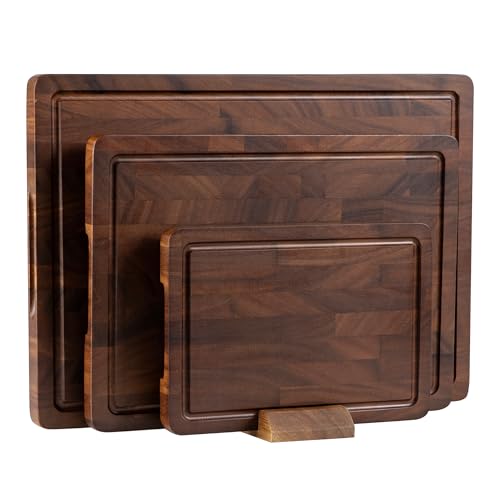
【Craftsmanship and Material】THETCHRY cutting board set is meticulously crafted from genuine South American Walnut. Renowned for its dense grain, walnut is considered the premier material for high-end kitchen tools. Not only is this board 1.5 times harder than ordinary wood, but its end-grain pattern effectively minimizes knife marks, protecting your blades with every cut.
Is a Glass Cutting Board Safe to Use?
Glass cutting boards are not the safest option for active food preparation. Their slick surface can cause food to slide during chopping, especially with smooth items like tomatoes. This increases the risk of a knife slipping and potentially cutting your fingers. Tempered glass boards can shatter into sharp shards if dropped, which is a serious injury hazard. Any chips or cracks compromise the board’s integrity, making it more prone to breaking or creating dangerous splinters. While they are easy to sanitize and dishwasher-safe, their safety during heavy chopping and frantic holiday prep is questionable. For safer, more stable cutting surfaces, opt for non-slip boards designed to handle frequent use. For context, wooden boards require regular maintenance with cutting board oil to prevent drying and cracking, while glass needs none. Reserve glass boards for serving or display to avoid unnecessary risks in the kitchen. Furthermore, glass’ hardness will rapidly dull a blade, requiring you to frequently restore a keen edge using a proper sharpening technique suited for standard knives, unlike the special methods needed for serrated edges. Even the hard surface of glass can cause microscopic chips in steel, accelerating blade wear with every chop.

Large 10.39-in x 14.78-in Utility Cutting Board is ideal for big meals

KITCHEN ESSENTIAL: These nonslip cutting boards are expertly designed to provide an exceptional experience, whether for cutting, slicing, dicing, mincing, or chopping.

Versatile 2-piece set: Includes one 7.25 x 10.75 inch Prep Board and one 9 x 12.9 inch Everyday Cutting Board, perfect for slicing, dicing and daily kitchen prep
Why Cutting on a Glass Cutting Board Feels Loud and Uncomfortable
Cutting on a glass board feels loud and uncomfortable because the surface is unyielding and reflects sound and vibration directly back into your hand. Each chop produces sharp clinking and scraping noises that can grate on nerves, similar to nails on a chalkboard. The blade drags and squeaks against the glass, creating abrasive friction that amplifies sensory discomfort. The rigid hardness also transfers shock into your hand, making every cut feel abrupt and unforgiving. Additionally, the smooth, slick surface causes food to slide, reducing control and stability. The constant clatter and friction turn routine food prep into a physically tiring and jarring experience you’ll want to avoid.

PREMIUM QUALITY AND DURABLE: THETCHRY plastic cutting boards for kitchen is made of high-quality food-grade plastic, which is safe and healthy. And the surface of the cutting board is tough enough to withstand chopping, slicing and dicing various foods. Even after long-term use and repeated washing, it will not bend or break, and can be used by you and your family for a long time.

ULTRA DURABLE STRENGTH: 3rd Party Tested for durability, thick cutting boards have a nonporous surface that won’t splinter or peel, unlike wood cutting boards or a bamboo cutting board; deep grooves help catch messy juices while our strong design is built to last in your home to handle tough messes

15.4"x10.4" Dual-Sided Cutting Board: Engineered with a spacious double-sided design to keep separation of different food types. Use titanium side for raw meat and seafood. Flip to the Wheat Straw PP side for chopping vegetables and fruits, a softer material that effectively protects your knife edges from rolling, ensuring a sharp and safe cutting experience
Where Glass Cutting Boards Excel: Durability and Appearance
Glass cutting boards excel in durability and appearance. Tempered glass resists daily wear much better than softer materials like wood or plastic. Unlike wood or plastic, a glass board won’t develop deep grooves, helping it stay smooth and looking new longer. This scratch resistance keeps its clean look intact, making visual appeal a key benefit. The nonporous surface doesn’t absorb stains or odors, so your board stays bright and hygienic over time. Additionally, heat resistance allows you to place hot pans directly on it without risk of scorching or warping. As a result, glass boards maintain a sleek, polished finish even after repeated use, making them both durable and attractive for a modern, minimalist kitchen aesthetic. However, for those who prioritize blade longevity, top butcher blocks are often recommended as a better alternative. Furthermore, these boards are crafted with polished edges for a sleek, finished appearance suitable for various kitchen uses. While glass cutting boards are not known for protecting knife blades, they still offer a superior scratch resistance that surpasses many softer cutting surfaces.
Should You Buy a Glass Cutting Board for Serving or Display?
Cost considerations are key here: a glass cutting board for serving or display costs more than a typical plastic or wooden option because you’re paying for aesthetics and ease of cleaning rather than function as a prep surface. Tempered glass with a non-slip backing provides the best stability and safety when used stationary. However, avoid placing it in high-traffic areas or where it might be knocked or dropped, as glass can shatter into sharp fragments. For a gentler yet durable alternative, many prefer walrus oil wood wax to maintain a wooden board’s surface. For occasional use as a serving piece or to protect your countertops, a glass board can be a stylish and practical choice. This design choice reflects a similar functional compromise seen in butter knives, where a notch prevents butter from sticking while sacrificing pure cutting performance. But if you need a durable, everyday chopping board, it’s better to look elsewhere, especially since ceramic knives require a softer, more forgiving surface to maintain their edge and avoid chipping.

Premium Tempered Glass Cutting Board — Crafted from high-quality tempered glass that resists breaking, scratching, and staining; built to withstand daily use and provide long-lasting durability.

GLASS CUTTING BOARD SET: Includes two different sizes of glass cutting boards (16x12 Inch) (12x8 Inch). Fine polished edges, practical handles and non-slip feet. Say goodbye to ingesting microplastics

Hacaroa 4 pack tempered glass cutting board with 2 different sizes, two large cutting boards measure 15.7 x 11.8 inches, two small ones 11.8 x 7.9 inches, perfect for almost any kind of food including meats, breads, fruits, etc.
Who Actually Benefits From a Glass Cutting Board?
Glass cutting boards are especially beneficial if you prioritize hygiene and easy cleaning. Their non-porous surface resists juices and bacteria, making them ideal for handling raw meats, seafood, or produce. Unlike wood or plastic, they don’t develop deep knife grooves, which can trap moisture and bacteria over time, simplifying cleanup after staining foods like turmeric or beetroot. A quick rinse or dishwasher cycle is usually enough to keep them spotless.
You’ll also benefit if you prefer low-maintenance kitchen tools that require minimal effort to keep in good shape. Unlike traditional boards that need frequent oiling or careful scrubbing, glass boards are durable and dishwasher-safe. They serve well for quick food prep or as serving platters, reducing the time spent on maintenance. However, if you use ceramic knives on a glass board, you will need a proper sharpening stone to restore their edge at a precise angle.
If aesthetics matter in your kitchen, glass boards double as stylish serving trays for cheese, charcuterie, or appetizers. Bakers appreciate their smooth, flat surface for rolling dough without worry of absorption or staining. Additionally, their heat resistance allows them to double as trivets, protecting counters from hot pots and pans, especially in small kitchens where space is limited. Keep in mind, though, that glass boards are best suited for prep and presentation rather than heavy chopping, as they can be brittle and prone to shattering under force. Unlike plastic cutting boards, which are not typically recyclable in curbside bins due to contamination and material composition issues, glass boards are made from a material that is fully recyclable if broken. For more durable chopping tasks, Japanese chef knives are specifically designed with harder steel edges that excel on wooden boards, avoiding the edge damage that can occur on harder glass surfaces.
The Honest Verdict: Are Glass Cutting Boards Good for Everyday Cooking?
Glass cutting boards are not ideal for everyday cooking. They tend to dull your knives more quickly than wooden or plastic boards, which means you’ll need to sharpen them more often. The hard surface offers no give, making chopping and prep work louder and more frustrating due to less friction and control. While they look sleek with various color options and materials, they function best as secondary tools rather than primary cutting surfaces.
You can use glass boards as trivets or serving platters because of their heat resistance and easy cleanup. Their non-porous surface is excellent for handling raw meats or messy foods without staining or absorbing liquids. However, for daily chopping, most cooks prefer wood or high-density polyethylene (HDPE) boards. Glass is good for hygiene, but it doesn’t hold up well to frequent use, so it’s best to reserve it for specific purposes rather than everyday prep work.