Finding the right serrated knife for different tasks can feel overwhelming. From bread to tomatoes to steak, each type is designed with specific tooth patterns and blade shapes to make cutting easier without crushing soft foods.
By understanding the variety, you can choose the perfect knife to handle your next challenge with confidence. Keep reading to see how each serrated knife type can work for you.
What Makes a Serrated Knife Different From a Plain Edge?
A serrated knife differs from a plain edge primarily in its cutting surface. Instead of a smooth, single sharp line, a serrated knife features a saw-like edge with teeth and gullets. These teeth are designed to grip and slice through tough, fibrous materials like bread crusts, tomatoes, or rope with ease, often making the initial cut much easier than with a plain edge. The saw-like action allows the blade to saw through surfaces without much pressure, reducing slipping and crushing. This design also helps the teeth stay effective longer, as they are less prone to dulling quickly compared to a plain edge. However, sharpening serrated blades is more complex; it typically requires specialized tools like tapered rods to preserve the shape of each tooth, making maintenance more time-consuming than sharpening a plain edge with a standard stone. In contrast, premium Japanese kitchen knives often feature a plain edge for precision slicing, but some designs incorporate serrations for specific tasks like cutting bread or tomatoes. For those who regularly slice large roasts or cooked meats, a serrated knife can also outperform a plain edge by tearing through cooked protein fibers without shredding them, though a dedicated electric or manual slicer offers even more consistent thickness across large cuts of meat. Unlike a plain edge that requires frequent honing, the serrated design provides a long-lasting edge similar to the durable construction of an end grain cutting board.
How to Choose the Right Serrated Knife for Your Kitchen
The ideal serrated knife depends on your primary tasks, but for most general purposes, a 5- to 6-inch utility serrated knife offers good control. It is well-suited for slicing soft fruits, vegetables, and delicate bread. For larger loaves or tougher crusts, a 9- to 10-inch blade provides the length needed for clean, efficient cuts without crushing the bread.
Serration pattern variations significantly impact performance. Wider, pointed teeth deliver more bite into crusts and skins, making them ideal for strongly textured foods. Smaller serrations work better on softer foods like tomatoes or cakes, providing a gentle cut that reduces squishing. Selecting the right pattern ensures your knife performs well on your most common tasks. To maintain that performance over time, you will eventually need to learn how to properly sharpen the serrated edge, which often requires specialized whetstones with a tapered shape.
Handle design influences safety and comfort. An ergonomic handle with a non-slip grip helps prevent accidents during repetitive sawing motions. Full-tang construction—where the metal runs through the entire handle—adds balance and durability. However, avoid cheap stainless steel options; they tend to dull quickly and can be unsafe over time.
High-carbon stainless steel with a Rockwell hardness of 56 to 60 offers better edge retention and a more balanced feel in your hand. Always prioritize knives made with quality materials that can withstand frequent use. For comparison, the best kitchen shears also emphasize high-carbon stainless steel for lasting sharpness and durability. A reliable serrated knife often features a full-tang construction that enhances longevity and control during use. Remember, serrated knives excel on tough exteriors while preserving soft insides but are not suitable for tasks like mincing or peeling. Ultimately, choose a serrated knife based on the foods you cut most often rather than appearance alone.

Variety of innovative new knife and block styles let home cooks customize their cutlery collection
PREMIUM PERFORMANCE – Perfectly engineered multipurpose serrated knife tapered to a razor-sharp edge of the this tomato knife for effortless slicing of vegetables, juicy fruits and meat, as well as slicing of small, tender cakes and breads.
Bread Knives: The Classic Blade for Crusty Loaves
A bread knife typically has a long serrated blade measuring 9.5 to 10.25 inches, which allows you to slice through wide crusty loaves with smooth, efficient strokes. The serrated teeth grip tough bread crusts tightly, preventing compression of the soft interior crumb. To cut bread, use a gentle sawing motion—there’s no need to press down hard—as the blade’s length helps complete cuts in fewer strokes, especially on round boules or baguettes. Focusing on letting the teeth do the work results in better slices. For sourdough or ciabatta, the serrations bite into the hard crust, preserving the airy interior. This produces clean, even slices without tearing or smashing the crumb. A curved blade can enhance your control on large, round artisan loaves, making slicing more comfortable and precise. This same design principle of using specialized cutting tools to maintain structural integrity also explains why charcuterie boards require carefully selected knives for precise, damage-free slicing of meats and cheeses, particularly when presenting high-quality charcuterie boards that showcase artisan meats and cheeses. For an ideal pairing, a premium serving surface provides essential stability and style to complement the precision of your serrated blade. To keep your bread knife performing at its best, hand wash and dry the blade immediately after use to protect the edge. Store it safely to ensure the sharp teeth remain ready for your next crusty loaf. Proper maintenance makes all the difference in durability and slicing efficiency.

Premium Quality Blade: This bread cutting knife is crafted from high carbon stainless steel (0.26%-0.35% carbon, 12%-14% chromium), the best bread knife’s blade is oil-tempered and heat-treated to HRC 53±1 for optimal sharpness and durability. Precise 2.3mm thickness ensures a perfect balance between sharpness and toughness

Ultimate 10-Inch Professional Blade: The ideal 10 inch bread knife for serious bakers. Its extended length allows for single-motion slicing through large sourdough bread boules and artisan bread without the need for repetitive sawing, ensuring a clean, bakery-quality finish every time

CLEAN SLICES FOR CRUSTY LOAVES – The long 10-inch serrated blade grips sourdough and artisan crusts while cutting through soft interiors with less crushing.
Offset Bread Knives: Better Leverage for Tall Cakes
An offset bread knife with a raised handle is ideal for slicing tall cakes because it keeps your knuckles clear of the cake and cutting surface. The offset handle positions your hand above the blade, allowing you to slice through stacked layers without smashing your fingers against the cake or counter. Its long blade, typically 8 to 10 inches, enables you to make one clean, low-pressure stroke across wide diameters, which helps preserve delicate crumbs. The serrated teeth grip the crusty exterior while sawing gently through soft interiors, preventing crushing. This design also reduces wrist strain and increases control when handling tall or layered desserts. Besides cakes, it works well for slicing baguettes, bagels, and even tough-skinned fruits. To maximize efficiency, use a light rocking motion rather than pressing down hard. The raised handle makes frequent tall-item slicing easier and more comfortable. The polypropylene handle provides a soft, comfortable grip that enhances ergonomic use during extended cutting tasks. Similar to how top-rated rotary graters use offset handles to protect knuckles from the cutting surface, this knife keeps your hands clear of the cake. For long-lasting performance, high-quality blades are often made with multiple layers of steel to enhance durability and edge retention. When selecting a serrated knife, consider cutting board mats that protect both the blade and your countertop from scratches and wear.

BOLEXINO OFFSET BREAD KNIFE: BOLEXINO 9 Inch offset serrated bread knife is made of high quality stainless steel.This material makes the bread knife wear and rust resistant, corrosion resistant, offers decent edge retention for long-term usage.

Premium German Steel Construction: Made from premium German X50CrMoV15 steel for excellent rust resistance, long-lasting sharpness, and easy maintenance in high-volume commercial kitchens

QUALITY CONSTRUCTION: Knife is crafted with one-piece high-carbon Japanese steel for easy edge maintenance and long-lasting sharpness
Tomato Knives: Small Serrations for Slippery Produce
Tomato knives typically have blade lengths around 4 to 5.5 inches. This size strikes a balance between precision and control, allowing you to handle soft, slippery produce with ease. The small serrations, usually fine in size, are essential because they grip the smooth tomato skin without slipping. This means you can start the cut cleanly without applying excessive force, reducing the risk of crushing fragile flesh or squirting juice. While not designed for heavy tasks, the same grip advantage is leveraged by top butcher knives for deer hunting and processing to handle tough hide without slipping. Because of their compact size, these knives give you better maneuverability for delicate slices. You can make thin, even cuts without difficulty, which helps preserve the shape and presentation of your tomatoes. You don’t need a heavy, bulky knife here—this is a specialized tool designed for a specific task. Even if the blade isn’t razor-sharp, the fine serrations ensure effective cutting through ripe, tender produce, making this an indispensable part of your kitchen arsenal for handling fragile fruits. The serrations on these blades create a sawing motion that cleanly cuts through waxy skins without tearing. Unlike many graters, which rely on abrasive surfaces to shred hard cheese, these knives use their serrations to grip rather than grind.

Multipurpose serrated paring knife designed for everything from garnishing, mincing, or peeling, to slicing or dicing

4-INCH SERRATED KNIFE: spear tip, hand sharpened: Improve meal prep experience with Icel serrated knives. Designed for slicing, dicing, cutting, and chopping, making meal prep effortless and enjoyable. Ideal sharp kitchen knives.

Multipurpose serrated paring knife designed for everything from garnishing, mincing, or peeling, to slicing or dicing
Utility Serrated Knives: Mid-Sized Blades for Everyday Tasks
Utility serrated knives, with blades typically ranging from 5 to 6 inches, are the perfect mid-sized tool for everyday tasks. They bridge the gap between a paring knife and a chef’s knife, offering a balance of precision and versatility. This size allows you to handle various tasks such as slicing crusty bread, soft cakes, and slippery fruits like tomatoes or peaches without crushing them. You can also use it for non-food items like cardboard, rope, and plastic strapping, making it a handy all-purpose tool. When selecting a set, look for models that offer excellent value and quality to ensure long-term satisfaction. Ignoring dull edges for too long can lead to crushed or torn food rather than clean cuts. Different cheese types also benefit from serrated edges, as cheese knife types excel at cutting soft or crumbly textures without sticking.
Handles matter, so choose a material that provides a comfortable, secure grip for better control during use. When it comes to maintenance, serrated edges are harder to sharpen than straight blades. They are often marketed as low-maintenance but require specific sharpening tools when they become dull. Because of their size and design, they work best for controlled, medium tasks rather than broad chopping, so match this blade to projects that need precision rather than bulk cutting.

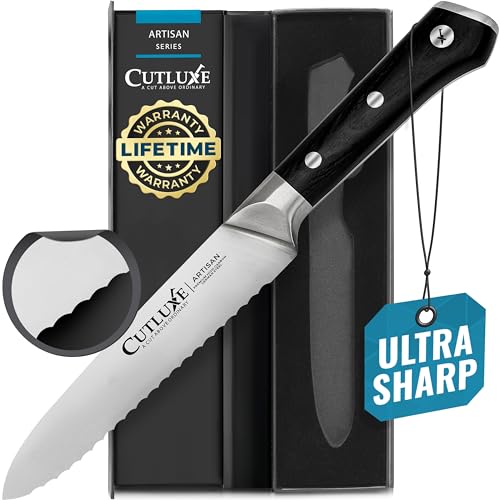
ULTRA-SHARP BLADES: Superior professional-level sharpness that ensures precision cutting.

Slice with Precision: Cut cake slices, bagels and tough crusts evenly and delicately, so they’re less likely to fall apart.

SERRATED UTILITY KNIFE – The perfect companion for preparing your packed lunch or at brunch: thanks to its fine serrated edge, this utility knife not only cuts cleanly through rolls without tearing, but it is also suitable for vegetables (such as firm tomatoes), fruit, or dry sausage
Steak Knives: Edges Designed for the Dining Table
Serrated steak knives are specifically designed to cut through crusted, seared, or grilled meat with minimal force. Their tooth-like serration pattern concentrates cutting power on the points, allowing each tooth to grasp and slice through tough exteriors efficiently. This means less downward pressure is needed, making for a smoother and safer cutting experience. The serrations also help the knife stay sharp longer because the points absorb most of the wear instead of the entire blade edge, reducing the need for frequent sharpening. While they might leave slightly jagged slices, this rarely matters for crusted steaks or foods with firm skins. Typical blade lengths are around 4 to 5 inches, fitting comfortably on standard dinner tables. Made from stainless steel, these knives resist corrosion and are easy to clean, making them practical for everyday use. For example, Victorinox Swiss Classic Steak Knives are crafted with high-quality stainless steel, ensuring durability and a sleek appearance. For buyers seeking top-tier performance, a similar level of craftsmanship can be found in Wüsthof chef knives, which are renowned for their precision and longevity. When slicing meat on a cutting board, juice grooves help collect flavorful runoff and keep the dining area tidy.