Choosing the right cheese grater can make all the difference in your kitchen, whether you’re after perfect shavings or quick prep.
The best tool depends on what you’re working with and how much you need to grate at once.
Finding the right match helps you save time and keep your kitchen organized.
Keep reading to discover which grater suits your cooking style and storage space.
Start Here: Match Your Cheese Grater to Cheese Type and Volume
Match your cheese grater to the cheese type and volume by prioritizing texture. For hard cheeses like Parmesan, opt for a microplane or rasp to create fine, fluffy shavings that melt quickly, ideal for finishing dishes. Soft cheeses such as mozzarella are best grated with a flat or paddle grater with larger holes to prevent smearing and maintain a clean texture. If you need to grate large quantities, consider a rotary or electric grater to save effort and reduce hand fatigue. When planning cheese storage, remember that harder cheeses generally store longer and can be grated in advance. For cheese pairing, fine gratings work well for delicate toppings, while coarser shreds melt better in recipes. A box grater offers versatility by handling multiple textures with its different-sized grating surfaces. For those seeking a single solution, a knife set with block provides balanced quality, performance, and value for all your kitchen prep needs, as the best cutlery sets combine durable materials with ergonomic handles for long-term use. Similarly, matching your grater to the task is just as important as selecting the right kitchen knives for each cutting job.

A Fine Blade Cheese Grater offers a precise blade that creates a superfine grate. When used with harder ingredients, a fine Cheese Grater produces powder-like results that pack an intense flavor. With moister foods, you will see a puree-like texture from your ingredients.
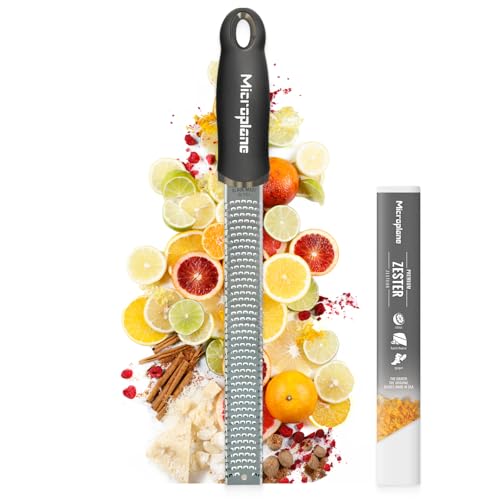
Zest Citrus: The blade is designed with a specific tooth set that takes the flavorful rind directly off the citrus fruit, while leaving behind the bitter white pith. Zest adds flavor to vinaigrettes, stir fries, salads, and baked goods! Change your life, with a little zest!

BEST FOR: Hard Cheeses (Parmesan, Asiago, Manchego), Citrus, Chili, Ginger, Garlic, Results are powder like and blend without texture.
Why the Box Cheese Grater Remains a Kitchen Workhorse
The box cheese grater remains a versatile and reliable tool in your kitchen due to its four-sided design, which encompasses coarse, fine, slicing, and zesting surfaces. Its large surface area allows for continuous grating, minimizing stops and scrapes during batch preparation. Over time, the box grater has evolved from a simple punch-plate device into a multi-functional workhorse, maintaining its relevance in everyday cooking. Its ergonomic design enables you to hold it upright for better control and apply pressure safely, reducing the risk of slips. You can handle a variety of ingredients—cheese, vegetables, butter, and aromatics—without needing additional tools. Grated cheese disperses evenly and melts faster, while coarse shreds add texture to casseroles and toppings. Regular rinsing with mild soap keeps the blades sharp, and air-drying prevents corrosion. Low-cost and widely accessible, the box grater continues to be an essential and dependable piece of kitchen equipment. When choosing what to buy, understanding grating surfaces helps you match the tool to your specific cooking needs.
When a Microplane Beats Every Other Grater for Finesse
The Microplane is unrivaled for creating whisper-thin finishes rather than coarse shreds. When presentation matters, you can produce delicate, lacy wisps that dust pasta or salads like fresh snow. This fine grating not only looks elegant but also enhances flavor. Tiny particles melt quickly or blend seamlessly into dishes, intensifying taste without adding chunky texture. You’ll prefer it over box graters whenever precision is critical—for zesting lemons without bitter pith or grating hard Parmesan into airy flakes. The razor-sharp teeth effortlessly turn garlic, ginger, or nutmeg into powder with minimal pressure. It excels for ingredients that should almost disappear into the dish rather than stand out. For finishing touches that demand finesse, no other grater matches the Microplane.

EFFORTLESS & SAFE - The blade of this cheese grater is designed with special square blade and processed with photo-etching technology. Tough body with large size non-slip handle makes it more safe and effortless while grating. It is the better choice of grater and zester for kitchen tools

Grates All Cheese Types – Works perfectly on hard cheeses like Parmesan and soft cheeses like Cheddar. Quickly improves the taste and texture of your dishes.

Enhance the Flavor of the Food:Grated the parmesan cheese into the fine strands with the graters for kitchen handheld, then add the cheese strands to the pasta, a unique-flavored pasta dish is ready! It can also grate the lemons, garlic, ginger, and chocolate.
Rotary Cheese Graters: Best for Table-Side Use
A rotary cheese grater is ideal for serving freshly grated cheese directly at the table without making a mess. You crank the handle over your plate, angling the drum to direct shreds precisely where you want them. This setup is especially useful for finishing pasta or salads. For best results, use hard cheeses that are chilled beforehand to ensure smoother turning. Cut the cheese into pieces that fit the hopper and avoid overloading it to prevent jamming the mechanism. The same principle of artisanal craftsmanship that drives up the cost of a charcuterie board also applies to high-end rotary graters, where durable materials and precise engineering justify the price. Similarly, premium ceramic knives rely on a high-quality manufacturing process to deliver exceptional cutting performance and longevity. When evaluating a high-end rotary grater, look for the same hallmarks of material quality that distinguish top-tier knife brands from budget alternatives.
Safety is a key advantage of rotary graters. Your hands stay well away from the blade drum, eliminating knuckle risks. The hand-crank motion is easier and more comfortable than pushing across a flat surface, providing consistent, uniform shreds each time. Many models feature stylish designs suitable for tabletop use, along with suction bases that keep them stable during operation. Be sure to clean the drum and crevices promptly after use, and secure all parts before cranking for safe, efficient performance. This tool offers quick, fresh finishing with minimal fuss.

Three Blades: Coarse shredding blade, fine shredding blade with different diameter ; One slicing blades; A pound of cheese is only 30 seconds, avoid contact between fingers and blades
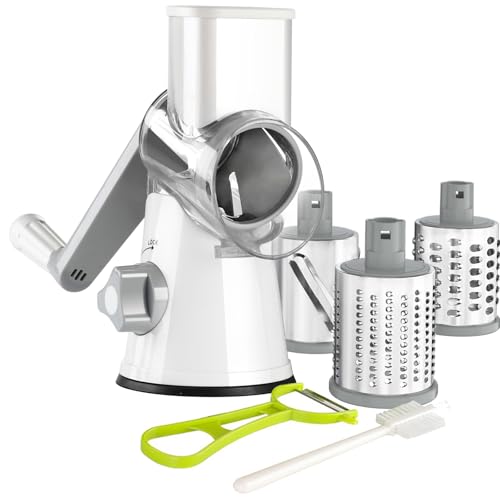
The Ourokhome cheese grater facilitates food preparation with ease: Enjoy fresh cheese? Simply turn the crank handle a few times and obtain freshly shredded cheese. Utilize this kitchen grater to enhance your favorite recipes

Large barrel and sharp stainless steel blades for efficient grating
Flat Cheese Graters: The Smart Pick for Soft Cheeses and Small Jobs
A flat cheese grater is ideal for soft cheeses and small jobs. Its simple, single-sided design makes quick work of soft textures like young cheddar or mozzarella. You’ll achieve uniform shreds that melt rapidly—perfect for grilled cheese sandwiches or sauces. When handling small quantities, grate directly over your dish for added convenience. Chilling the cheese beforehand helps, but cleaning and storing the grater is straightforward. Its flat shape rinses clean in seconds and fits easily in any drawer. While not suited for large batches, it’s excellent for quick toppings or a few tablespoons. For tasks requiring more precision, you can compare this tool to the best pizza scissors for quality and performance. You can also pair it with zest or finely chopped vegetables to expand its utility. Overall, this compact tool offers a practical solution for everyday small-scale tasks. For those prioritizing durability in their kitchen tools, cutting board quality often reflects the same material standards found in premium graters.
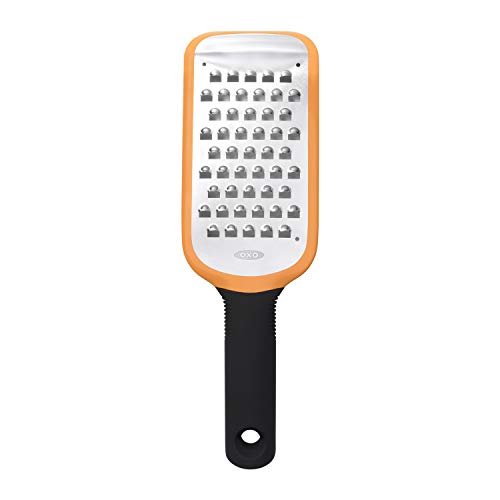
Ideal for grating semi soft cheeses, potatoes, zucchini, onions, cabbage, butter and apples
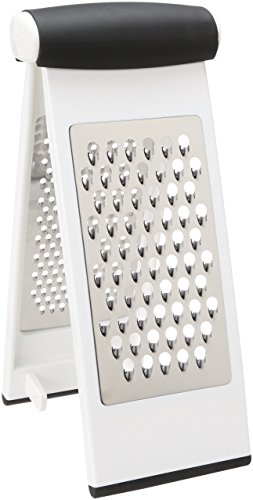
Use on any flat surface or over any size bowl
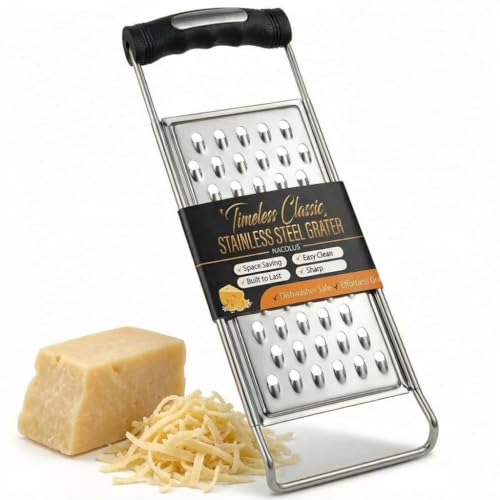
Effortless Coarse Shredding: Precision-etched, ultra-sharp stainless steel blades make quick work of hard and soft cheeses, parmesan, vegetables, and chocolate. This coarse grater produces perfectly sized shreds for tacos, salads, pasta, and baking, giving you consistent results with minimal effort
Electric Graters: Best for High-Volume Kitchens Only
Electric graters are best suited for high-volume kitchens that process large quantities of cheese daily. They can handle 40 kilograms or more per hour, making manual efforts much more efficient and consistent. If your operation includes pizza stations, salad bars, or pasta prep that requires steady cheese grating, an electric grater can speed up your workflow while reducing physical strain. However, these tools come with significant costs and space requirements. Commercial electric graters with at least a 1-horsepower motor tend to be expensive—often several times the price of manual graters. They also demand ample counter space for operation and must be cleaned thoroughly after use to prevent cross-contamination. Light-duty models with half a horsepower or less are inadequate for high-volume needs. Choosing between board butter vs mineral oil for cutting board care is a similar trade-off of cost versus durability. Investing in a powerful electric grater is a serious commitment, suitable only if your daily cheese processing justifies the expense and effort. For occasional or small-scale cheese prep, manual graters or simpler options are more cost-effective and practical. Unlike butter knives, which are dull by design to safely spread soft spreads, electric graters rely on sharp blades to shred hard cheese efficiently. When discarding old or damaged electric graters, always follow safe disposal guidelines for sharp blades to prevent injury during waste handling.

【8-in-1 Electric Cheese Shredder】The electric vegetable shredder comes with 8 interchangeable stainless steel blades to meet your diverse needs. The eight blade options include cheese blade 2.2mm, cheese blade 4mm, thick slice, flat wire, medium shred, thick shred, mincing, wave. Easily accommodating all your cooking requirements.
![5-IN-1 Electric Cheese Grater Stainless Steel 800W [3S Efficient Cutting]](https://m.media-amazon.com/images/I/51jhYe4z4jL._SL500_.jpg)
【Save 50% Time】This 800W electric cheese shredder provides fast and smooth cutting. It easily handles hard cheese and vegetables without jamming, allowing you and your family to save 50% of meal preparation time and enjoy delicious food quickly.
![5-IN-1 Electric Cheese Grater Stainless Steel 800W [3S Efficient Cutting]](https://m.media-amazon.com/images/I/51bwy6PUpdL._SL500_.jpg)
【Save 50% Time】This 800W electric cheese shredder provides fast and smooth cutting. It easily handles hard cheese and vegetables without jamming, allowing you and your family to save 50% of meal preparation time and enjoy delicious food quickly.
How to Choose: The 3-Question Grater Decision Framework
To choose the right grater, start by asking yourself three key questions. First, consider which cheeses you use most often. Match your tool to your storage habits: a microplane works best for hard cheeses like Parmesan, while a box grater with a medium surface suits semi-hard varieties such as cheddar. Soft cheeses, like ricotta, don’t require fine blades and are better grated by hand or not grated at all. Just as a carving knife needs sharpening with the correct angle to restore a keen edge, your grater’s blades must be kept sharp for optimal performance. However, when choosing cheeses for a platter, be mindful that a board heavy on cured meats may increase sodium and saturated fat intake. For a durable, long-lasting grater, consider models with hard maple construction, as it resists wear and moisture better than softer woods.
Next, think about the quantity you typically grate. For small garnishes or finishing touches, a handheld rasp or microplane is quick and convenient. For larger batches, a stable box grater provides more control and speed, making the task less tiring.
Finally, identify the texture you need for your dishes. Fine shreds enhance flavor and melt seamlessly into pasta sauces or baked dishes. Coarser shreds add heft and texture, ideal for salads or toppings. The blade choice directly influences the final look and feel of your grated ingredients.
Also, consider comfort and maintenance. Look for graters with sharp stainless steel blades and non-slip grips to reduce hand fatigue. Flat graters are generally easier to clean than multi-sided models, saving you effort and time. Answering these questions will help you select a grater that fits your kitchen needs perfectly.