Ever wonder how to serve cheese without it sticking or crumbling? The right knife makes all the difference, whether you’re working with soft Brie or firm Parmesan.
Choosing the correct blade ensures smooth slicing and easy serving, all while protecting the cheese’s texture.
In this guide, you’ll learn which knives suit each type of cheese and how to match your tools to get the best results.
Keep reading to discover the perfect cheese knife lineup for your next cheese board.
How to Match Cheese Texture to the Right Cheese Knife
Matching cheese texture to the right knife is essential for clean cuts and preserving flavor. For soft and semi-soft cheeses, use a blade with holes to reduce drag and prevent sticking; a narrow, light blade easily portions soft-ripened varieties. Crumbly blue-veined cheeses require a chisel or spreader to break off clean pieces without shattering. Semi-firm cheeses like cheddar are best served with a narrow plane knife that shaves thin slices with minimal pressure. Firm cheeses such as Manchego need a sturdy offset knife to push through dense paste effectively. Very hard cheeses like Parmesan demand a short, pointed knife to chip along their natural grain. Properly matching your knife to each cheese texture not only makes serving easier but also enhances storage techniques and preserves each cheese’s unique flavor profile. Choosing a top steak knife set with a block ensures you also have sharp, reliable blades for dense accompaniments that require clean cuts. For optimal performance across all your blades, maintaining a sharp edge with Japanese sharpening stones ensures precision cuts on even the firmest cheeses. For the best results, consider how top bread knives are also reviewed for quality and performance when selecting tools for dense or crusty accompaniments.

PRECISE CUTTING – Specially designed stainless steel blade glides through soft, semi-soft, and firm cheeses with ease, delivering clean, professional-looking slices.

COMPLETE CHEESE KIT - This 3 piece cheese serving knives set includes pronged, chisel, and heart knives for slicing, crumbling, spreading, and serving a polished cheese board.

☘Durable Premium Stainless Steel Made of high-quality food-grade stainless steel, rust-proof and sturdy. Built to withstand daily use without bending or breaking.
Soft Cheese Knives That Prevent Sticking on Brie and Camembert
Open-work or skeleton knives are your best choice for slicing Brie or Camembert without sticking. These knives have perforations in the blade that reduce the contact area with the soft cheese, allowing the creamy interior to release cleanly. Look for blades labeled as soft cheese or skeleton knives, which are specifically designed for bloomy-rind cheeses. If you don’t have one, a thin, straight-blade knife works as an alternative because its narrow profile minimizes cheese buildup and helps maintain the wheel’s shape. When selecting any cheese knife, consider cutlery sets for quality and value to ensure your blade performs well over time. For best results, avoid using glass cutting boards as their hard surface can dull your blade and cause sticking. Maintaining a sharp kitchen knife is essential for precise, clean slicing through soft rinds and creamy interiors.
For cleaner cuts, chill your cheese first using proper cheese storage techniques. Cold cheese firms up, making it less sticky and easier to slice smoothly. Wiping the blade with a damp cloth between cuts also helps prevent cheese from sticking and reduces drag. Some cheese knives feature a fork-tipped end, combining perforations with a pronged tip, making it easier to lift delicate slices and serve them neatly. These are a great choice for cheeseboards where precision and presentation matter.

Cheese Knife: This special designed soft cheese knife from our MATTSTONE HILL Collection is intended for cutting soft cheese. The narrow blade has less surface area for cheese to stick to. NO STICKING.

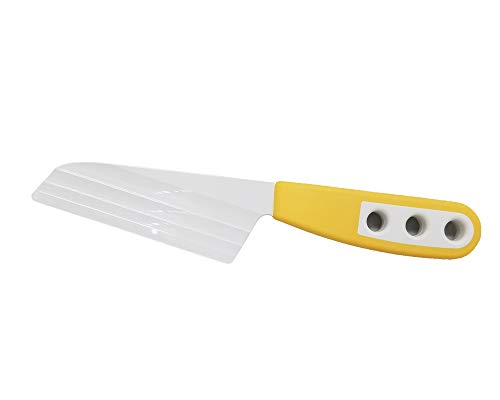
Unique drafted blade
Best Cheese Knives for Cheddar and Semi-Hard Cheeses
For cheddar and other semi-hard cheeses, a knife with a sturdy, wide blade is essential to cut without crushing the block. A mini cleaver or cheddar knife offers the necessary strength and width, allowing you to apply controlled downward pressure that preserves the cheese’s structure. This clean cut not only looks better but also enhances flavor release by minimizing jagged edges that can unevenly release moisture. Pair your blade with a pronged knife for lifting slices easily or a flat cheese chisel for shaving aged cheddars. Choose a knife with a thick spine to ensure strength and balance. A comfortable handle is also important to prevent slips during cutting. After use, wash these knives by hand immediately to prevent residue buildup that can dull the edge. Regular sharpening is key to maintaining crisp, precise cuts. Properly selected and maintained, these tools will ensure your semi-hard cheeses like Gruyère or Colby slice perfectly every time. When paired with a wood cutting board, some studies suggest the wood may have natural antibacterial properties that help keep the surface safer for cheese preparation. For those who prefer a smoother glide through denser blocks, consider a blade with small holes that reduce friction and prevent the cheese from sticking to the metal. Choosing a cutting board made from a hardwood like maple provides a durable surface that resists deep scoring from the blade.
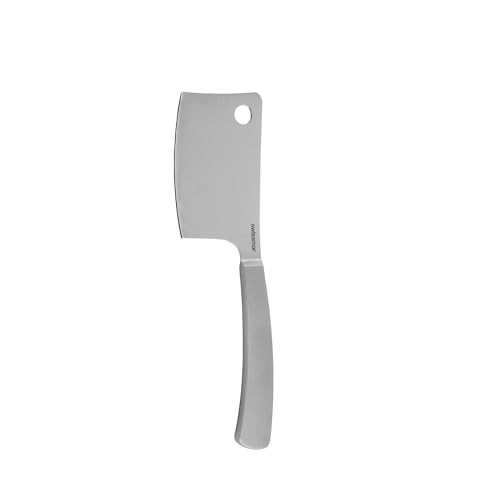
DESIGNED FOR HARD CHEESES – Ideal for slicing and cubing cheddar, Swiss, havarti, and colby cheeses.
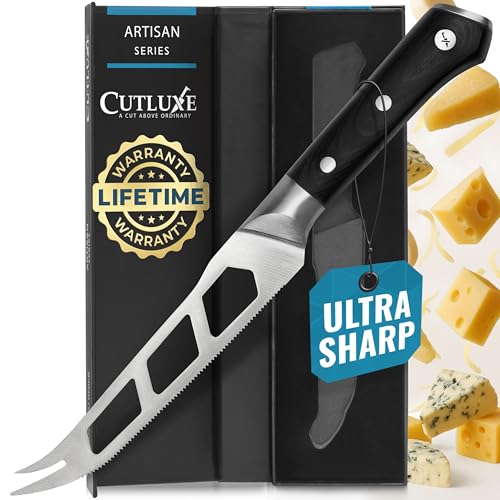
A KITCHEN ESSENTIAL: This pronged cheese knife ensures excellent control when cutting various cheeses like Brie, Cheddar, Mozzarella, and even tomatoes—ideal for a variety of textures.
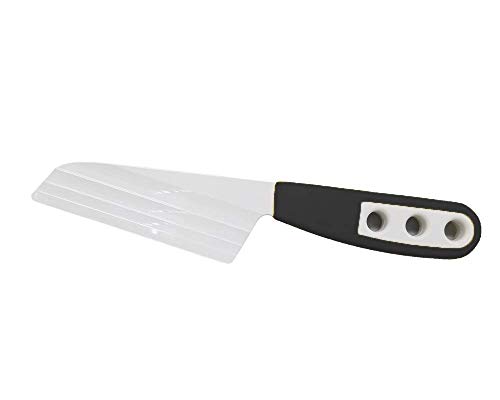
This black cheese knife has a unique drafted blade
Why Hard Cheeses Like Parmesan Need a Cleaver or Spade Blade
Hard cheeses like Parmesan need a cleaver or spade blade because their dense, brittle texture resists normal slicing. The natural aging process creates a granular structure and tough rinds that are difficult to cut cleanly. Cleavers and spade blades apply force efficiently, allowing you to initiate fracture lines instead of trying to slice smoothly through the cheese. High-quality knife sets with blocks often include these specialized blades, offering better performance on such dense cheeses.
To start a clean break, you drive a pointed, spade-like blade into the rind, which helps prevent crumbling—something common with thinner blades. These sturdy tools take advantage of existing fissures that form during aging, allowing for more controlled splitting. Proper storage of the cheese maintains its integrity until you’re ready to cut, ensuring clean portions.
Wide, rigid blades handle downward pressure without flexing, which helps produce rustic shards rather than broken fragments. This not only improves presentation but also reduces waste. Using these specialized blades respects the cheese’s structure, making portions easier to handle and serve cleanly.

High-quality stainless steel blade

WINNER OF THE iF Design Award 2025: Recognized for its innovative design, functionality, and quality.
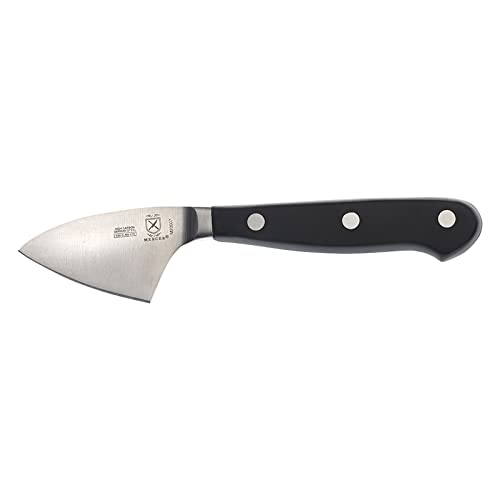
QUALITY CONSTRUCTION: Knife is precision-forged with high-carbon German cutlery steel for incredible long-lasting sharpness
When to Use a Spreader Cheese Knife Instead of a Slicer
A spreader cheese knife is ideal for soft, spreadable cheeses that need to be scooped or smeared rather than sliced. These cheeses—such as cream cheese, chèvre, or triple-cream Brie—are delicate and can be torn or dragged if cut with a slicer. The broad, flat blade distributes the cheese evenly and facilitates neat dollops or swirls, making it perfect for buffet presentations or when guests are applying cheese directly onto crackers or crostini.
Since spreader knives have a wide, blunt blade, cleaning them is simple—just wipe down the flat surface. They don’t trap sticky residues like serrated slicers, which makes maintenance easier. Use a spreader for soft cheeses to preserve their texture and appearance, and opt for a slicer when working with semi-hard or hard cheeses that hold their shape under a firm cut.

Wide range of uses: 4-piece stainless steel spreading knife set for butter, cheese, butter, jelly, jam, peanut butter, and pastry making

【Premium 304 Stainless Steel & Ceramic Handle】This cheese spreader is made from food-grade 304 stainless steel and features a smooth ceramic handle. Durable, rust-resistant, and perfect for spreading butter, cream cheese, and jams with ease.

【2 packs】2 stainless steel butter knives can meet your daily kitchen needs while also being able to share food with your family.
Pronged and Spear Knives for Crumbly Cheeses and Serving
Pronged and spear knives are essential tools for handling crumbly cheeses because they feature a narrow blade with fork-like tips that allow you to cut and lift pieces without touching them directly. These knives are especially useful for cheeses like blue cheese, feta, or Lancashire that tend to break apart easily. Instead of struggling with a slicer and risking crumbling, you can break off rustic chunks or crumbles and then spear them with the prongs for a clean transfer to your plate or cheese board. For example, this design works well because it resembles chef knives types that prioritize versatile, crush-free handling across different ingredients. Pair this tool with a durable cutting surface to protect both the blade and your countertops from damage. Choosing a pronged knife from the top cheese knife picks ensures you get balanced weight and comfortable grip for repeated use.
The design minimizes sticking because some blades include holes, making it easier to serve crumbly textures smoothly and effortlessly. Using a dedicated knife for each type of cheese prevents flavor mixing and maintains presentation quality. The fork tips enable guests to lift cubes or slices without hand contact, keeping the serving area tidy. Whether you’re working with soft cheeses like brie or semi-hard varieties like gouda, this tool combines cutting and plating in one simple motion, providing precise, crush-free handling that enhances any cheese display.