Choosing the right chef’s knife can feel overwhelming, but it all comes down to understanding your needs. Do you want a versatile tool for all-purpose cutting, or a specialized blade for precision work?
The key is matching your technique and comfort with the right style and size. Keep reading to discover how to pick the perfect knife for your kitchen.
What Makes a Chef’s Knife the Most Essential Kitchen Tool?
A chef’s knife is the most essential kitchen tool because it can handle nearly every daily preparation task—from chopping vegetables to mincing aromatics. Its versatility means you’ll reach for it first for almost any ingredient, whether dealing with boneless meats or hard squash. The key to this adaptability lies in its design: a well-balanced blade allows you to make long, stable slices and intricate julienne cuts without tiring your hand. Understanding different knife styles helps you choose the right blade for specific tasks, such as a serrated knife for bread or a boning knife for poultry. When selecting a chef’s knife, it is helpful to consider top knife sets for block storage that offer both quality and performance for daily use. Investing in a set with a full tang and high-carbon steel ensures lasting edge retention and durable balance.
Handle materials such as durable synthetic polymers or comfortable wood influence your grip and control, especially during extended use. The wide, flat side of the blade is perfect for crushing garlic and transferring chopped ingredients directly from the cutting board to the pan. Because of its multifunctionality, a high-quality chef’s knife can replace other specialty blades, supporting a range of techniques from coarse dicing to delicate herb chiffonade. This combination of efficiency and precision makes it an indispensable part of your kitchen arsenal.
What Are the Key Differences Between Western and Japanese Chef Knives?
Blade geometry is the clearest difference between Western and Japanese chef knives. Western blades tend to have a thicker spine and a wider sharpening angle of about 18 to 22 degrees per side. This design makes them sturdy for heavy-duty rocking and chopping motions. In contrast, Japanese blades feature a thinner profile with a narrower V-grind, typically between 12 and 16 degrees per side. This reduces resistance during cutting and makes them ideal for push-cutting and precision slicing. Maintaining these fine edges often requires applying stropping compound to a leather strop for a clean, sharp result. A narrower angle like this prioritizes edge sharpness over durability, as noted in sharpening guides. For those seeking top performance, high-quality Japanese steel often comes from specialized brands reviewed for their cutting ability.
Handle design also differs significantly. Western knives usually have full-tang handles with bolsters, offering a planted and balanced feel suitable for repetitive chopping. Japanese knives often feature lighter, more ergonomic wa-handles that prioritize agility and precise control, especially during delicate cuts.
Which Style Is Better for Home Cooks: Western or Japanese?
The choice between Western and Japanese chef knives depends on your cooking style and maintenance preferences. Western knives are thicker and made of softer steel, which makes them durable, low-maintenance, and forgiving during rough prep and twisting. Their curved edge facilitates rocking cuts, and their rugged design suits all-purpose kitchen work.
Japanese knives, on the other hand, are characterized by harder steel that allows for sharper edges and more precise cuts. They are lighter and excel at fine work, especially with vegetables and fish. However, they require gentler handling and more careful maintenance to preserve their sharpness. Your best option aligns with your specific cutting habits and how much upkeep you’re comfortable with.

MUTI-PURPOSE CHEF KNIFE SET - The Brewin 3pc Professional Kitchen Knife Set comes with 1× chef’s knife, 1× santoku knife, and 1x utility knife and will be your best cooking mate. The knife set can easily handle all your daily kitchen tasks as the versatile knives let you enjoy cutting, carving, slicing, chopping, and mincing meat, fruits, vegetables, and more. This luxurious Brewin boxed carving knife set is the best gift for your loved ones.

Lightweight, precisely balanced 8-inch or 20cm chef's knife

High-Carbon Stainless Steel Blade: It is manufactured from high-quality stainless steel that maintains its functionality for a long time. And to boost its sturdiness, the steel contains 0.6-0.75 carbon. This makes it two times as hard as other knives in its class as they contain about 0.3% carbon
What Is a Santoku Chef Knife and How Does It Compare?
A santoku is a Japanese all-purpose knife typically measuring between 5 and 7 inches in length. Its shorter blade compared to Western chef’s knives allows for precise control during slicing, dicing, and chopping. The blade features a straighter edge that is optimized for push cuts rather than rocking motions, which helps achieve cleaner, more accurate cuts. This angle falls within the optimal sharpening range for fine-edge durability and sharpness. Using a quality cutting surface, such as a top-rated wooden board, helps protect the delicate edge of a santoku blade from damage.
Crafted from harder steels, santoku blades tend to hold their sharp edge longer but require careful handling to prevent chipping. To keep the blade performing at its best, you’ll need to sharpen it at a fine angle, generally around 15 degrees per side. This makes them a popular choice for home cooks seeking precision without frequent maintenance. The flat profile and lighter weight make it particularly well-suited for vegetables and boneless meats, but it’s not designed for tasks involving bones or heavy-duty chopping.
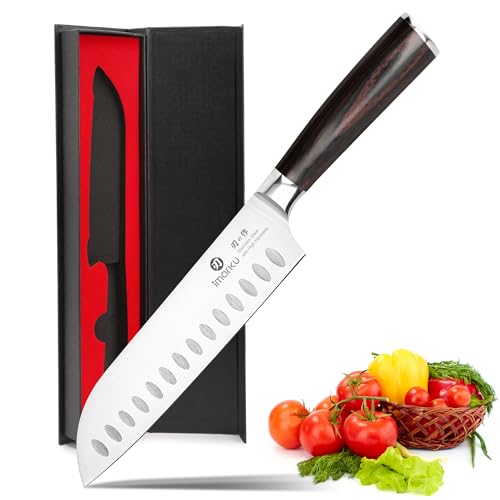
Professional Chefs Knife: This imarku super sharp chef’s knife is made of Japanese high carbon stainless steel that resists rust, corrosion, and discoloration. It can be used for your daily kitchen tasks of chopping, slicing, dicing, and mincing of all kinds of meat, vegetables, fruits, and bread. It is suitable for both home and restaurant kitchens.

【Japanese VG10 Steel Core】This Santoku knife is crafted with a premium Japanese VG10 steel core with a hardness of 62 HRC, and features a precise 12° hand-sharpened edge, delivering exceptional sharpness and excellent edge retention. The blade of this chef knife retains a traditional black forged finish, which helps reduce food sticking and enables more efficient cutting.

【Ultra-Sharp Santoku Knife】This 5 inch chef knife features a hand-polished 15–18° edge for clean, precise cuts with less effort. The 2.3mm blade offers a balance of sharpness and durability for everyday kitchen prep, from vegetables and fruit to meat and fish.
How to Pick the Right Blade Length and Weight for Your Hand?
To choose the right blade length for your hand, measure from your wrist crease to your middle fingertip. A measurement under 17 centimeters (about 6.7 inches) indicates a 6–7 inch blade suits you best. If your measurement falls between 17 and 19 centimeters (roughly 6.7 to 7.5 inches), try a 7–8 inch blade. For measurements between 19 and 21 centimeters (around 7.5 to 8.3 inches), an 8–9 inch blade is appropriate. Anything over 21 centimeters (8.3 inches) calls for a 9–10 inch blade. This measurement directly guides your choice, ensuring your knife feels manageable and comfortable during use. For those who frequently cut vegetables, Japanese vegetable knives offer excellent precision and balance. When evaluating options, always compare top picks on quality and performance to ensure your selection meets professional standards.
Blade weight also plays a key role. An 8-inch Western-style chef’s knife typically weighs between 7 and 9 ounces, but even lighter blades—around 50 to 80 grams—can cause wrist fatigue during prolonged chopping. Look for a balanced knife that feels like an extension of your arm, not a burden. When holding the knife, test the grip with a pinch hold—if it feels heavy or awkward, choosing a smaller or lighter option may reduce strain. For comparable cutting performance, consider top rated bread knives that also prioritize a balanced weight and comfortable handle design.
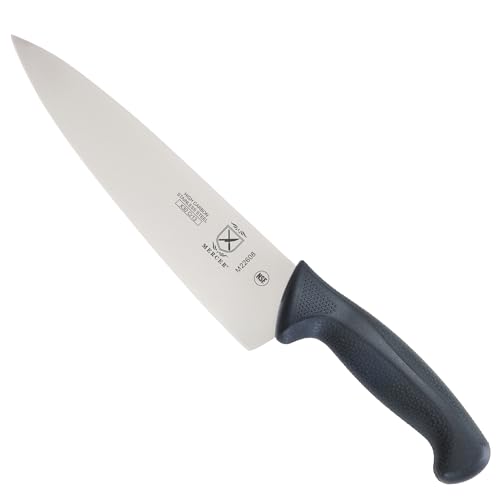
QUALITY CONSTRUCTION: Knife is crafted with one-piece high-carbon Japanese steel for easy edge maintenance and long-lasting sharpness

ULTRA-SHARP BLADES: Superior professional-level sharpness that ensures precision cutting.

Great for culinary students and professionals alike
Do You Really Need Other Knives? Paring, Utility, and Bread Knives Explained
A minimalist kitchen can function well with just three types of knives: a chef’s knife, a paring knife, and a serrated bread knife. A paring knife, typically 2 to 4 inches long, offers precise control for peeling, coring, and trimming tasks where a larger knife feels unwieldy. A utility knife, usually between 4 and 7 inches, can take on slicing sandwiches or small produce, but often overlaps with the chef’s knife’s duties. The serrated bread knife, around 8 to 12 inches in length, is essential for slicing crusty loaves without crushing them. You don’t necessarily need all three; a basic setup of a chef’s knife, a paring knife for detailed work, and a serrated knife for bread is sufficient. Add a utility knife only if you want a versatile, smaller general-purpose blade. For those who frequently prepare vegetables, choosing a chef’s knife with optimal blade geometry can significantly improve cutting precision and reduce effort. To keep these essential knives performing well, you should explore sharpening stones designed specifically for kitchen use, as each style offers different advantages for maintaining a razor-sharp edge.

QUALITY CONSTRUCTION: Knives are crafted with high-carbon Japanese steel for easy edge maintenance and a razor sharp blade that lasts

ULTRA-SHARP BLADES: Superior professional-level sharpness that ensures precision cutting.

Tramontina Colorado 3-inch Chef's Paring Knife features
Rocking vs. Push-Cutting: Which Chef Knife Style Fits Your Technique?
The choice between rocking and push-cutting depends on the shape of your knife and the tasks you do most often. Rocking works best with curved chef’s knives, like a French or German-style blade, because the curved edge allows you to pivot the tip while the handle moves up and down. This creates a smooth, rapid chopping rhythm ideal for mincing herbs, garlic, and other small ingredients. The technique benefits from the blade’s weight leverage and an ergonomic grip that keeps your hand stable during fast cuts. Keeping the tip of the knife in contact with the cutting board is a fundamental part of the rocking motion technique for maintaining control throughout the cut.
Push-cutting is more suitable for straighter knives, such as a santoku, where you push the blade forward and down to make a clean slice. This method offers precise control for cutting vegetables or slippery items. However, push-cutting can slow down repetitive tasks like mincing because the strokes are more deliberate. The key is to match your knife’s shape to your natural motion: using a curved blade for rocking and a straight blade for push cuts ensures you work efficiently with better speed and accuracy.