Storing your Japanese knives properly can make a big difference in keeping their blades sharp and rust-free.
The key is controlling moisture, since even a tiny amount of water can cause rust on carbon steel blades.
With the right drying and storage methods, you can help your knives stay in top condition for years.
Here’s what you need to know to protect your blades long-term and avoid damage.
Why Blade Moisture Is Your Japanese Knife’s Biggest Enemy
Moisture is your Japanese knife’s biggest enemy because even a thin film of water can cause rust almost immediately. Residual moisture left on the blade is the leading cause of corrosion, so wiping it down once isn’t enough. Your knife’s reactive carbon steel can show surface oxidation within hours if exposed to humid conditions. Humidity levels above 65 percent significantly increase the risk of corrosion, so keeping your storage area between 40 and 60 percent relative humidity is essential. Unventilated cabinets and drawers trap moisture, accelerating damage. For instance, true Damascus steel knives are often made of layered carbon steel that is similarly vulnerable to rust if stored improperly. Moisture control prevents blade corrosion before it begins, helping to preserve your knife’s sharpness, performance, and lifespan. Using a worn-out sharpening steel to maintain your edge can actually do more harm than good, as it may fail to realign the blade properly. Wearing cut-resistant gloves while handling your knife during storage maintenance can help prevent accidental injury.
How to Dry Blades Before Any Storage Method
To dry your blades thoroughly before storage, you need to ensure no moisture remains on any part of the knife. Use a soft, dry cotton or microfiber cloth and wipe the entire blade surface carefully, avoiding abrasive materials that could scratch the finish. Focus on the full length of the blade, paying special attention to tricky areas such as the spine, edge, heel, choil, and handle joint, because water can hide there. Wipe from the spine toward the edge for safer handling and to avoid accidental cuts. For those who own multiple high-quality knives, regularly using the best steak knives ensures each blade is treated with the same care for optimal performance. After towel drying, consider a final wipe with a cloth that has been treated with a mild detergent solution to further remove any lingering oils or residues.
After towel drying, give the blade a brief air dry to evaporate any remaining moisture. Never skip the initial hand drying step, as residual dampness can lead to rust—especially with carbon steel blades. Make sure the blade is completely dry before moving it to storage; storing damp blades invites rust and corrosion. Remember, taking these quick but thorough drying steps is essential to keep your blades in optimal condition. Additionally, while you focus on drying, consider that the surface you rest the blade on during this process also matters, as wood cutting boards offer a softer, more forgiving surface than harder materials.
Risks of Loose Drawer Storage and How to Fix Them
Loose drawer storage poses significant risks for your knives. When your knife is stored loosely in a drawer, its blade can collide with other utensils, leading to micro-chipping and edge rolling. These tiny damages degrade the knife’s cutting performance rapidly. Additionally, reaching blindly into a drawer increases the chance of accidental lacerations, creating what can be called a “knife roulette” scenario. Moisture trapped between unorganized knives promotes corrosion, even on stainless steel blades, while hidden damage reduces the intervals between sharpenings. To maintain a high level of cutting performance, you should prioritize proper storage methods. A knife block with slots can provide a secure, organized alternative that prevents blade collisions and corrosion.
To eliminate these hazards, invest in proper knife safety through drawer organization. Use a dedicated drawer insert with individual slots to keep each knife separated. Rigid blade guards or sheaths should be fitted onto each blade to prevent lateral movement. Avoid contact with other tools or liners when storing your knives. Keeping blades fully separated protects their edges from wear, prevents accidental cuts during retrieval, and preserves the knife’s geometry. This approach ensures your knives stay sharp, safe to handle, and longer-lasting.

Check Your Drawer Dimensions: This product is suitable for drawers with an inner size larger than 17.1"D x 12.7"W and a height greater than 2.3"
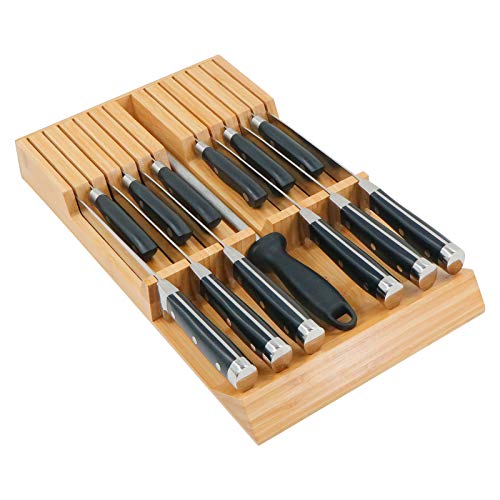
Check Your Drawer Dimensions: This product is suitable for drawers with an inner size larger than 17.1"D x 10.1"W and a height greater than 2.3"

FITS MOST STANDARD KITCHEN DRAWERS: Measures 17 x 5.3 x 2 inches and slides flat into most standard kitchen drawers. Measure first, a 17 inch drawer holds 11 knives while a 22 inch drawer fits all 16, and leave room above the 2 inch base for the handles
Choose a Saya That Protects Without Trapping Moisture
A saya that protects without trapping moisture must prioritize proper airflow. It should never be airtight, allowing any moisture to escape and preventing condensation. Always ensure the blade is completely dry before sheathing, as even a small amount of water on the spine or choil can cause rust on reactive steels. Use the saya mainly for dust and impact protection, not as a sealed container. Store it in a stable environment with humidity levels between 40 and 60 percent to minimize moisture buildup. Regularly inspect the sheath for signs of dampness or mustiness, and dry it thoroughly if needed to maintain optimal conditions. Just as a high-quality charcuterie board balances style and ventilation to prevent food spoilage, a well-designed saya balances protection and airflow to prevent blade corrosion.

Package: 1 x knife sheath/cover (knife blade not included). Color: Black. Size: as shown.

The knife protector is made of high quality black walnut, which is both hard and delicate,moisture-resistant
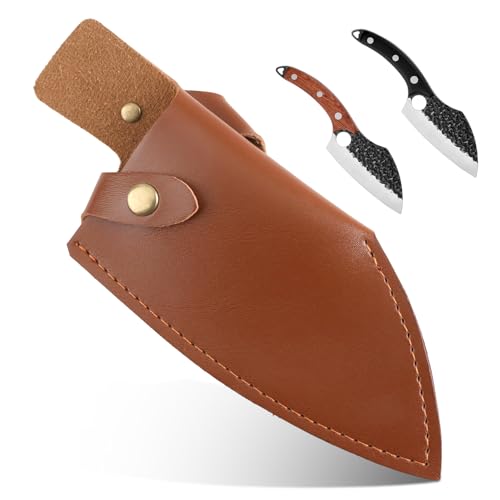
PU Leather Material: Crafted from premium PU leather, this sheath combines classic aesthetics with exceptional durability. Its supple yet resilient construction effectively protects the blade and develops a beautiful patina over time. The thick leather construction provides optimal abrasion resistance, ensuring long-lasting durability in both kitchen and outdoor environments
Select a Magnetic Strip for Fine Edges
To protect fine edges, choose a magnetic strip that allows the blade’s spine and flat face to contact the strip before the edge does. Consistent magnetic strength is crucial; neodymium magnets provide an even pull across the bar, securing both petty knives and heavier chef’s blades without requiring forceful placement. Weak spots can cause shifting, risking damage to your edge during removal. Unlike glass cutting boards, which can dull fine edges rapidly due to their hard surface, a magnetic strip avoids this contact entirely. For home cooks, ceramic knives similarly benefit from magnetic storage to prevent chipping their brittle edges. Prioritize surface safety by selecting a smooth-faced strip—hardwood minimizes metal-on-metal contact, while high-grade stainless steel, like 304, resists corrosion and snagging. Avoid exposed corners or point-loading; a wide, flat contact area is essential. Mount the strip securely with screws to prevent micro-movements that could loosen the hold over time. Keep knives spaced appropriately—crowding increases the risk of nicks and damage. When placing a knife on the strip, do so spine-first with a gentle, controlled motion. This method preserves your blade’s grind and finish, extending its lifespan. For optimal performance, consider top Japanese folding knives that are reviewed for quality and edge retention.

★Powerful Magnetic Knife Bar: This modern magnetic knife bar is made from strong magnets and covered in elegant, satin finished, high grade stainless steel, accenting any kitchen décor.

⚡Easy installation: This high-quality lightweight knife magnetic strip no drilling 15,5 Inch with Neodymium magnet is designed for quick and easy installation on a smooth wall or cabinet surface. Using a powerful industrial adhesive tape, you can easily attach it. This magnetic strip for knives storage is an updated version equipped with an improved adhesive strip. Simply place the premium magnetic holder no drill on a clean surface, wait 24 hours, and your knives are ready for use on this holder

⚡Easy installation: Fridge knife magnetic strip – Upgraded version of the knife magnetic strip, which does not require special installation. High quality 304 stainless steel magnetic knife holder with super strong double-sided magnet. Fridge mounting - no installation required. Just place it to the fridge wall and you're done!
Use a Knife Block Without Damaging Blades
Choosing a knife block with individual slots is essential for protecting your blades. The key is ensuring each knife has a snug fit that allows smooth insertion and removal without lateral rubbing. Narrow or tight slots scrape the edges, causing dulling over time. Conversely, overly wide universal slots enable thin Japanese blades to shift and bite into filler material, increasing the risk of damage. A good knife block features smooth, clean interiors—preferably made of wood—since rough or dirty materials can nick blades. For maintaining sharpness, consider using a ceramic honing rod designed for the harder steel of Japanese knives to realign the edge between sharpenings. Keep the interior dry and free of crumbs, as debris can scratch blades during use. Always insert and pull out knives in a straight line to minimize side contact with the slot walls, which helps preserve sharpness. Rotating knife positions periodically can distribute any wear evenly across the slots. Regularly oil the interior with food-safe mineral oil to maintain a smooth surface and extend the lifespan of both your block and your blades.

【20-Slot Universal Knife Block】The ACTESE Teak Knife Block has 20 knife slots to easily store various knives, such as Santoku knives, chef knives, bread knives, and steak knives. It includes 2 large knife slots specifically designed for sharpening rods and kitchen scissors. The deep slots can accommodate knives up to 9 inches, keeping your kitchen tidy and enhancing convenience.
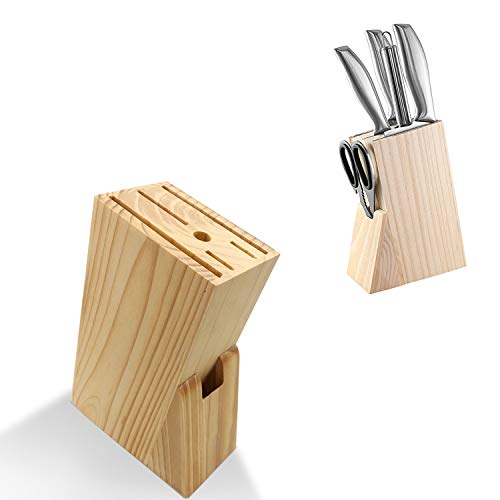
Knife organizer with 7 holder slots, it can hold two 9.5 cm wide knife,one 4.7 cm wide knife,two 2.1 cm wide knife,one meat needle,1 scissor

Minimal Scandinavian design wooden knife block holds up to 18 knives; stylish, functional, and compact for any kitchen countertop while keeping knives organized and easily accessible.
Where to Store Your Japanese Knife for Best Protection
The best storage method for your Japanese knives depends on how often you use them. For frequent use, mounting a coated magnetic strip away from sinks and steam is ideal. This keeps blades visible, minimizes contact with other metal objects, and reduces the risk of chips. It also helps protect your wooden handles and steel rivets from moisture damage. Many quality knife sets are designed with specific blade hardness that requires careful handling to avoid chipping.
For knives used less often, individual saya sheaths provide superior protection. Always ensure the blades are completely dry before sheathing to prevent rust. Saya shields guard the edges from drawer collisions and transport nicks, prolonging the sharpness and integrity of your knives. Similar to how woodcarvers rely on cut-resistant gloves to prevent accidental injuries during meticulous work, storing knives in sheaths provides a critical layer of physical protection for the blades.
Avoid storing knives loose in drawers, as this can dull the edges and cause chipping, especially with high-hardness steel. If drawer storage is necessary, use a dedicated knife tray to keep blades separated from other metal tools. For long-term storage, choose a dry, ventilated cabinet. Pairing this with sheaths or occasional oiling helps prevent corrosion and maintains your knives in top condition. For a quick alternative, consider that magnetic strips are also commonly reviewed as a top mounting method for rotary graters, showing their versatility in kitchen tool storage.
How Often to Inspect and Rotate Your Stored Knives?
Inspect your stored Japanese knives monthly in humid climates, paying close attention to blade flats, edges, and tang joints. This frequent check helps catch early signs of rust or moisture buildup before they cause damage. For indoor storage environments with stable humidity, every 2 to 3 months is sufficient. During each inspection, always verify that no moisture is trapped inside cases or blocks, as trapped humidity accelerates corrosion and dulls blades. Similarly, just as cutting boards require regular oiling to prevent drying and cracking, your knives need routine moisture checks to avoid rust. For a comprehensive knife set, choosing a model with white knife blocks can make moisture inspection easier by highlighting any discoloration or residue. To further protect your collection, consider that the best heavy-duty kitchen shears also require routine maintenance to prevent rust at pivot points.
Rotate your knives regularly, ideally every few uses, to prevent uneven wear and prolong edge life. Using a rotation of three to four knives allows you to match each blade to specific tasks such as slicing, prep work, or heavy-duty cuts, reducing unnecessary stress on any single knife. Always ensure knives are thoroughly dried before reinserting them into storage after use or rotation to prevent moisture retention, which can lead to rust.
Adjust your inspection and rotation schedule according to your storage environment. Carbon steel knives require more frequent checks and tighter rotation due to their higher susceptibility to rust, especially in humid conditions. After seasonal humidity changes or shipping, inspect knives immediately for any signs of condensation or moisture. Maintaining this routine keeps your blades sharp and your handles in good condition, ensuring safe and effective use over time.
Best Storage Tools for Transporting Japanese Knives
To transport Japanese knives safely, use a saya or wooden sheath for single blades. These protect thin grinds and prevent the edge from touching other objects during transit. Always insert the blade spine-first and ensure it is completely dry to avoid corrosion. For carrying multiple knives, a padded knife roll or bag is ideal, but always add blade guards or edge protectors for extra security. Plastic, leather, or wooden guards prevent accidental cuts and help maintain the sharpness by reducing dulling. When traveling with knives, a hard case with foam inserts and a lock offers maximum impact resistance. Unlike a standard straight edge, serrated teeth grip aggressively, so guarding them is especially important to prevent damage to those fragile points. Keep blades secure and minimize movement within the carrier to prevent nicks and scratches, which can compromise your edge. Combining a dry blade, sheath or guard, and a fitted case ensures the safest and most secure transport.

KNIFE SHEATH DIMENSIONS - Includes 6 universal utility knife covers multiple sizes, designed to protect blades during storage or transport.

Premium American Oak wood construction for enhanced durability and long-lasting blade protection

Razor-Sharp Japanese Stainless Steel Blade – Crafted from premium Japanese stainless steel, this 3.5-inch paring knife delivers professional-level sharpness and long-lasting performance. Perfect for peeling, trimming, coring, or precision slicing, it handles fruits, vegetables, and delicate tasks with ease.
Build a Consistent Cleaning and Drying Routine
A consistent cleaning and drying routine involves immediate hand-washing with warm water and mild soap, using a soft sponge to shield the finish. Avoid the dishwasher altogether to prevent damage. Rinse the knife thoroughly to remove any debris, then dry it promptly—especially carbon steel blades, which are prone to rusting quickly. Focus on drying both sides of the blade, including the spine, tip, and handle junction, as these are high-moisture zones. Do not air-dry the knife; instead, wipe it dry with a dedicated towel kept near your sink. Pay close attention to moisture-prone areas like the cutting edge and seams.
A clean, dry knife minimizes the frequency of sharpening and honing required. Establish a routine: rinse, wash, then dry, consistently after each use. Only return the knife to storage once every trace of moisture is gone, ensuring it stays in optimal condition.