
Wondering if your sharpening steel has seen better days? Over time, these tools can wear out and lose their effectiveness.
A dull or damaged steel can even harm your knives instead of keeping them sharp.
Keep reading to learn the key signs that indicate it’s time to replace your sharpening steel before it causes more damage.
Why Honing Steels Wear Out (And When They Don’t)
Surface damage often shortens a honing steel’s lifespan more than normal wear. Metal steels that develop grooves, dings, dents, or pits from rough treatment can snag or misalign your knife’s edge instead of smoothing it. Ceramic rods are fragile; dropping them can cause chips or cracks, even if routine use does not cause significant wear. Metal buildup from swarf or debris can clog the surface of both metal and ceramic rods, decreasing their effectiveness. Cleaning can restore performance in ceramic rods, but damage from impact usually cannot be fixed. For example, selecting a top charcuterie board involves comparing options on quality, performance, and value, much like choosing a durable honing steel. Choosing a cut-resistant glove for wood carving follows a similar principle of balancing protection with durability. Recognizing the signs that say it is time to sharpen your knife helps prevent the need for excessive steel use.
In contrast, smooth, ungrooved metal honing steels do not have a cutting surface that wears down over time, making them very durable. For typical home use, your steel can last for years or even decades unless it is physically abused or mishandled. Proper care and gentle handling help extend their usefulness significantly.

[ PREMIUM MATERIALS ] - The 10 inch honing rod is made from pure white ceramic using Kimura's proprietary layering process and smoothened to a 1200 grit finish.

Hones And Realigns Edges: Designed for regular maintenance, this ceramic rod gently hones and realigns the cutting edge to help maintain cutting performance without removing significant metal.

KEEPS YOUR EDGE CUTTING LIKE NEW: A few light strokes before each prep straighten and refine the edge, so you sharpen less often and your knives last longer
How to Tell If Your Sharpening Steel Has Gone Smooth
A sharpening steel that has gone smooth will no longer do its job effectively. To tell if your steel has lost its texture, start with a visual inspection. Hold the rod under bright light and look closely. If the surface appears shiny and mirror-like, rather than dull or matte, it has become polished. Notice if the grooves or ridges have rounded off instead of maintaining their sharp edge; this indicates the surface has worn down. Additionally, check for metal shavings stuck in the grooves—if they no longer cling, the surface is too slick to grip the blade properly. When you draw your knife across the rod, it should require some resistance and produce a scraping sound. If it slides easily and you hear less noise, your steel has become smooth. This means it will no longer hone the edge as effectively, and you may need more passes or a new rod to restore sharpness. The Dexter-Russell brand, for example, uses stainless steel for blade durability in their sharpening steels. When your steel looks polished and feels slick to the touch, it’s time to replace it for optimal results. To extend the life of your rod, consider pairing it with a high-quality knife set that maintains edge retention longer, reducing the frequency of honing. For the rod itself, regularly cleaning it with safe cleaning products can prevent metal debris buildup that accelerates surface wear. Choosing a rod with a harder surface, as seen in top damascus steel options, can also resist polishing wear far longer than standard models.
The Fingernail Test for Worn Honing Steel Grooves
The fingernail test is a reliable way to assess whether your honing steel’s grooves are still effective. Lightly run your nail along the steel rod. A healthy steel will catch your nail with consistent resistance, indicating structured textures in the grooves. This clear, repeated feel confirms that your honing steel is still properly maintained. If your nail slides smoothly with little to no resistance, the groove edges are likely rounded off. Be sure to clean the steel first to remove any residue that could interfere with the test. If resistance remains absent after cleaning, the grooves have worn down, reducing their honing surface. Unlike chromium rods that may wear out and fail the gravity test, ceramic honing rods never wear out. Uneven resistance from top to bottom suggests uneven wear, which can decrease honing effectiveness. To choose a replacement that offers both quality and value, look for a cutlery set that includes a durable honing steel. If your steel no longer catches your nail, it may be time to replace it. This simple test offers a practical, tactile check to supplement visual inspections and ensure your honing steel continues to perform effectively. For a lasting upgrade, consider a ceramic honing rod which provides a harder, non-wearing alternative to traditional steel. Unlike plastic cutting boards, which can develop deep grooves that harbor bacteria and require frequent replacement, a worn steel simply loses its cutting-edge realignment function and can be swapped out without hygiene concerns.
Chips, Pits, and Cracks: Visible Damage You Should Never Ignore
Visible chips, pits, or cracks in your honing steel are serious concerns that should never be ignored. Chips create snag points that can catch and damage your knife edge, potentially worsening the defect with repeated honing. Pits disrupt the smooth surface, causing your blade to contact hollow spots instead of a flat honing area, which reduces effectiveness and increases the risk of uneven wear. Cracks are fracture lines that can propagate under stress, possibly turning your steel into a hazard if it breaks during use. Unlike surface discoloration, which is purely cosmetic, these defects weaken the steel’s structural integrity and compromise safety. You can often feel or see these issues easily—if you do, it’s a clear sign that the steel needs replacement. Continuing to use a damaged honing steel can scratch, roll, or chip your knives, especially high-value or thin blades. Removing a damaged steel from service immediately is critical; in most cases, replacement isn’t optional but essential for safe and effective honing.

KEEPS KNIVES RAZOR-SHARP: Maintain knife edges between professional sharpenings.
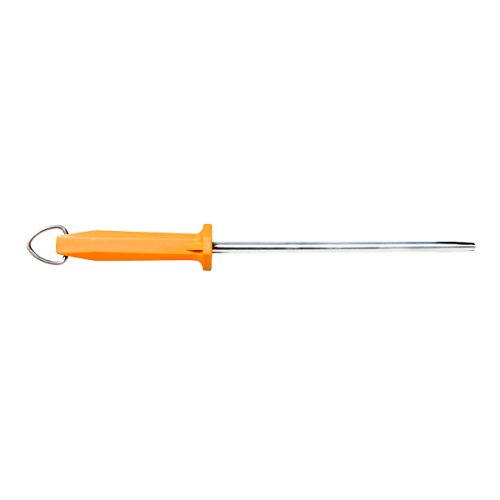
SMOOTH HONING SURFACE: Realigns and finishes established knife edges during routine maintenance without aggressive abrasion.

QUALITY CONSTRUCTION: Made with high-quality German steel to hone knife edges and remove burrs for increased knife performance
Can You Repair a Worn or Damaged Honing Steel?
You can repair a worn or damaged honing steel if the damage is superficial. Light contamination or a glaze can usually be cleaned off with warm, soapy water and a nylon brush, restoring the steel’s effectiveness. Cut-resistant gloves offer hand protection during more aggressive cleaning or scouring tasks. For minor surface irregularities, using steel wool or very fine sandpaper can help smooth out wear or scratches. Historically, light filing was employed to fix ridged rods, and abrasive polishing with a scouring pad can remove embedded debris and minor imperfections. For those seeking a reliable upgrade, top Wüsthof chef knives offer superior steel quality that reduces the need for frequent honing repairs. To maintain a hygienic surface after cleaning, it is helpful to adopt regular wiping habits after each use.
However, deep grooves, dents, or heavy rust pits are not realistically repairable. If the honing steel no longer hones evenly or if you’ll need to remove too much material to restore its surface, replacing it is the better choice. Opt for repairs only when the damage is superficial, and the surface can be restored to a uniform condition.

𝗦𝗨𝗣𝗘𝗥 𝗙𝗜𝗡𝗘 𝗖𝗟𝗘𝗔𝗡𝗜𝗡𝗚 𝗣𝗢𝗪𝗘𝗥:Achieve flawless cleaning and buffing results with SIMBA Steel Wool Grade #0000. As the finest grade available, our pack of 16 pads ensures precise, superior performance every time. This 0000 steel wool works perfectly as a steel wool scrubber and steel wool pads, making it ideal for detailed cleaning, polishing, and 0000 steel wool for cleaning tasks.

WÜSTHOF HONING ROD – Sharpen dull knives, scissors and cutters safely

SUPER FINE CLEANING POWER: Achieve flawless cleaning and buffing results with SIMBA Steel Wool Grade #4. As the finest grade available, our pack of 16 pads ensures precise, superior performance every time.
Home vs. Pro Use: How Many Years Should a Honing Steel Last?
A honing steel typically lasts between 20 and 30 years for home cooks. Its durability is due to infrequent use and the high-quality materials commonly employed, like plain stainless steel or grooved metals, which are nearly indestructible under regular home conditions. In a professional kitchen, however, the lifespan averages about 5 to 10 years. Daily, high-volume use causes more surface wear, with grooves rounding out and the honing effectiveness diminishing over time. Some professionals replace their steels every 3 to 7 years, depending on build quality. Diamond-coated models tend to wear faster because the abrasive particles can dislodge over time. Therefore, the steel’s material and how often you use it directly influence how long it will last; plan for sooner replacements if you are a professional. Unlike a plastic cutting board, which is made from a different material that can often be recycled, honing steels are constructed from durable metals that rarely enter the recycling stream. For those who use ceramic knives, a diamond sharpening stone is actually a better choice for sharpening than a steel. For those seeking a complete set, white knife sets with blocks often include a honing steel of similar quality to the knives.

Premium Steel Construction - The steel rod is made of carbon steel and plated with nickel-chrome; the fine surface of the steel rod prevents the cutting edge from damage when sharpening.

KITCHEN KNIFE SHARPENER FOR ROUTINE CARE: Keep frequently used knives ready for everyday prep. This honing rod helps maintain and refresh the cutting edge between more intensive sharpening sessions, making regular knife care quick and straightforward.
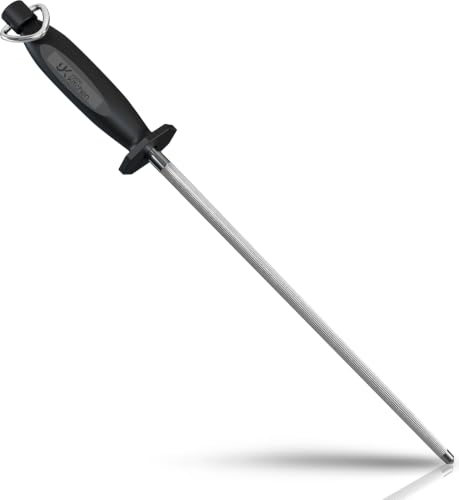
Premium Steel Construction - The steel rod is made of carbon steel and plated with nickel-chrome; the fine surface of the steel rod prevents the cutting edge from damage when sharpening.
4 Signs Your Honing Steel Could Damage Your Knife
Deep grooves, dings, or rust on your honing steel are clear signs it could be damaging your knife. An uneven surface can snag or scrape the edge during honing, leading to metal deformation instead of true realignment. Additionally, check your blade after honing; if you notice micro-chips, a wavy edge, or a rolled edge that worsens over time, it indicates the steel is causing damage rather than maintaining the edge’s integrity. If your knife dulls almost immediately after honing, the steel may be abrading the edge rather than sharpening it. Improper cleaning can also leave grit or corrosion on the steel, introducing additional abrasion. Bluish discoloration or deep scratches on your blade are signs the steel is too harsh and should be retired. For trouble-free slicing, a top vegetable knife made from harder steel can better withstand the honing process. When these signs appear, replacing your honing steel can prevent further damage to your knives. For a long-lasting upgrade, consider investing in high-quality pro kitchen knives that are designed to resist edge degradation even with regular honing. A better approach is to pair your knives with a superior steak knife set with block that includes honing tools built for consistent performance.
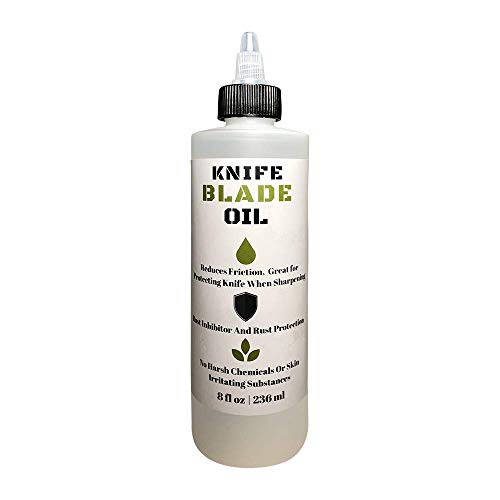
NATURAL & SAFE: Our Knife Blade oil is composed of 100% natural food-safe ingredients to provide worry-free use. While also providing superior protection for kitchen knives, pocket knives, and more


Professional Maintenance Oil Kit: Our knife oil kit inclued 1x 3.5 fl oz knife oil, 1x rust eraser, 1x rust remover paste, 1x wooden chip brush, 2x lint-free cloth. All the tools is perfect for your knives or iron tools
