You might think you need a whole knife drawer to cook like a pro, but that’s not true. Almost every task can be handled with just a few key blades.
Choosing the right knives—like an 8-inch chef’s knife, a paring knife, and a serrated bread knife—can make all the difference in your kitchen.
Keep reading to discover which knives are essentials and how to select the best ones for your style.
Why Home Cooks Need a Chef’s Knife (and How to Pick One)
A 8-inch chef’s knife is the standard starting size, offering a versatile length that balances control and efficiency for everyday prep. This size can comfortably handle most tasks like chopping vegetables, slicing meats, and dicing herbs without feeling bulky or cumbersome. When choosing a knife, prioritize a handle that feels secure in your grip, allowing precision with less fatigue during prolonged use.
Blade material also matters: German-style stainless steel (around 56 HRC) tends to be more forgiving and durable against chipping, making it ideal for rock-chopping and tougher cuts. Japanese steel (60+ HRC) stays sharper longer but chips more easily, which is better suited for finer, delicate slicing. Look for a full-tang, forged construction rather than one with a installed bolster—this ensures the knife can withstand regular use and remains sturdy over time.

This 8- inch chef’s knife is a versatile tool for cutting, chopping, dicing, mincing and more

Stays Razor Sharp 3x Longer : Forged from premium German Stainless Steel with a 14-16° hand-polished edge. Features 57+ Rockwell hardness to retain its precision edge for over 1000 cuts, delivering effortless, paper-thin slicing

Japanese Damascus Steel: Crafted with a premium Japanese steel core (10Cr15CoMoV), this Damascus chef knife reaches 62 HRC hardness for exceptional sharpness and edge retention. The 15° V-shaped blade delivers precise, effortless cuts for slicing, chopping, and dicing.
What Knife Size Fits Your Hand and Cutting Style?
Choosing a knife size that fits your hand and cutting style is essential for comfortable, efficient prep. Measure from your wrist crease to the tip of your middle finger to determine hand length. A hand under 17 cm pairs best with a 180 mm blade for better control, while hands measuring 19 to 22 cm suit a 210 mm or 240 mm blade. Ensure the handle length slightly exceeds your hand’s width to prevent strain during use. For those seeking the best balance of affordability and performance, many affordable Japanese knives offer excellent quality in these popular blade sizes.
Your cutting motions influence the ideal knife length too. Shorter blades, around 6 to 7 inches, are perfect for quick, precise cuts on small ingredients. Mid-length blades, about 8 inches, offer a good balance of reach and maneuverability for general tasks. Longer blades, 9 to 10 inches, excel at slicing large items and making smooth, long strokes. Always check that the knife feels balanced in a pinch grip—heavy tip or handle can cause fatigue. Maintaining a sharp edge requires quality sharpening stones to ensure precision over time. Match the blade length to typical ingredient sizes and your workspace to keep chopping smooth and strain-free. For top-rated options, look for a utility knife that combines durability with a comfortable grip for versatile everyday cutting.
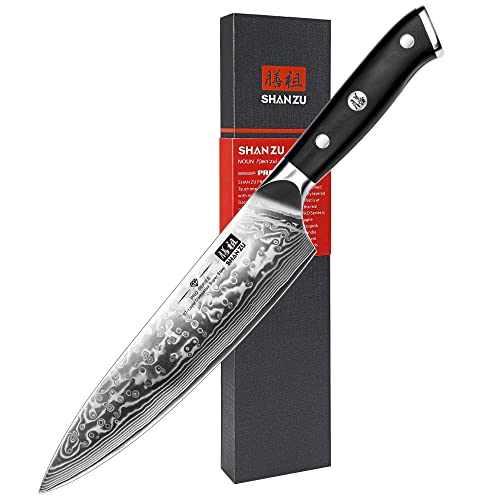
Japanese Steel Knife Core, Super Sharp: SHAN ZU chef's knife core is made of 10Cr15Mov Damascus Japanese steel that has high hardness(62 HRC), rust-resistant, and wear-resistant features; with advanced forging technique, you will get a super sharp kitchen knife

High-Carbon Stainless Steel Blade: It is manufactured from high-quality stainless steel that maintains its functionality for a long time. And to boost its sturdiness, the steel contains 0.6-0.75 carbon. This makes it two times as hard as other knives in its class as they contain about 0.3% carbon

● 【COMPLETE 5-PIECE CULINARY ESSENTIALS】 Elevate your kitchen versatility with the professional japanese knife set. This versatile culinary collection includes an 8 inch Chef Knife for heavy chopping, 7" Santoku Knife with granton edge for effortless release, 7" Slicing Knife for precise roasts, 5" Utility Knife, and 3.5" Paring Knife for intricate prep. Perfect for slicing meats, vegetables, fruits, and tomatoes without crushing delicate fibers
What a Paring Knife Does That Bigger Knives Can’t?
A paring knife excels at tasks requiring precision and control that larger knives can’t match. Its short, narrow blade allows you to peel, trim, and carve with finesse. You’ll use it to peel apples, potatoes, and carrots with short, controlled cuts that remove only what’s necessary. The size makes it easy to work in tight spaces, such as cording strawberries or deveining shrimp without damaging surrounding flesh. For quality and performance, many top-rated models feature serrated edges that grip slippery skins without tearing the flesh.
This knife is also ideal for delicate carving on small items. It can mince a single garlic clove, segment citrus, or score meat with surgical accuracy. Unlike bigger knives, which can slip or overcut on curved surfaces, a paring knife stays steady. When you need to remove a blemish, shape a garnish, or clean out a tiny cavity, the paring knife is your best tool—it’s designed for those detailed, precise tasks. For everyday carry, a secure belt sheath is equally essential for protecting both the blade and your waistline. To maintain that precision, you should sharpen the blade every few months depending on frequency of use.
When to Reach for a Serrated Bread Knife
A serrated bread knife is the best choice when cutting foods with a hard crust and a soft interior. Its saw-like teeth grip and saw through tough bread crusts without crushing the airy crumb inside. This makes it ideal for crusty loaves like baguettes and sourdough. It also works well on delicate, soft items such as brioche, cakes, and pastries, helping you cut clean slices without tearing or squashing. For those seeking top rated santoku knives, a similar level of quality and performance is often reviewed for comparison. When selecting a serrated knife, consider the steak knife types that are specifically designed for cutting through tough crusts and tender interiors. To maintain the blade’s performance, regular application of food safe mineral oil is recommended to protect the handle and prevent wood from drying out.
Additionally, the serrations excel at slicing slippery-skinned fruits and vegetables like tomatoes, melons, and citrus. They grip the smooth surfaces, allowing you to cut through juicy produce without squeezing out the juice or crushing the flesh. Use light pressure and a gentle back-and-forth sawing motion to avoid damaging fragile foods. Whether you’re carving meat, portioning baked goods, or preparing fresh produce, a serrated bread knife helps you make clean, precise cuts every time.

Premium Quality Blade: This bread cutting knife is crafted from high carbon stainless steel (0.26%-0.35% carbon, 12%-14% chromium), the best bread knife’s blade is oil-tempered and heat-treated to HRC 53±1 for optimal sharpness and durability. Precise 2.3mm thickness ensures a perfect balance between sharpness and toughness
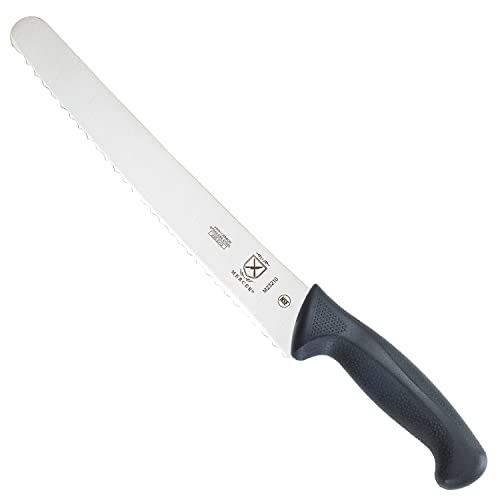
QUALITY CONSTRUCTION: Knife is crafted with one-piece high-carbon Japanese steel for easy edge maintenance and long-lasting sharpness

High-quality stainless steel blade
The Utility Knife: The Underrated Middle Ground for Everyday Tasks
A utility knife typically has a blade length between 4 and 7 inches, making it the ideal middle ground for many everyday tasks. This size strikes a balance: it’s long enough for larger cuts but compact enough for precision work. The versatility of the blade allows you to handle tasks that are too big for a paring knife but too delicate for a chef’s knife. For example, you can slice tomatoes or trim chicken without crushing soft produce, thanks to its controlled size and maneuverability. When choosing a set, look for a utility knife that offers quality, performance, and value to ensure it complements your block without breaking your budget. The narrow blade provides better precision for mincing herbs or cutting cheese cleanly. It isn’t suitable for heavy chopping or hacking through bones, but for routine small to medium prep work, it performs reliably. You’ll find yourself switching knives less often since this single tool can manage various tasks. Straight-edged utility knives excel at slicing, while serrated versions handle bread and crusts with ease. Their practicality and flexibility make them a handy, nimble backup in your kitchen arsenal. To keep this blade in top condition, regular maintenance with a food-safe mineral oil helps prevent rust and preserve the handle over time. Honing the blade on a diamond stone can further extend its lifespan when the abrasive surface is cared for with proper cleaning and storage.
Santoku vs. Chef’s Knife: Which All-Purpose Blade Wins?
The santoku’s lighter 5–7 inch blade is perfect for precise, straight-up-and-down chopping. Its narrow edge angle enhances sharpness, allowing you to make clean cuts with minimal effort. Hollow scallops along the blade help reduce sticking and dragging when slicing delicate foods like fish or boneless meats. Because it offers better control and speed for intricate tasks, the santoku is ideal if you prefer a lighter, more nimble knife. However, for versatility across a broader range of kitchen tasks, the chef’s knife typically excels with its larger size and heft. When choosing between them, comparing top picks on quality and value can help you decide. For optimal performance, the santoku benefits from a narrower sharpening angle to maintain its fine edge. When selecting kitchen tools, consider high-quality shears for efficient poultry preparation.

High-quality stainless steel blade

QUALITY CONSTRUCTION: Knife is precision-forged with high-carbon German steel for better durability, and taper-ground edge allows for increased efficiency when cutting along with incredible long-lasting sharpness

【Ultra-tough Stainless Steel Blade】The whole blade forged with triple-layer laminated steel, made of high-end Japanese steel 10Cr15CoMoV, which can withstands cold, heat, and corrosion for long-term use. It's hardness reaches 62HRC, the steel contains about 0.9% carbon, making it two times as hard as other knives in its class.
Which Specialty Knives Are Worth the Investment for Home Cooks?
A paring knife, typically 3 to 4 inches long, is the most worthwhile specialty knife to add after your chef’s or santoku. Its small size makes peeling, trimming, and detailed work much easier than using a larger knife. You’ll find affordable, high-quality options, and its versatility benefits everyday tasks like preparing fruit, herbs, and garlic. To protect your investment, a quality butcher block will help maintain the blade’s edge over time. For uniform homemade fries, a dedicated fry cutter can ensure consistent thickness and faster prep work. For tough-skinned ingredients like tomatoes, the best alternative is often a serrated blade designed for perfect cuts without crushing.
Next, a serrated bread knife is essential for slicing crusty loaves and tomatoes without crushing them. It works well on foods with tough exteriors and soft insides, providing a clean cut every time.
A boning knife is worth the investment only if you frequently process poultry or trim meats. Its narrow, flexible blade allows for precise removal of bones and cartilage, reducing waste and making butchering more efficient.
For those who enjoy fish, a thin fillet knife helps you get close to the flesh with minimal waste. Its slender design makes delicate work easier, giving you cleaner cuts on fish fillets.
Finally, a utility knife offers a nimble second blade for tasks like sandwich preparation or slicing smaller ingredients. It provides added convenience and flexibility, bridging the gap between a chef’s knife and a paring knife.

【Powder Steel Paring Knife】The kitchen paring knife is made of high-carbon Japanese powder steel with a hardness of 63HRC. It is harder than 99% of ordinary steels, offering excellent rust resistance and durability
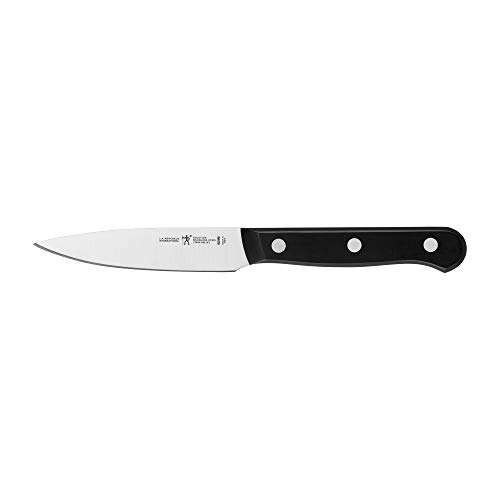
ULTRA-SHARP BLADES: Superior professional-level sharpness that ensures precision cutting.

This indispensable knife allows you to dominate kitchen adventures that require precision.
Don’t Ruin Your Knives: Daily Care That Keeps Blades Sharp
To keep your knives sharp, proper daily care is essential. Always hand wash blades immediately after use with warm water, mild soap, and a soft sponge. Avoid soaking them or placing them in the dishwasher, since heat and detergent can dull the edges and damage handles. Dry the knives thoroughly with a towel right away to prevent rust, especially on high-carbon steel blades. For those seeking a final, razor-like finish, ceramic stones offer exceptional control and precision.
Correct storage also plays a crucial role in maintaining your knife’s edge. Use a knife block, magnetic strip, or blade guard—never store knives loose in a drawer where edges can bang against metal. Cutting on wood or plastic boards helps preserve the blade’s sharpness; avoid glass or stone surfaces that can quickly dull edges. Between ingredients, wipe the blade clean to reduce residue buildup. Hone your knives weekly at a 15 to 20-degree angle to realign the edge. Every 4 to 6 weeks, when honing no longer improves performance, sharpen your blades to restore their sharpness. For tasks like prepping fish, an electric fillet knife can make cutting quick and effortless while still requiring proper blade care. A well-maintained, sharp knife is safer and makes food prep more efficient.