Ever struggled with tearing your tomatoes or hesitated before slicing? Dull knives can make prep frustrating and even dangerous.
Luckily, sharpening your steak knives isn’t complicated once you know the right techniques.
By the end of this, you’ll be able to keep your blades sharp and your cuts clean, whether they have straight edges or serrated teeth.
The full guide is just ahead.
Sharpen Straight-Edge Steak Knives on a Whetstone
Start by selecting a coarse-to-fine whetstone sequence, such as 400–1000 grit for dull edges and 3000–6000 grit for fine finishing. Soak the stone if recommended by the manufacturer to ensure proper lubrication and polishing. Position the blade at approximately 20 degrees per side, maintaining a steady angle throughout. Lock your wrist in place and move your entire arm in smooth, consistent strokes from heel to tip, avoiding small wrist movements. Similar to how quality chicken shears require durable blades for reliable cuts, steak knives benefit from consistent angle control during sharpening. High-quality cutlery sets often include steak knives with excellent edge retention to reduce sharpening frequency.
Use edge-leading strokes—meaning the blade moves forward in the direction of the cut—covering the full length of the edge. Continue until you feel a burr form fully along the blade’s entire length, which indicates that the edge has been sharpened sufficiently on that side. Then, switch to the opposite side and repeat the process. For consistent angle control, beginners can employ sharpening guide clips to ensure a stable 15-degree angle per side. A clean, flat stone surface is essential for maintaining consistent results during the sharpening process.
Effective honing involves applying light, controlled pressure, and gradually progressing through finer grits. Jumping quickly from coarse to fine grit can make it harder to remove scratches and achieve a smooth, sharp edge. Finish the process with alternating passes on a fine stone to deburr and refine the edge. Keep the stone clean and flat during sharpening to maintain consistent results.
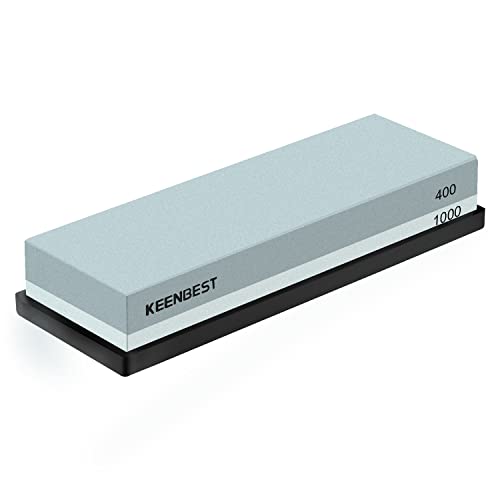
No oil needed, just put the stone into water for 10-15 minutes before using and they are ready to use. You can always adding water on it while sharpening, with water the lubricating effect of grinding will be great and helps you to save strength

2 dual-sided whetstones: 400/1000 grit and 3000/8000 grit for ultimate control; stones use water (vs. oil) for sharpening; clean easily with water

Precision Sharpening: Made of premium quality material, our knife sharpening kit is manufactured for you that provides great cutting performance. Its neat appearance tells that it not only serves its way, but also a perfect gift for your family and friends
Sharpen Serrated Steak Knives With a Tapered Rod
To sharpen serrated steak knives, use a tapered rod that fits each gullet without forcing the tips. Work each serration individually by pushing the rod away from the edge at about 15 to 20 degrees, following the existing bevel angle. Apply light, even pressure, and rotate the rod slightly during each stroke to ensure an even grind. Understanding how whetstones work clarifies that whetstones sharpen by abrading metal to form a new edge, a similar principle to using a rod on serrations. Perform three to six short passes per tooth until a faint burr appears on the flat side of the blade. Unlike plastic cutting boards, bamboo cutting boards can dull blades more quickly, so keeping your knives sharp is especially important. The popularity of Italian charcuterie boards often depends on the quality of your knife work for slicing cured meats.
Controlled, single-direction strokes are essential for maintaining the integrity of serrations; never rub the blade back and forth. After sharpening each serration, flip the blade and gently remove the burr with a few light passes on the flat side. Finish by wiping the knife clean to remove any debris and metal filings.

SHARPENS ALL KINDS OF KNIVES & TOOLS: This diamond-coated steel rod is used to sharpen a variety of knives and tools such as serrated blades, electric fillet knife blades, and even fish hooks. Crafted with durable materials for long-lasting use, ensuring a reliable tool for all your sharpening needs.

Size: 2 pieces diamond sharpeners about 135mm(5.3 inches) long-lightweight,suitable size,easy to store and save space

Premium Material: The diamond knife sharpener is made of superior diamond material, which has excellent wear resistance, corrosion resistance, high temperature resistance, high strength and impact resistance, durable for long time use.
Check Your Knife to Decide If It Needs Sharpening
Check your knife to decide if it needs sharpening. To determine if your knife needs sharpening, perform a simple performance check first. If you notice you’re applying more force to cut through meat or bread, or if you’re sawing back and forth, it’s a sign the edge has dulled. A dull knife will also drag or slow down mid-cut, causing wrist fatigue. Additionally, if your cuts are tearing or crushing soft foods like tomatoes, the blade’s edge likely needs attention. When slicing on smooth surfaces, such as an onion skin, a dull blade may slip or skate off, increasing safety risks. For the best results, you can also compare the blade’s performance to the quality standards found in top knife sets with blocks to gauge how far off it is from optimal sharpness. Sharpening should be done every few months for regularly used knives to maintain peak performance. Inspect the edge visually: look for a shiny, rounded line along the blade, which indicates rounding of the edge. Chips, nicks, or dents also signal dulling or damage. If light reflects clearly off the edge, the bevel has worn down. Lastly, inconsistent performance across different parts of the blade or the need to exert extra force are reliable signs that sharpening is due. Always confirm dullness before sharpening to prevent unnecessary wear and ensure safety. Maintaining your cutting board with fractionated coconut oil can also help preserve blade sharpness by providing a stable cutting surface.
Test the Edge and Stay Safe After Sharpening
After honing your knife, inspect its sharpness using straightforward techniques. The paper cut test is quick: hold a single sheet vertically and slice downward at a shallow angle. A truly sharp blade should cut cleanly without tearing the paper. Then, test a ripe tomato—press the blade gently onto the skin on a stable surface. If the blade bites into the skin immediately without crushing the fruit, it’s sharp enough. You can also perform a light-reference check: tilt the blade under bright light. A sharp edge will reflect a fine, consistent line rather than bright glints. Juicy foods are easier to handle with a cutting board with juice groove to keep your countertop clean.
Always prioritize safety. Treat the blade as if it’s dangerous—because it is. Wash the knife with mild detergent, dry it thoroughly, and examine the edge for burrs or nicks. Use cut-resistant gloves if necessary, and store the knife securely. Stay focused when handling the blade to prevent accidents and avoid distractions during cleanup.
Hone Straight-Edge Knives for Regular Edge Maintenance
Once your knife feels less precise but isn’t dull, honing can help realign the microscopic edge without removing metal. Maintain a consistent angle of 15° to 20° as you draw the blade from heel to tip in a smooth arc. Use light pressure and alternate sides evenly, performing three to six strokes per side. Regular honing helps keep your edge aligned and extends the time between sharpening sessions.
How often you should hone depends on your usage. For frequent cooks, honing before each cooking session or at least once a week is recommended. Remember, honing won’t fix a truly dull edge; if performance doesn’t improve after honing, you need to sharpen the blade. Regular honing maintains cutting performance and keeps your steak knives sharp and ready.
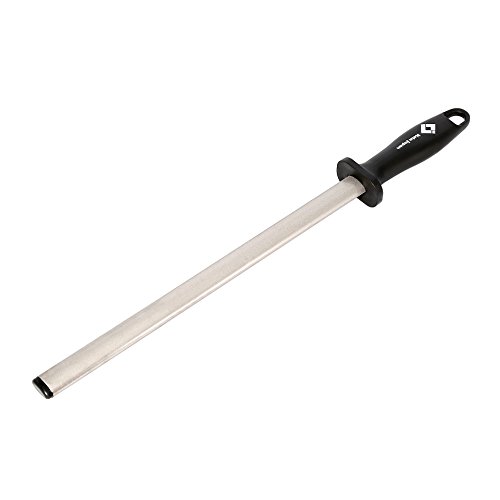
✔️ DIAMOND ELECTOPLATING: State-of-the-art manufacturing for precision Kitchen, Home or Hunting blade sharpening. Ensures efficient and sharp sharpening of dull knives and tools.

KEEPS KNIVES RAZOR-SHARP: Maintain knife edges between professional sharpenings.

WÜSTHOF HONING ROD – Sharpen dull knives, scissors and cutters safely
Gather the Right Tools for Each Steak Knife Type
To properly sharpen each type of steak knife, select your tools based on the blade’s edge. For straight-edge knives, a whetstone offers precise control for reshaping and sharpening, while a fine-grit sharpening rod is ideal for light maintenance. Use a leather strop after sharpening to refine the edge and remove burrs, ensuring a clean cut. Serrated blades require different tools: a tapered ceramic rod fits well into small scallops, and a diamond rod provides more aggressive repairs. Always choose a rod diameter that matches the gullet size to maintain correct blade alignment. Avoid using flat stones on serrations—they simply don’t fit into the scalloped edges. Match the tool’s hardness to your blade material: ceramic for finer edges and diamond for durable steel. When sharpening, check your cutting angle against the beveled side of the serration, not the flat side. Keep your work surface stable, use a light source to inspect your progress, and work in one direction to avoid uneven edges. For high-carbon steel blades, premium Japanese knife quality often requires a finer grit progression to achieve the optimal edge retention and cutting performance.
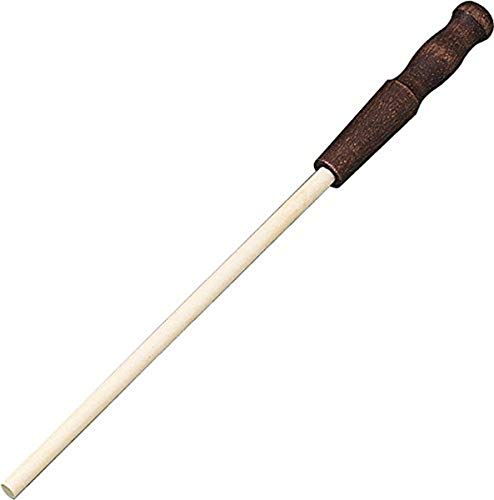
Wood handle

Built in angle guides provide consistent and repeatable angle to ensure you can quickly and accurately hone the edge of your knives.
