
Ever worry about dull, unsafe kitchen knives or accidental cuts while storing them? The right storage method keeps your blades sharp, protects your hands, and even helps prevent accidents, especially if little ones are around.
With a few simple tips, you can keep your knives secure, dry, and easily accessible.
Keep reading to learn the best ways to store your kitchen knives safely and effectively.
Why Knife Storage Mistakes Ruin Your Blades: and Your Fingers
Loose drawer storage will dull your blades and put your fingers at risk. When blades rattle against other utensils, the tips can chip, and the metal contact accelerates dulling, meaning you’ll need to sharpen more frequently. This constant friction shortens the lifespan of your blades’ sharpness, and hidden blades in crowded drawers create a real hazard of cutting yourself when reaching for a tool. Quality knife sets with blocks offer a safe alternative that keeps blades separated and protected. A similar approach to keeping tools organized is found in top charcuterie boards, which prioritize both quality and secure storage of their components. For serving knives used on boards, specialized cheese knife designs offer tailored blades that slice without tearing delicate accompaniments.
Wet storage is equally damaging. Dampness—especially with carbon steel knives—triggers rust and pitting. These issues weaken the blade over time and can damage the handle joint. High humidity in enclosed spaces silently deteriorates your knives before you even use them, leading to compromised edges and compromised safety. Proper drying and dry storage are key to maintaining your blades’ sharpness and safety.
3 Storage Methods That Keep Your Blades Safe and Sharp
Magnetic strips mounted on your wall are an excellent storage method because they provide quick access while keeping blades safe and sharp. These strips hold blades securely with strong magnets, preventing slipping or falling. They also keep blades separated, reducing the risk of accidental damage or dulling from contact with other utensils. Plus, they allow you to display your knives neatly, enhancing your kitchen’s aesthetics. Just ensure blades are dry before mounting to prevent rust, and place the strip at a height that’s safe and accessible. This method is ideal if you want visibility and easy reach, especially in kitchens with limited counter space. For those seeking the best cutlery sets, this storage approach complements high-quality blades by preserving their edge. Unlike softer sharpening stones, Arkansas stones are known for their fine, hard abrasive qualities that help maintain a durable edge. To further protect the blade’s edge, consider choosing between cutting board wax and oil to properly condition your cutting surface.
What Makes a Good Knife Block? (And What to Avoid)
A good knife block has a stable base that prevents tipping and provides safe, easy access to your blades. Look for a heavy, wide block with a low center of gravity—this helps it stay put when you pull out knives with one hand. The size should match your kitchen space; too large and it will encroach on your countertops, too small and it won’t hold your entire collection. Additionally, treating the wood occasionally with a food safe oil can help prevent cracking and keep the block in good condition for years.
Next, consider the slot design. Opt for universal openings that accommodate different knife sizes—from small paring knives to large chef’s knives—without scraping or damaging the blades. Wide, smooth slots minimize scratches on the blade material and help preserve edge sharpness. Avoid narrow or rough slots, which can damage edges or make safe removal difficult.
Material choice matters too. Dense hardwoods such as acacia or beech are ideal because they are gentle on blades and aesthetically pleasing. Check that the interior slots are smooth and well-finished to prevent rough edges from dulling your knives over time.
Finally, ensure the design is easy to clean. A removable insert or drainage system prevents debris buildup and makes maintenance simpler. Do not pick a block that tips easily or takes up more space than you have available, as cluttered countertops diminish workspace and safety. For alternative storage, a top-rated vegetable chopper can also reduce the need for frequent knife use and blade storage.

Upscale Select Acacia Material: Featuring the upscale natural grain of solid acacia wood, it works as both a prep board and an elegant charcuterie platter. Unlike hard bamboo,cheap plastic and plain stainless steel boards that quickly dull blades, our solid acacia cutting board features naturally gentle wood fibers to cushion knife edges. It minimizes deep knife marks and extends the service life of your premium kitchen knives. it is a ideal & thoughtful gift for housewarming & wedding.

20 SLOTS – Holds a variety of knives, from smaller slots that hold steak knives to larger slots that hold 8 inch cleavers.

8-piece Victorinox Fibrox cutlery set, hand-finished in Switzerland
How to Install and Use a Magnetic Strip Without Damaging Your Knives
To install a magnetic strip safely without damaging your knives, follow these essential guidelines. First, mount the strip into wall studs for maximum stability. Use heavy-duty screws placed close together to ensure it stays secure. Choose a dry area near your prep station, avoiding spots above sinks or stoves where moisture or heat could affect the magnet or blades. For added peace of mind, consider the same quality standards found in top Wüsthof chef knives when selecting a durable strip. Additionally, be aware that glass cutting boards are not recommended for daily use because they can quickly dull blades and create a harsh surface that damages the edge.
Position the strip at eye to shoulder height for easy access. Use a level to verify it’s straight so knives won’t slide off. When placing knives, always present the spine to the strip first. Gently rotate the blade until the magnet holds the flat of the knife, avoiding scraping the edge against the surface. Keep knives spaced out to prevent them from knocking into each other during use or removal.
To remove a knife, gently roll the spine away from the strip, then slide it downward. Never yank or pull the knife straight off, as this could damage the blade or magnet. Regularly clean and dry the strip and knives to prevent rust and dulling, ensuring they stay in good condition over time. For optimal blade care, avoid storing high-carbon steel knives on magnetic strips if they are not coated, as some top rotary cheese graters demonstrate the importance of matching materials to prevent damage.

【Acacia Wood & Super Strong Magnet】HOSHANHO magnetic knife strip is made from top-quality acacia wood and built-in two rows of powerful magnets running through the entire strip, stronger adsorption force allow even your largest knives to hang safely and securely, ultra sturdy and easy to clean up.

★Powerful Magnetic Knife Bar: This modern magnetic knife bar is made from strong magnets and covered in elegant, satin finished, high grade stainless steel, accenting any kitchen décor.

HEAVY DUTY MAGNET: ultra sturdy and strong design; 10 by 1.7 inch magnetic knife holder can hold up to six pounds of total weight; designed to hold a variety of sizes of your knives and tools
How to Organize Knives in a Drawer the Safe Way
Position your most-used knives in the easiest-to-reach slots, with blades oriented downward. A vertical arrangement keeps handles accessible and prevents the blades from dulling or becoming damaged. Install a non-slip liner under the tray to prevent shifting during use, which maintains organization and safety. For added protection, consider placing a knife arch over the organizer to shield fingers when reaching in. This setup minimizes movement, reduces the risk of cuts or dulling, and creates a secure, efficient storage space in your drawer. For maintaining perfect edges, you might also consider pairing this storage method with Japanese sharpening stones for regular maintenance. To further protect blade precision, look for drawer organizers that accommodate Japanese cooking knives made from harder steel alloys. These harder alloys, often found in premium Japanese knives, require careful storage to retain their exceptional edge retention and performance.
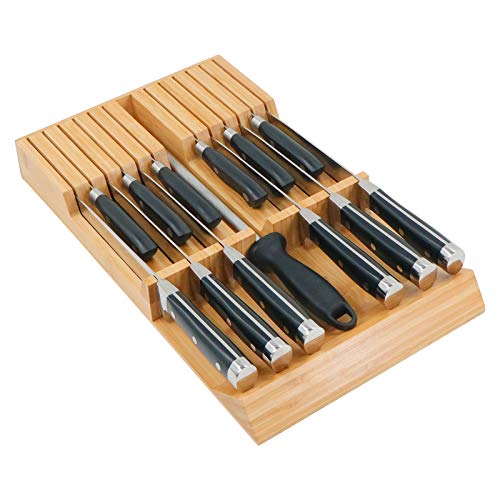
Check Your Drawer Dimensions: This product is suitable for drawers with an inner size larger than 17.1"D x 10.1"W and a height greater than 2.3"

Standard Size:The bamboo kitchen knife organizer has 16 knife slots which can store 16 knives and a knife sharpener. Please measure your kitchen drawer before purchasing. The height of the knife block doesn't include the height of the knife handle, please consider the knife handle on the measurement data

FLEXIBLE DIVIDERS - Made from cork and rubber composite, this in drawer knives drawer organizer holds knives up to 12" long in place for storage; SIZE: 15"L x 5.9"W x 2.5"H
Why Drying Your Knives Before Storage Is Non-Negotiable
Drying your knives thoroughly before storage is essential to prevent corrosion. Moisture left on the blades, even on stainless steel, can quickly lead to rust and dullness. A wet blade stored in a drawer or knife block traps humidity, especially since airflow is limited. This trapped moisture accelerates edge deterioration through pitting and corrosion. Similarly, using high-quality sharpening stones helps restore a keen edge that is more resistant to moisture damage. In contrast, a protective barrier like board conditioner can shield surfaces from humidity in the same way a dry blade avoids trapped moisture. For wooden cutting boards, a similar principle applies: a clean, dry cloth is crucial to prevent warping and bacterial growth.
Pay close attention to the blade, handle, bolsters, and rivets, as water can hide in these areas. Using a clean, dry towel or cloth, make sure to wipe each knife completely. Focus on drying the junctions where water tends to collect. Drying your knives thoroughly not only protects against rust but also helps keep them hygienic by removing residue and bacteria that thrive on damp surfaces.
This quick step takes only a moment but significantly extends the life and performance of your knives. Proper drying ensures your blades stay sharp, clean, and looking great for years to come.
5 Danger Zones to Avoid When Storing Knives
Avoid storing knives in five danger zones to keep safe and protect your blades. First, do not toss knives loose in drawers. Contact with other utensils can dull the edge and pose a serious cut risk when reaching in blindly. Use sheaths or dedicated slots instead to keep blades secure and visible. Second, never leave knives soaking in a wet sink. Standing water promotes rust and hides dangerous blades from sight, increasing the risk of accidental cuts. Third, keep knives away from the edges of countertops. A blade placed too close can be easily knocked off or grabbed unintentionally, leading to injuries. Fourth, avoid storing knives near the stove. Heat exposure can weaken the blade’s performance and attract greasy residue that hampers safety and cleanliness. Fifth, skip overstuffed blocks or crowded racks. Overcrowding can cause blade damage and make safe removal difficult. Assign each knife its own secure spot to ensure safety and maintain the sharpness of your blades. For a safer alternative, consider storing blades near a stylish book-shaped cutting board to keep both your knives and cutting surfaces organized in one designated area.
Childproof Knife Storage Without Losing Access
Childproof knife storage options that combine accessibility and safety include lockable in-drawer blocks with childproof locks, magnetic strips inside cabinet doors, locking countertop knife blocks, and high cabinet locks. For in-drawer blocks, simply install a reliable latch on the drawer to allow quick adult access while keeping knives hidden from children. Mounting a magnetic strip inside a cabinet door offers a discreet storage spot that can be secured with a childproof lock, giving you fast access and organization. Locking countertop knife blocks provide the convenience of countertop placement but require adult strength or a safety button release to open. For elevated storage, adding a lock to high cabinets prevents children from climbing and reaching dangerous items. Always return knives immediately to their locked or high-up spot after use. When selecting knives for any storage method, consider the best material for kitchen knives to ensure they maintain sharpness and durability. Choose storage with safe handle grips that fully enclose blades, reducing the risk of shifting or accidental exposure. This combination of secure, accessible options helps keep kids safe while ensuring you can grab your knives quickly when needed.
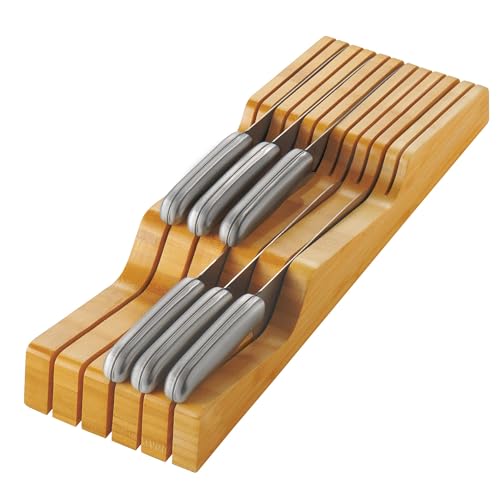
FITS MOST STANDARD KITCHEN DRAWERS: Measures 17 x 5.3 x 2 inches and slides flat into most standard kitchen drawers. Measure first, a 17 inch drawer holds 11 knives while a 22 inch drawer fits all 16, and leave room above the 2 inch base for the handles

Check Your Drawer Dimensions: This product is suitable for drawers with an inner size larger than 17.1"D x 12.7"W and a height greater than 2.3"

☘Upgraded Knife Lock Box--Keep your family safe with our newly upgraded keyless knife lock box, designed to prevent young family memebers from accessing sharp knives and tools. Features a solid, laminated surface and a hardened steel shackle to resist cutting and sawing. Unlike other cheap locks have screws on the surface that a person could use a tool to open. Our knife lock box has ZERO screws outside, without your own passcodes, no one can open it.
How to Clean and Inspect Every Storage Type
Regular cleaning and inspection of each storage type ensure your knives remain sharp, rust-free, and ready for use. For knife blocks, completely empty the block and scrub each slot with a small brush to remove debris and residue. Disinfect the interior using diluted bleach or vinegar to prevent mold buildup. After cleaning, dry the block thoroughly by turning it upside down before reinserting the knives, since wooden blocks can trap moisture that promotes rust. When choosing a block, consider Japanese knife sets that prioritize moisture-resistant materials for better long-term protection.
Magnetic strips only require a damp wipe to remove dust and grease. Immediately dry the strip afterward to prevent moisture from affecting blades. Check the mounting hardware regularly to ensure it remains tight and the magnets still hold securely—any slipping or looseness indicates wear. Keep the surface free of grime, as grease and dust can cause scratching or dulling of your knives over time.
In-drawer trays should be vacuumed regularly to clear crumbs and debris, and any removable parts need washing in hot, soapy water. Carefully inspect the dividers for cracks or breaks that could cause blades to touch each other, which may dull or damage the edges.
For guards, sheaths, and wallets, wash them in hot, soapy water and allow them to dry completely before storage. Replace any covers that show signs of wear, such as exposing edges or compromised material. Never store a damp knife in these enclosures, as trapped moisture can lead to rust and bacterial growth.
Cloth wraps benefit from regular application of mineral oil to maintain their flexibility and protective qualities for long-term storage. Also, inspect these wraps periodically for signs of humidity or mold, which can compromise their effectiveness.
Which Storage Method Fits Your Kitchen and Cooking Style?
Choosing the right storage method depends on your kitchen layout and how you cook. For small countertops, prioritize options that maximize space: a magnetic strip can free up workspace and hold multiple zones, while in-drawer organizers hide blades neatly out of sight. A knife block is traditional but takes up valuable surface area in compact kitchens.
If you cook frequently, quick access is key—opt for a strip or a sturdy block mounted securely to prevent accidents. No wall space? Opt for a drawer organizer or a portable knife roll that can be stored away easily.
For a clean and minimalist look, in-drawer storage offers a sleek profile. A magnetic strip or wall-mounted rack provides a modern display and keeps your knives accessible. To match your kitchen aesthetic, consider coordinating knife colors with your decor or cabinetry when storing blades visibly.
