Wondering if Senken knives are truly made with real Damascus steel? It’s a common question, and the answer isn’t always straightforward.
Some Senken knives do feature authentic layered Damascus with a VG10 core, but others just have surface-etched patterns that mimic the look. Knowing how to spot the real thing can save you from a misleading label and help you choose a quality knife.
Keep reading to learn how to tell the difference.
What Senken Means by “Real Damascus” for Its Kitchen Knives
Senken’s “real Damascus” refers specifically to its multilayered steel blades, constructed with a total of 67 layers and featuring a VG10 steel core. This layered build is not just for show; it is a true forging process rooted in the historical origin of Damascus steel. The multiple layers are individually forged, creating a genuine, multi-layered blade rather than a surface-etched pattern. The 67-layer folded construction ensures extreme durability, providing long-term usability without needing replacements, as each blade is forged for robustness. Proper care with food safe mineral oil can help preserve the blade’s handle and layered appearance over time. For handles made of wood, applying a food safe mineral oil regularly prevents drying and cracking. Understanding durability and upkeep differences between oil and conditioner can further guide your maintenance routine.
In their product descriptions, Senken differentiates these knives from other brands that may simply apply decorative Damascus patterns. Their premium kitchen knives explicitly state “67-layer Japanese Damascus Steel,” emphasizing the authentic layered construction. Other lines may use terms like “Damascus Pattern,” which typically signals only a surface design without the layered forging technique.
Therefore, when Senken claims “real Damascus,” they mean blades with a forged multilayer construction centered on their VG10 core—not just patterned finishes or surface etchings. This craftsmanship is the core proof of authenticity and quality in their knives.

Premium Design: This 8-inch chef's knife measures 13.78 inches in length, 8 inches 2.0 mm in thickness, and weighs 246 grams. Its 5.2-inch boxwood octagonal handle provides a comfortable, ergonomic grip. The 15-degree hand-polished blade on each side ensures precise cuts and long-lasting sharpness.

【 Japanese Steel Knife】67-layer Damascus knife with 0.98% carbon & 18% chromium content, lead hardness at 58HRC. Each Japanese chef knife is hand-forged by experienced blacksmiths with premium Damascus steel to ensure higher sharpness, higher wear resistance, durability and hardness.
The Honest Verdict: Does Senken Sell Real Damascus Knives?
Senken does sell real Damascus knives, but not all models qualify as authentic. When examining their catalog, you’ll notice a clear distinction in the descriptions. Some listings, like the “Imperial,” explicitly state they use 67-layer folded steel, which indicates genuine Damascus construction. Others mention only a “Laser Damascus Pattern,” which suggests a decorative surface etch rather than true layered steel. For buyers seeking quality and value, it is essential to focus on knives that explicitly detail their layered construction rather than just aesthetic patterns. Additionally, you should be aware that real Damascus performance depends on the core steel’s hardness, not just the pattern. Choosing a set from a trusted brand can also ensure you receive consistent quality across all blade types in your collection.
Manufacturing details reinforce this difference: some knives are described as having real layered construction with a VG10 core, pointing to true Damascus techniques. Conversely, other models only describe a pattern, implying a superficial design. To determine authenticity, always check the product descriptions carefully. Mention of “folded layers” or “67-layer Damascus steel” typically means the blade is genuinely layered. If the listing only references a “pattern,” you’re likely looking at a decorative surface. The Senken Tsunami Collection, for example, features a 67-layer folded Damascus steel blade with a VG-10 core, confirming its genuine layered construction.
Does Senken’s 67-Layer VG10 Senken Damascus Knives Claim Hold Up?
Senken’s 67-layer VG10 Damascus construction genuinely holds up as a layered blade design. It features a VG10 core wrapped in 66 layers of Damascus cladding, totaling 67 layers. This configuration aligns with modern manufacturing standards for layered steel. Unlike traditional Damascus steel, which was a single, homogeneous billet, Senken’s approach involves forge-welding Damascus layers over a high-performance VG10 core. This creates a wave pattern and enhances corrosion resistance, while the core provides excellent edge retention. The math behind the layers—33 on each side plus the core—adds up accurately, making their claim legitimate. Therefore, Senken’s description of a 67-layer VG10 Damascus blade is correct and supported by its construction method. The knives are heat-treated and sharpened to a 15° edge, ensuring superior cutting performance compared to typical Western blades. Many kitchen experts recommend storing such blades in top knife holders to protect their edge and intricate layering. For chefs seeking top pro kitchen knives, this layered design balances performance and value effectively. Unlike wood fiber cutting boards, which are pressed from wood fibers and resin into a non-porous surface, the blade’s layered Damascus cladding offers a distinct structural advantage.
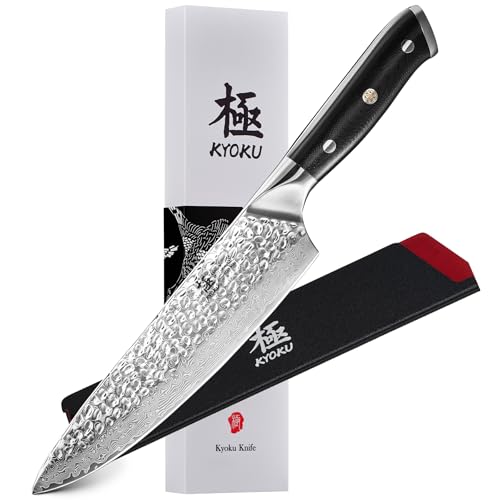
HIGH-END JAPANESE CHEF KNIFE: This all-purpose cool knife is part of Kyoku shogun series, manufactured with modern technology and traditional craftsmanship; its Japanese 67 layer Damascus VG-10 steel(MADE IN JAPAN) blade has been cryogenically treated and paired with a perfectly balanced handle offering superior precision and control for home chefs and culinary professionals alike

Exquisite 67-Layer Damascus Steel: Forged with 67 layers, this damascus kitchen Knife showcases a stunning ripple pattern. Not just a tool, it resists corrosion and dulling. our genuine damascus steel provides toughness for heavy-duty prep, ensuring your cooking knives remain a reliable partner. Every chef needs a reliable knife.

【Premium Damascus Chef Knife with VG-10 Steel Core】Our Japanese knives feature a VG-10 steel core (62 HRC) for unmatched sharpness and stain resistance. The 67-layer Damascus cladding ensures durability while adding elegant, rust-proof patterns—perfect for both professional kitchens and home use
How Senken’s Forged Damascus Differs From Its Laser-Etched Patterns
You can tell the difference between forged Damascus and laser-etched patterns by examining the entire blade, especially near the edge bevel or spine. Forged Damascus is created by forge-welding multiple layers of steel, resulting in a pattern that runs continuously through the metal. This causes the pattern to have an organic, irregular flow that remains visible even after grinding or polishing. Laser-etched patterns, on the other hand, are purely surface decoration applied through a manufacturing process that uses a laser to burn the design into the steel. These designs are uniform and mechanically precise, but they disappear when the steel is machined, ground, or polished away. If the pattern vanishes near the edge or spine, it is likely etched rather than forged. Labels often clarify this distinction: “laser-etched” indicates surface decoration only, while “forged Damascus” signifies a structural layer pattern that penetrates the entire blade.
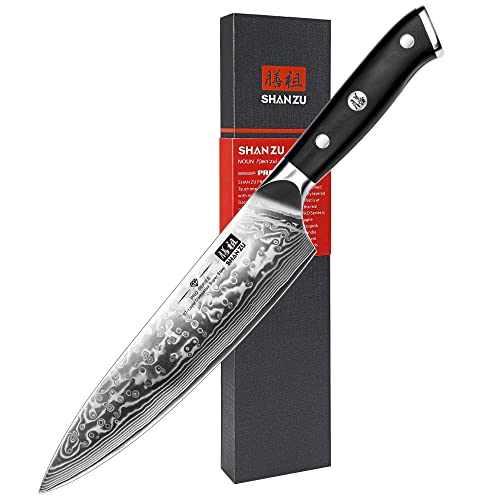
Japanese Steel Knife Core, Super Sharp: SHAN ZU chef's knife core is made of 10Cr15Mov Damascus Japanese steel that has high hardness(62 HRC), rust-resistant, and wear-resistant features; with advanced forging technique, you will get a super sharp kitchen knife

Masterpiece Hand-Forged Damascus Kiritsuke Knife: Our exceptional hand forged chefs knife is a true masterpiece. Each damascus kitchen knife in our collection is meticulously crafted, resulting in a unique, resilient blade. Experience the superior performance and artistry of a professionally hand forged chefs knife that stands out in any kitchen.

All-Rounder Chef Knife:All-rounder: Designed for authority,our chef knife features a weighted blade and a reinforced spine that powers through hearty ingredients with clean,confident strokes.The broad blade surface and optimal curvature facilitate seamless rocking and chopping,excelling at dicing root vegetables,disjointing poultry,and slicing roasts.For core kitchen tasks that demand strength and consistency,this knife stands as an indispensable cornerstone of culinary craftsmanship.
Why Senken’s Non-Damascus Lines Use “Damascus Pattern” Labeling
Senken’s “Damascus pattern” label on its non-Damascus lines clearly indicates a cosmetic finish rather than true layered steel. When you see “Damascus Blade Pattern” on collections like Cerulean and Amethyst, it’s a visual design element, not an indication of layered construction. Product pages often avoid mentioning layered steel and instead note that these knives are “laser-etched” or “not a true forged Damascus knife set.” This honest language protects the brand’s reputation by preventing claims that could falsely imply superior metallurgy. The label functions primarily as a decorative descriptor that appeals to kitchen aesthetics. It signals that you’re paying for the visual style of Damascus, not for the layered steel technique. This approach helps you understand exactly what you’re getting and prevents confusion about the material’s authenticity. Even so, the blades are still heat-treated and sharpened to a 15° bevel for superior cutting performance compared to typical Western knives.
Evidence That Senken’s Tsunami and Umi Lines Are Genuine Layered Damascus
The Tsunami and Umi collections are indeed genuine layered Damascus, featuring explicit 67-layer construction claims—33 layers on each side surrounding a VG10 core. These descriptions are not vague pattern references but detailed structural specifications that support material authenticity. Senken consistently states the 67-layer configuration across multiple product pages, from 7-piece to 15-piece sets, demonstrating transparency and standardization in their claims. The HRC 62 hardness rating aligns with typical hard-steel Damascus blades, further indicating quality. Although there is no public independent lab verification, the brand’s own documentation emphasizes that these knives are forged, layered Damascus, rather than surface-etched patterns. Overall, both lines present themselves as genuine layered Damascus with explicit layer counts and core materials—a key indicator of authenticity. Applying a durable finish like DIY cutting board oil can help protect the knife’s handle and bolster its longevity. Similar to how evaluating charcuterie boards requires weighing pros and cons to determine their true health impact, verifying Senken’s Damascus claims involves scrutinizing detailed structural specifications rather than marketing patterns.
Three Red Flags in Senken Listings: Conflicting Materials, Vague Wording, and Missing Core Details
Conflicting material claims are a major warning sign. Senken describes some blades as “67-layer Japanese Damascus Steel” and others as “High-Carbon Steel,” yet their brand page states that their Damascus sets use Japanese VG10 steel. This inconsistency makes it hard to trust what’s true—you shouldn’t have to guess whether a blade is genuinely layered Damascus or just patterned steel. Just as wood cutting boards rely on natural antimicrobial properties rather than artificial coatings for safety, a genuine Damascus blade depends on a real layered core, not surface etching. Similarly, using cut-resistant gloves can help ensure your hands remain safe while carving wood with any blade.
Vague wording also signals trouble. Listings often mention “professional-grade steel” or “beautiful designs” without explaining how the blades are crafted. When sellers focus on appearance over clear technical specs, it raises a red flag about the product’s authenticity and quality.
Missing core details further complicate matters. You may see information like blade length and weight, but essential details such as core steel type or hardness are often absent. Without these specifics, it’s impossible to verify if you’re getting real Damascus steel or a decorative, non-layered steel.
How to Tell If a Senken Knife Is Real Damascus Before Buying
To determine if a Senken knife’s Damascus pattern is genuine without causing damage, examine the pattern’s continuity on the spine and ricasso. Ask the seller for close-up photos of these areas; a real Damascus blade will display a seamless pattern that continues smoothly across the full length. If the pattern stops abruptly or appears only on the surface, it’s likely a superficial design. Look at the pattern depth by holding the blade at different angles under good lighting. Authentic Damascus layers will shift and reflect light differently, creating a layered, textured appearance, unlike flat, printed designs. Feel the surface; genuine Damascus has a slight variation in texture from stacking layers, rather than a slick, stamped-on finish that feels uniform and smooth. Be wary if multiple knives show identical patterns, as this suggests the pattern may be printed or artificially replicated, not truly layered steel. Real Damascus is forged by skilled craftsmen, often with hand-forging techniques that produce visible folds in the steel. Remember that real Damascus is a forging process rooted in historical and cultural significance, representing layered steel rather than a cosmetic overlay. Extremely low prices for a Damascus knife are a red flag, since authentic craftsmanship demands higher costs. Finally, ask the seller how the pattern was created—an authentic Damascus pattern is forged from repeated layering and folding, so their explanation should reflect that process over surface treatments. Like a fillet knife, an authentic Damascus blade benefits from a carefully chosen edge sharpness angle to optimize durability for its intended use. Their answer can often reveal authenticity more reliably than photos alone. For those seeking to maintain such a blade, using high-quality Japanese sharpening stones is essential to preserve both the edge and the layered pattern.

67-Layer Damascus Blade: Crafted with a VG10 core (62 HRC) and 67-layer Damascus steel, this Japanese chef knife features a distinctive hammered Damascus blade designed for lasting edge retention and stain resistance. The layered construction combines traditional Japanese craftsmanship with dependable performance for professional kitchens and everyday kitchen prep

【Damascus Knife Set】Atumuryou 3 piece knife set comes with 8" Chef Knife, 7" Santoku Knife and 3.5" Paring Knife, effortlessly handling everything from meat cutting and vegetable chopping to fruit preparation. Whether for home cooking or professional use, this is an ideal choice.

67 layers of Damascus steel for a harder blade that stays sharper longer with an ergonomic Pakkawood handle for precision and control. Made utilizing the 3-step Honbazuke method – an advanced heat treatment to achieve a combination of hardness and flexibility that creates an exceptional 12-degree cutting edge.
What VG10 Steel and Folded Layers Mean for Performance
VG10 steel provides a good balance of performance traits for Senken-style layered knives. It offers a hardness around 58 to 61 HRC, which allows for a sharp edge that can hold up during everyday use. Its high chromium content gives it strong corrosion resistance, making maintenance simpler compared to high-carbon non-stainless steels. This steel’s composition—roughly 14.5 to 15.5 percent chromium along with molybdenum and vanadium—creates a fine grain structure that promotes stable cutting performance and ease of sharpening. Unlike knives stored in self-sharpening knife blocks, which often claim to maintain an edge through abrasive slots, a properly heat-treated VG10 blade relies on its inherent hardness and fine grain structure. Layering techniques create an eye-catching pattern on the blade but don’t inherently improve cutting ability. The folded layers mainly serve to refine the knife’s appearance, not its functionality. The core material, VG10 steel in this case, controls the edge behavior and cutting performance. A well-made monosteel VG10 blade will cut just as effectively as a layered one. While folded construction adds complexity and visual appeal, it does not guarantee superior performance. The key factor in a knife’s real-world ability remains its heat treatment quality—the correct treatment can significantly influence how the steel performs regardless of its layering. To preserve a quality blade, always hand wash and dry it immediately, just as you would carefully apply a food-safe mineral oil to protect a wooden cutting board from moisture damage.

[ Effortless Cuts with VG-10 Damascus Steel ] Super sharp 3-layer Japanese kitchen knife with 15° edge – built for clean, precise cuts every time.

【INNOVATIVE MAGNETIC NESTING DESIGN】 Designed to nest beautifully together, each knife fits seamlessly inside the next while powerful magnets keep every blade securely in place, creating a sleek, space-saving countertop display that keeps your kitchen organized, clutter-free, and elevates your kitchen's modern aesthetic.

Complete 16-Piece Configuration】 The expanded layout includes an 8” Chef Knife, 8” Slicing Knife, 8” Bread Knife, 7” Santoku Knife, 5.5” Utility Knife, 3.5” Paring Knife, six steak knives, a 6” meat fork, kitchen scissors, a knife sharpener, and a natural wood knife block. This all-in-one complete set neatly covers a wide range of kitchen tasks from meal preparation to table serving
Is Senken’s Damascus the Real Deal? The Honest Verdict
Senken’s Damascus appears legitimate based on its specs—a 67-layer count combined with a VG10 core—which aligns with the characteristics of genuine pattern-welded steel rather than a printed imitation. Independent reviews confirm that the pattern runs throughout the steel itself, not just on the surface, indicating true layering.
However, several warning signs warrant caution. The manufacturing origin remains unclear, raising doubts about whether these knives are forged in-house or dropshipped from a third party. Additionally, the term “Damascus” is often used loosely in the industry, and without third-party metallurgical certifications, you’re relying solely on the company’s claims. While the specs are promising, verification from independent sources remains essential to confirm authenticity. The set’s blades are heat-treated and sharpened to a fine 15° double-bevel edge, delivering superior performance compared to standard Western knives. To maintain such performance, regular sharpening is crucial to prevent the edge from becoming dull and losing its cutting efficiency. The careful design logic behind a premium board—including wood selection and layout—parallels the layered craftsmanship needed for true Damascus steel.