Wondering if an end grain cutting board is really worth the extra cost? These boards are known for being gentle on knives and lasting many years, but they also require more upkeep and come with a higher price tag.
On the other hand, edge grain boards are lighter and cheaper but show scratches faster.
Here’s what you need to know to choose the best fit for your kitchen.
Why Your Knife Edge Might Need End Grain
End grain can significantly extend the sharpness of your knife edge because it minimizes damage during cutting. When you cut into an end grain board, the knife slides between vertical wood fibers rather than smashing across them. This causes less microscopic abrasion on your bevel and slows down the formation of tiny chips that dull the blade. As a result, your knife experiences less stress per cut, which boosts its resilience and longevity. Additionally, cutting on an end grain surface reduces resistance, allowing you to use less force. This softer impact improves cutting accuracy, as the board absorbs shock rather than fighting your knife’s movement. The smoother, quieter cuts you get from an end grain board help maintain a sharper edge for longer periods. However, the benefits depend heavily on the board’s quality and construction; not all end grain boards are equally gentle. When made well, an end grain board offers real advantages in keeping your knife’s apex sharper, cut after cut. For those who prioritize hand safety while maintaining their board, wearing cut-resistant gloves can provide additional protection during cleaning and handling. To maintain this performance over time, regular application of cutting board wax protects the wood and preserves its gentle cutting surface. For a safe deep clean, always use a mild soap and avoid harsh chemicals that can dry out the wood.

Experience the beauty of premium solid walnut! Crafted from premium natural walnut wood, this walnut wood cutting board is finished with natural oil to boost durability and create a smooth surface, preserving the wood’s pure natural qualities for daily kitchen use. It serves as an ideal food prep surface, and this family-friendly wooden cutting board lets you cook with joy in your kitchen while caring for your family’s well-being.
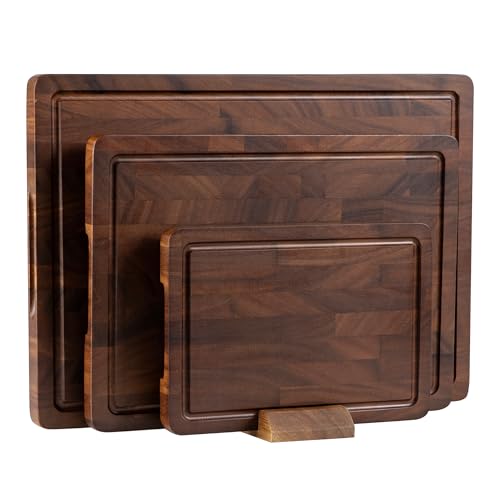
【Craftsmanship and Material】THETCHRY cutting board set is meticulously crafted from genuine South American Walnut. Renowned for its dense grain, walnut is considered the premier material for high-end kitchen tools. Not only is this board 1.5 times harder than ordinary wood, but its end-grain pattern effectively minimizes knife marks, protecting your blades with every cut.

【Premium Walnut with End Grain Durability】Crafted premium walnut, this cutting board features an upgraded 1-inch thickness and end grain construction for exceptional sturdiness and resistance to warping. The end grain design is renowned for being gentle on knife blades, preserving their sharpness, while its self-healing fibers close up after cuts, extending the wooden cutting board’s life.
How End Grain Cutting Boards Protect Your Knives
End grain cutting boards protect your knives by featuring wood fibers that stand upright on the surface. This orientation allows your knife blades to slide between the fibers rather than slicing through them. As a result, less resistance is encountered, which reduces stress on the knife’s edge. The vertical fiber structure, combined with the high density of the wood, creates a compressible surface that gently parts around the blade. This absorption minimizes micro-chipping and edge rolling because the fibers cushion impacts. Just as high-quality Damascus steel knives rely on layered construction for performance, the vertical fiber structure of an end grain board provides a similar level of care by allowing the blade to move with minimal resistance. After each cut, the fibers spring back into place, hiding minor marks and decreasing wear on the blade. Rather than grinding against hard, unyielding surfaces, your knife interacts with the board’s structure, allowing the edge to stay sharper longer. This design results in less force needed for cutting, reduced friction, and better preservation of your knives. Many top-rated models also feature juice grooves to catch liquids and keep your countertop clean during use. Overall, an end grain board offers a smart combination of durability and gentleness, extending the life of your blades with every use. Unlike softer materials that can harbor bacteria, dense hardwoods naturally resist moisture absorption, making them a hygienic choice when properly maintained.

【END GRAIN WALNUT CONSTRUCTION】Built with vertically arranged Black Walnut wood fibers in a checkered end grain pattern, this board provides a self-healing chopping surface that is exceptionally gentle on knife edges. Unlike edge grain or plastic boards, the end grain structure allows knife blades to slide between fibers rather than cutting through them, keeping your knives sharper longer while minimizing visible knife marks.

SIZE MATTER! : 1.7" Thickness for stability, 100% sustainable black walnut wood grown in America for long-lasting. We manufacture super thick & durable wooden boards, crafted using the end-grain technique, added Black walnut wood ensures ultimate adhesion, and it’s knife friendly. Ideal as Charcuterie boards, chopping board, butcher block.

Still looking for a cutting board that is both beautiful and practical? THETCHRY end grain walnut cutting board is the ideal choice for you! The unique structure has excellent durability and can withstand heavy cutting without being easily damaged. Its "self-healing" property makes every cut as smooth as silk. The blade cuts between the wood fibers and the fibers quickly close after leaving, keeping the knife sharp as new.
When Edge Grain Beats End Grain on Price and Care
Edge grain boards are generally more affordable and easier to maintain than end grain ones. Quality edge grain options usually cost between $50 and $200, significantly less than the $300 to $500 often required for end grain boards. Despite the lower price, edge grain boards still offer reliable durability for everyday use due to their simpler construction. This affordability mirrors the design logic behind charcuterie boards, where simpler assembly and material choices keep costs down for practical everyday items. Similarly, many top knife sets with blocks prioritize simpler construction to offer strong value without high maintenance demands. For those seeking a cutlery set that balances quality and cost, the same principle applies when reviewing the best cutlery sets.
Compared to end grain, edge grain boards are less porous and less sensitive to moisture, which makes them easier to care for. You can get away with lighter oiling and less frequent maintenance. Cleaning is straightforward—just wash thoroughly and dry completely. If you prefer a practical, budget-friendly option that requires minimal upkeep, edge grain fits perfectly into most kitchens.

Food preparation accessory helps you prepare ingredients efficiently, perfect for chopping meats, fruits, and veggies

MULTIPLE SIZES: Kitsure wooden cutting board comes in many sizes. The 15"×10" board is ideal for daily use, the compact 11"×7" board works well for quick jobs like slicing fruits, and the larger 18"×12" board suits for more extensive works like carving roasts. Cutting board sets with various sizes are also available in Kitsure, enabling you to handle different ingredients at the same time.

Durable and Long-Lasting: This edge grain butcher block cutting board resists deep cuts, ensuring a sturdy surface that lasts through years of heavy kitchen use, perfect for meat, veggies, and daily prep.
Does End Grain Last Longer Than Edge Grain?
End grain generally lasts twice as long as edge grain—about 10 to 20 years with proper care compared to 5 to 10 years for edge grain. The key difference lies in how the blades contact the wood fibers. When you cut on end grain, the blade slips between the fibers rather than across them, reducing the formation of deep scars. The fiber ends close back up after each cut, providing a self-healing property that protects the surface over time. Conversely, cutting on edge grain exposes the long side of the fibers, which are severed permanently. This leads to visible grooves and faster wear. This is why choosing the right wood cutting boards depends on understanding the material’s structural properties. Research shows that the self-healing nature of end grain also makes it more resistant to trapping bacteria and moisture compared to edge grain surfaces. However, even with this superior durability, placing an end grain board in the dishwasher is risky because high heat and moisture can cause warping and cracking.
End grain’s vertical fiber orientation makes it more impact-resistant, so it tolerates heavier chopping without damage. This structural resilience helps it withstand repeated impacts better and maintain integrity longer. Edge grain boards, while still functional, tend to show wear more quickly, develop grooves sooner, and may warp more easily if not properly maintained. Although regular maintenance can extend the life of both types, the inherent durability of end grain gives it a significant longevity advantage.

PREMIUM WALNUT END GRAIN - Crafted from 100% walnut wood, this end grain cutting boards for kitchen offers superior durability, rich natural color, and a luxurious look that elevates any kitchen. Ideal as charcuterie board, chopping board, and butcher block for meat, cheese and vegetables.

14 INCH SQUARE END GRAIN BOARD: This 14" x 14" x 1.25" chef's board is crafted from end grain acacia wood, giving you a substantial butcher block cutting board with real heft on the counter.

【END GRAIN CUTTING BOARD】Teak is a great wood for cutting boards because of its exceptional strength and moisture resistance due to its naturally high oil content. The wood is soft enough to protect the blade and hard enough to cut easily.
The Case for End Grain in a Home Kitchen
End grain is the best choice for your home kitchen cutting board because it is gentler on your knives. Its upright fibers allow your blade to pass between them, reducing friction on the edges and decreasing the frequency of sharpening. You’ll experience a softer cutting feel and better control, especially during dense prep work, with less impact on your knife’s edge. Research supports that hardwood’s natural antibacterial properties help resist bacteria, giving you added safety during food preparation. The self-healing surface closes up after cuts, keeping the board smoother over time and maintaining its appearance. Its aesthetic versatility results in unique checkerboard patterns that showcase craftsmanship. Additionally, the natural hardness of hardwood helps resist bacteria, and easy rinsing makes cleaning simple, offering peace of mind during food prep. For best results when those edges do need restoring, a repeatable technique with the correct angle ensures a keen edge. Unlike a butter knife, which relies on a holed design for even spreading, an end grain board’s gentle surface protects your knife’s edge from dulling.
How Maintenance Differs Between End and Edge Grain
Maintenance frequency varies between end grain and edge grain boards due to differences in how their surfaces absorb oil and show wear. End grain boards soak up oil faster because their surface is made of fiber ends, which absorb moisture and oil quickly. This means you should oil them about once a month initially, then extend to every 6–8 weeks once seasoned. In contrast, edge grain boards have a tighter surface that holds oil longer, allowing for longer intervals between oilings—typically from 6–8 weeks up to quarterly maintenance. For those seeking quality and value, comparing different cutting board styles and accompanying accessories can simplify the selection process. To extend the board’s lifespan, it is helpful to know how long to soak the cutting board in mineral oil for maximum absorption.
Surface wear also differs. End grain boards conceal knife marks better because cuts enter the fiber ends, making scratches less visible. However, heavy use may require resurfacing or light sanding over time. Edge grain boards are more prone to showing scratches and knife marks but are easier to sand smooth again. Both types should be lightly sanded if they become rough, and proper drying is essential. End grain’s open fibers absorb water more quickly, so it’s particularly important to avoid soaking and to dry thoroughly after cleaning. Always clean with mild soap and water, and reapply oil before the surface appears dry to maintain the board’s condition. For knife enthusiasts using premium Japanese kitchen knives, selecting the right cutting board can further preserve the blade’s edge and overall performance.
End Grain vs. Edge Grain: Choose by Your Cooking Style
End grain boards are ideal if you do heavy chopping. Their self-healing surface helps hide knife scars and reduces wear over time. The gentle feel on your blades makes chopping less tiring, especially for frequent tasks like dicing vegetables or preparing meat daily. The color variations and patterns of end grain boards also improve with use, offering a unique, attractive look that masks scars. A food-safe finish is essential to protect the wood and ensure long-lasting durability. Because the fibers are cut perpendicular, end grain boards are notably gentler on knife edges than other cutting surfaces.
In contrast, edge grain boards are better suited for lighter, everyday tasks. They are lighter, more affordable, and easier to handle, making them convenient for casual meal prep and serving. While they may show cut marks sooner, their firm surface provides enough support for slicing, dicing, and general use. If you prefer a versatile, low-cost option that handles occasional tasks well, edge grain is the way to go. Your choice should ultimately depend on your cooking volume and how often you’ll need to use your board.

100% BAMBOO: Kikcoin bamboo wooden cutting boards for kitchen preserves the original bamboo grain and texture.The surface is carefully polished and coated with food-grade oil, ensuring a smooth, burr-free finish that resists cracking

END-GRAIN CUTTING BOARD: Crafted from carefully selected FSC-certificated teak wood, the Nomster Workshop Series cutting board showcases the beauty and resilience of true end-grain construction. Each board is expertly assembled by skilled artisans, providing exceptional durability, natural “self-healing” performance, and a striking checkerboard pattern designed for both daily prep and display-worthy presentation.